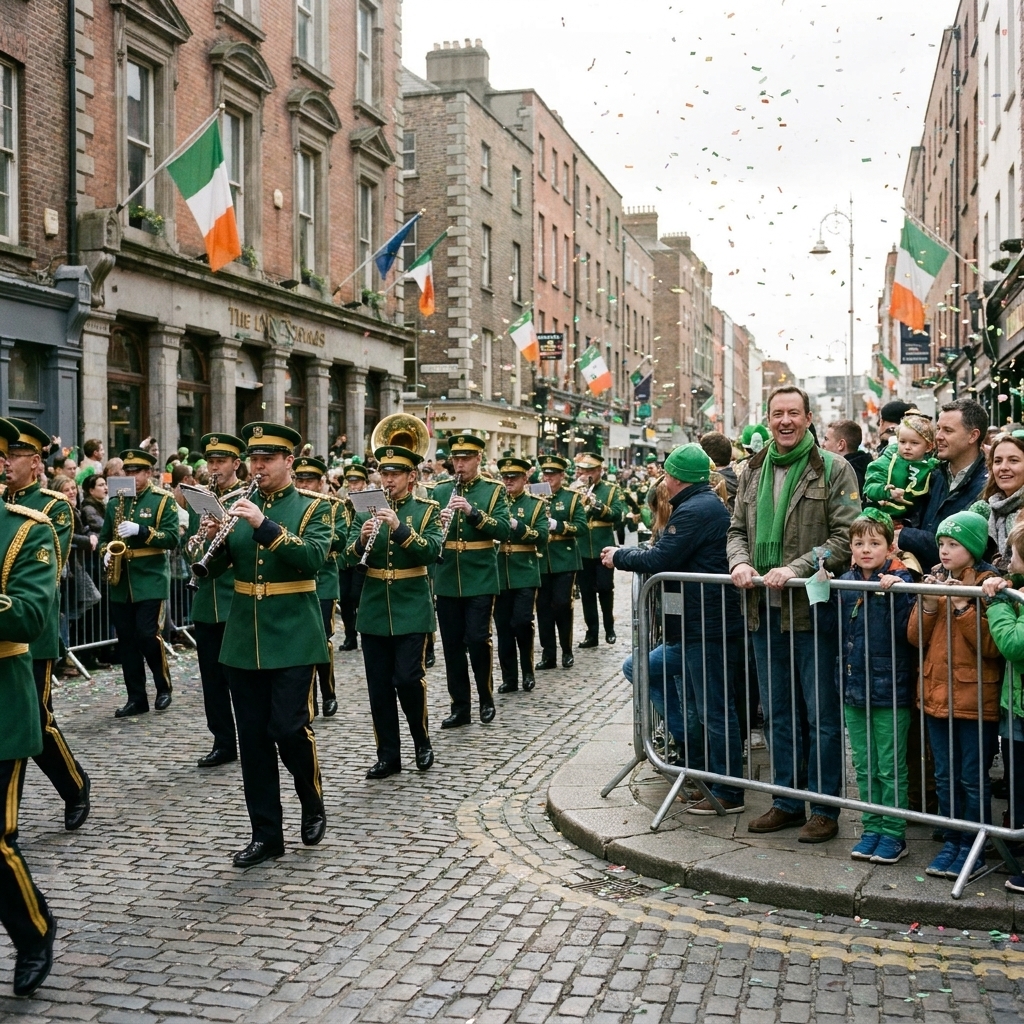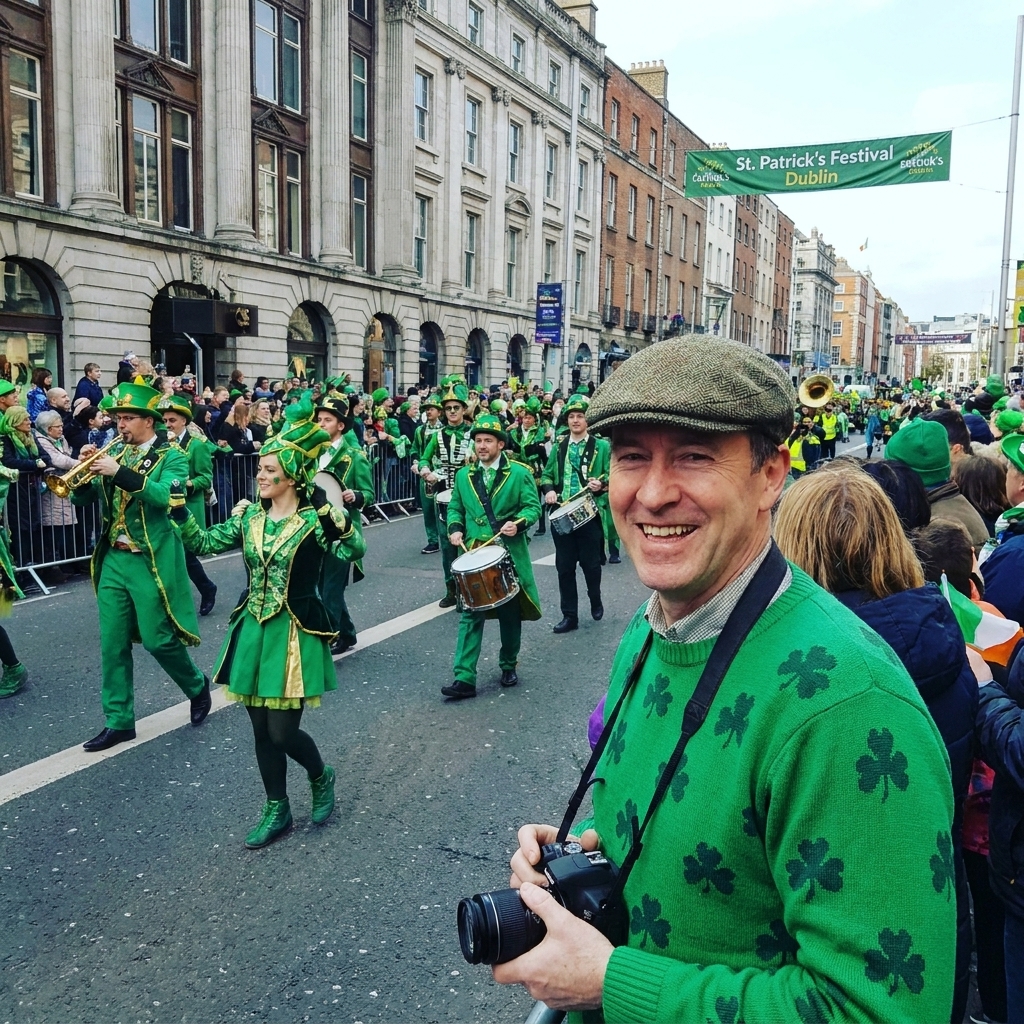

I still remember my first Dublin St. Patrick’s weekend in full swing: the city felt like it was vibrating. Every pub had a line, every bridge had a camera pointed over it, and I learned the hard way that “I’ll just wander over to the parade” is not a plan. It is a wish.
This is the guide I wish I had that first year: where to base yourself, how to actually see the parade without spending half the day staring at the back of someone’s novelty hat, and how to move around a city that temporarily turns into a giant pedestrian puzzle.

Know what you are attending
Dublin’s St. Patrick’s Festival is not just the parade. It is typically a multi-day citywide event, but the exact dates, route, and programming change year to year. Even if you only care about the parade itself, your accommodation, meals, and transport will all be affected.
If you want the broader context of the holiday, have a peek at my site guide: St. Patrick’s Day in Ireland. And if you want a more grounded take on who Patrick was beneath the green glitter, this one is worth bookmarking: where to find the real history of St. Patrick.
Booking accommodation
Book earlier than feels reasonable
Dublin’s room supply gets squeezed hard around St. Patrick’s weekend. Prices jump and central options vanish quickly. If you have fixed dates, lock in a cancellable booking as early as you can, then keep an eye out for a better deal later.
Pick your base by your tolerance for crowds
- City centre (Temple Bar, Dame Street, O’Connell Street area): easiest for walking to events, loudest at night, and you will pay for the privilege.
- Docklands and Grand Canal Dock area: still walkable into town but a little calmer, with decent space to breathe.
- South inner city (around St. Stephen’s Green, Ranelagh, Rathmines): a strong balance of access and sleep, with plenty still within a sensible walk.
- Further out on a transit line: often better value, but plan for packed buses and trams at peak times.
A first-timer’s rule: choose walkability over “nice views”
This weekend is when Dublin becomes a place you navigate on foot whether you intended to or not. Closed streets, diverted buses, and crowd-control barriers can turn a short ride into a long detour. If you can walk to your hotel in 20 to 30 minutes from the centre, you will feel like you’ve cracked the code.
What to check before you click “confirm”
- 24-hour check-in: arrivals run late when the city is busy.
- Cancellation terms: worth paying a little extra for flexibility.
- Noise: if you are near nightlife, pack earplugs. Seriously.
- Breakfast timing: queues for cafés get wild. Having breakfast sorted buys you time and sanity.
Parade viewing
The biggest mistake I see is people arriving 10 minutes before start time, expecting to drift up to the front. Dublin does not work like that on parade day.
The simple strategy
- Pick a target stretch of the route and commit to it.
- Arrive early if being close matters to you.
- Bring your own comfort kit so you are not forced to abandon your spot.
Good spots (without pretending there is one “secret”)
Routes can vary year to year, but the logic stays the same. You are looking for space, sightlines, and an exit plan.
- Wider streets over narrow pinch points: you will see more and feel less crushed.
- Near a landmark you can find again: it is easier to reunite with friends after bathroom breaks.
- Not directly outside the busiest pubs: you will get extra crowd surges.
When to arrive
If you want a front-row view near the centre, a sensible rule of thumb is 60 to 90 minutes early. Sometimes you can get away with less, sometimes you cannot, and it depends on the route and the weather. If you are happy a few rows back, you can arrive later, but understand you are trading comfort for spontaneity.
What to bring for a comfortable wait
- Layers and a rain shell: Dublin weather loves a plot twist. My deeper weather reality-check is here: the truth about Irish weather.
- A small snack and water: queues at convenience shops spike fast.
- A portable phone charger: your battery will melt from photos, maps, and messages.
- Something warm for hands: standing still is colder than you think.

Getting around
On St. Patrick’s weekend, “five minutes away” is sometimes a fairy tale. Parts of the city centre can become pedestrian-only, buses can be rerouted, and even when streets are technically open, foot traffic slows everything down. Check transport and festival notices close to the date and build your day around what is actually open.
Three movement rules
- Cross the river early, not mid-crush: bridges clog up before and after major events.
- Use big streets as your compass: smaller lanes can be blocked for crowd management.
- Build extra time into everything: meals, meet-ups, museum visits, the lot.
Have a meet-up landmark
If you are traveling with friends, pick a single landmark where everyone can regroup if phones die or the crowd splits you. Make it painfully specific: the entrance to a particular hotel, a statue you can point to, or one end of a bridge. “Outside somewhere near Trinity” is how people vanish for two hours.
Public transport expectations
Dublin’s public transport is useful, but on this weekend it is also busy and sometimes diverted. If you can plan one or two walking days, do it. Your feet might complain, but your schedule will thank you.
Driving into the city
If you can avoid it, avoid it. Parking is scarce at the best of times, and closures can turn simple routes into long loops. If you are road-tripping Ireland and only dipping into Dublin for the festival, consider parking further out and relying on walking and transit once you are in.
Eating and drinking
I love a lively pub, but there is a difference between atmosphere and being wedged in a doorway for 40 minutes, hungry, trying to get a bartender’s attention.
Smarter meal timing
- Eat earlier than usual: a solid lunch before peak parade crowds can rescue your evening.
- Book a table if you can: even a simple reservation can feel like a golden ticket.
- Keep one low-effort backup meal: a sandwich, a pastry, something you can eat while walking.
If you want a Guinness, order it like you mean it
Dublin bartenders are working at full speed this weekend. Know what you want, be ready when it is your turn, and do not wave cash like you are trying to land a plane. If you want the short version of pub etiquette, I wrote it here: how to order a Guinness like a local.
A warm fallback for later
When the night turns chilly and your legs are done, something hearty feels like a hug. If you want to taste a very Dublin kind of comfort food after the trip, try my recipe at home: Dublin coddle.
What to wear
Wear what makes you happy, but plan for standing still, sudden rain, and walking more than you expected.
- Water-resistant jacket with a hood: umbrellas become weapons in a crowd.
- Comfortable, broken-in shoes: cobbles, kerbs, and long walks will punish new trainers.
- One warm layer more than you think you need: evening temperatures drop fast.
- Small day bag: keep it close and easy to manage in crowds.
- ID: carry it if you plan to drink.

Safety and comfort
This weekend is great fun, but dense crowds change the basics.
- Keep valuables boring and close: phone in a zipped pocket, bag worn in front in the tightest areas, and do not leave anything dangling off a backpack.
- Have a separation plan: agree a meet-up landmark before you need it, especially with kids or a bigger group.
- Know your bathroom options: once you are behind barriers, it is not always simple to nip out and return. Sort this before you commit to a spot.
If you have limited mobility
Give yourself more space than you think you will need. Aim for a less congested stretch of the route, arrive earlier so you are not fighting for position, and plan rest breaks. For anyone who cannot comfortably stand for long, your best day is the one where you build in cafés, indoor stops, and short walking hops rather than one long, frozen wait.
A simple 3-day plan
Day 1: Arrive and scout
- Check in, then take a relaxed walk through the centre to get your bearings.
- Pick a clear meet-up landmark if you are with friends.
- Have an early dinner and an early night if parade day is your priority.
Day 2: Parade day
- Eat breakfast properly.
- Head to your chosen viewing area with time to spare.
- After the parade, walk away from the centre before choosing a pub or restaurant. Ten minutes of walking can cut your waiting time in half.
Day 3: Do something calm
This is my favorite trick for enjoying the festival weekend without burning out. Do one calm, distinctly Irish thing that has nothing to do with crowds. If you are itching to escape the city for a few hours, Glendalough is a classic day-trip direction when you want fresh air and ancient stones.
Common mistakes
- Underestimating walking time: closures and crowds change everything. Add buffers.
- Trying to do “all the things” in one day: pick your priorities and protect your energy.
- Not planning a bathroom strategy: if you have kids or anyone with mobility issues, this matters more than you think.
- Assuming you will have phone signal and battery all day: bring a charger and agree on a meet-up point.
- Wearing costume-level layers without a rain plan: green is great. Being dry is better.
Quick FAQ
Is Dublin St. Patrick’s weekend family-friendly?
Yes, especially earlier in the day and at festival events that are designed for families. The late-night pub scene is obviously a different beast, so plan your hours accordingly.
Do I need tickets to watch the parade?
Watching from public streets is generally a matter of arriving early and choosing your spot. Some seating areas and special viewing options can exist in some years, but you can have a brilliant day without paid seating if you plan well.
What if the weather is awful?
It can still be a great day. Dress for it, keep your expectations flexible, and remember that a warm pub and a bowl of something hearty is never far away in Dublin.
Before you go
St. Patrick’s in Dublin is big, loud, and genuinely special. But you will enjoy it more if you treat it like a hike rather than a casual stroll. Pick your route, pack for the conditions, and give yourself room to wander once the key moments are handled.
If you want more ideas for the holiday beyond Dublin, start here: Guide to St. Patrick’s Day.