

I have done St. Patrick’s Day in Ireland every which way: squeezed along Dublin’s barriers with a thousand strangers breathing the same cold March air, and tucked into a small-town main street where you can actually hear the band coming before you see them. When you add kids to the mix, the day gets better and trickier at the same time. Better, because Ireland leans into pageantry like nowhere else. Trickier, because crowds, noise, and late-night drinking culture can creep into places you did not expect.
This guide is for families who want the magic without the mayhem: safer viewing spots, calmer time windows, alcohol-free options, and the kinds of cultural moments kids remember long after the green face paint washes off.

First, a realistic picture of the day
March 17 is a public holiday in the Republic of Ireland, and a bank holiday in Northern Ireland, so you will feel it everywhere, even though local rules and timetables can differ a bit. In some places, St. Patrick’s Day is a single big parade day. In others, especially larger cities, there is festival programming that stretches across several days.
You will often see parades, family fun zones, street performers, live music, and sometimes museum or heritage programming, plus plenty of pubs doing what pubs do.
For kids, the sweet spot is usually: daytime events, earlier parade arrival, and a plan to exit before the post-parade crowd thickens.
- Best family hours: late morning through mid-afternoon.
- Hardest family hours: evening into night, particularly in city centres.
- Best overall strategy: choose one “big” event, then build a gentler day around it.
If you are still deciding whether to do Dublin at all, start with my guide to surviving Dublin’s St. Patrick’s Festival, then compare it with the more laid-back options in these small-town celebrations.
Picking the right parade
Dublin with kids
Dublin is spectacular, but it is also the most intense in terms of crowds and logistics. If your family thrives on big city energy and you plan ahead, it can be brilliant. If you have a stroller, a toddler who naps at noon, or a child who hates loud noise, you may find it a long day.
My personal rule in Dublin is simple: arrive earlier than feels reasonable, watch from a spot with a clear exit route, and leave before you are hungry and cranky.
Galway with kids
Galway can be a happy medium: festive, walkable, and still lively. The centre can get crowded, but it tends to feel more “community parade” than “mass event,” depending on the year and weather. If you are torn between the two cities, read Dublin vs. Galway for a straight comparison.
Small towns with kids
If you want the version of St. Patrick’s Day where locals wave at neighbours and a tractor might be part of the procession, pick a smaller town. You often get:
- More space at the curb, and easier bathroom breaks
- Shorter parade routes, so little legs manage better
- Friendlier pacing, and less late-night spillover
Use my small-town list as a starting point if you want the “Ireland you imagined” feeling.

Safer viewing spots
I am not a fan of parenting by white knuckles. The goal is to pick a viewing spot that lets kids see the action and lets you breathe.
What to look for
- Edge-of-route locations: The middle of the city centre is where crowds compress. The edges tend to be calmer.
- Near a landmark you can retreat into: a park, a wide side street, a museum entrance, or a large open square.
- Avoid bottlenecks: bridges, narrow streets, and tight corners where people naturally bunch up.
- Wind direction matters: If you can, avoid being downwind of heavy food stalls if you have kids sensitive to smells.
Timing tricks that work
- Arrive 45 to 90 minutes early for prime family spots. Yes, it feels excessive. It is not.
- Stand for the first half, then leave early. Kids get the “wow,” you avoid the crush.
- Pick a meeting point in case you get separated. Make it specific and easy: the corner outside a church gate, a distinctive bridge name, or a statue everyone can spot.
Stroller and buggy reality check
In dense crowds, a stroller can turn into a battering ram you did not ask for. If your child can manage a short walk, consider a carrier or toddler harness in the busiest parts. If you do bring a stroller, stay at the edge and keep an exit behind you.
Lost-child plan (two minutes, big payoff)
This is the bit you hope you never need, but you will relax more once it is done.
- Do a quick “what you are wearing” photo before you leave. Hat, jacket colour, shoes, the lot.
- Pop your phone number in a pocket (or write it on a small card). For older kids, practise saying it out loud.
- Agree on the rule if you get separated: stop where you are, and ask a steward or a Garda for help. (Point them out early so they are not scary later.)
- Consider ear defenders for younger kids or anyone sensitive to noise. Bands and drums are brilliant, until they are too much.
Family zones and alcohol-free options
Ireland’s St. Patrick’s Day is not “all pints, all the time,” but it is honest to say that pub culture becomes more visible as the day goes on. For families, the key is choosing environments that are designed for daytime crowds.
Clues a space will feel family-friendly
- Programming before late afternoon: children’s music, dance demos, storytelling, craft tables
- Clearly stewarded areas: barriers, marshals, and a noticeable security presence
- Food stalls plus seating: a place to sit down is a place to reset
- Near civic venues: libraries, museums, community centres, and cathedral grounds often stay calmer than nightlife streets
If your plan includes any city centre wandering, it helps to know how locals actually celebrate, and where tourists accidentally end up in the wrong vibe. I break that down in how locals celebrate St. Patrick’s Day in Ireland (and tourist traps to avoid).
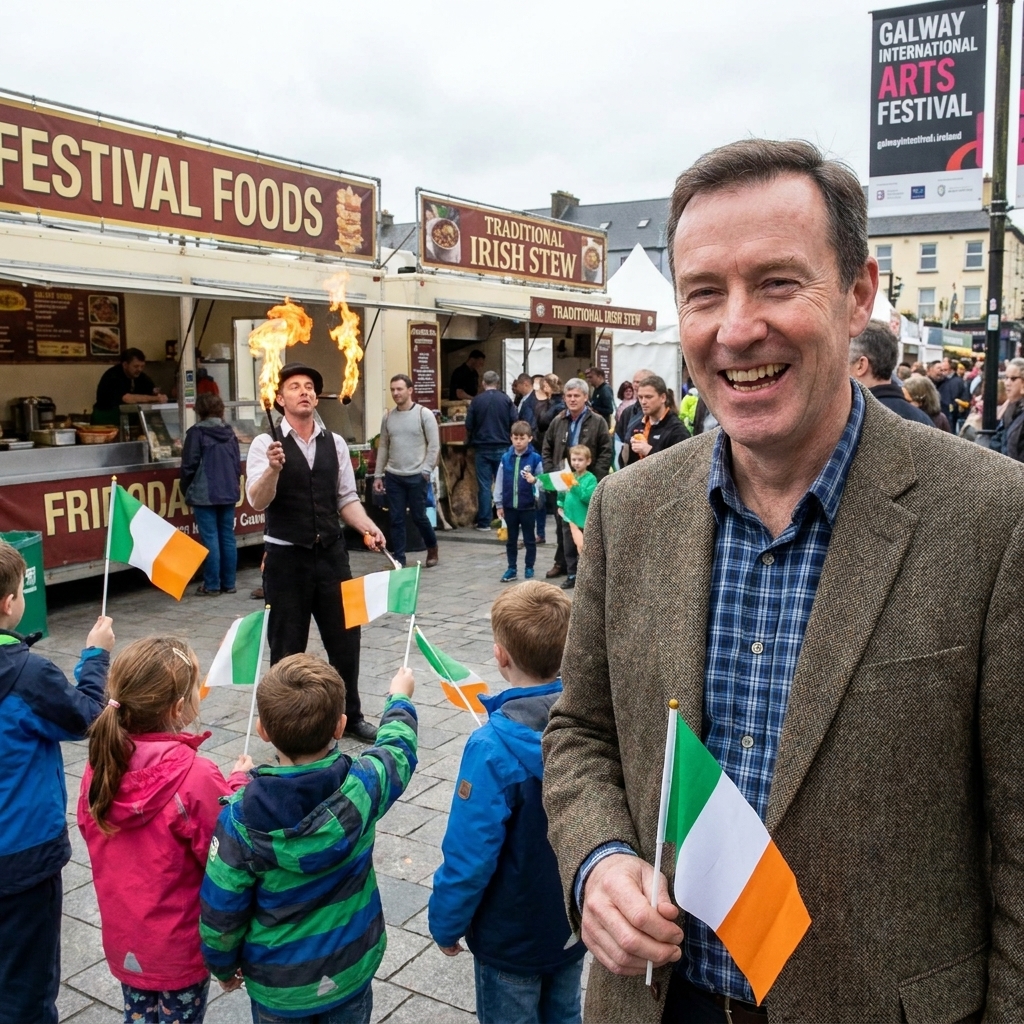
Funfairs and kid entertainment
Some towns add a funfair atmosphere around mid-March with rides, games, and pop-up attractions. These can be a lifesaver if you want to reward patient parade-watching with something that is purely for the kids.
My funfair sanity checklist
- Go early: lines are shorter and kids are less overstimulated.
- Set a token budget upfront: tell kids how many rides they get before you arrive.
- Choose one “big” ride: a memorable centrepiece, then pad the rest with smaller choices.
- Bring wipes and a spare layer: March weather plus sticky snacks is a predictable combination.
Quiet alternatives to rides
If your crew is not into spinning and flashing lights, look for daytime:
- Traditional music sessions where kids can come and go
- Irish dancing displays
- Storytelling events and crafts
- Short heritage walks
Cultural stops kids remember
One of my favourite ways to “do” St. Patrick’s Day with kids is to make the parade the middle of the sandwich, not the whole meal. Put a calmer cultural stop before and after.
Ideas that work almost anywhere
- Morning: a short nature walk, playground time, or a quick visit to a historic site
- Midday: parade viewing plus a warm drink and snack
- Afternoon: music and dance demos, a kid-friendly museum, or a simple coastal stroll
If you want to weave in “why are we celebrating?” without making it feel like homework, I keep the history grounded and readable in where to find the real history of St. Patrick in Ireland.
Food, warmth, bathrooms
With kids, the day is rarely ruined by weather alone. It is ruined by cold hands, hunger, and an urgent need for a toilet the moment you are surrounded by people.
Keep everyone warm
March can be mild or biting, and it can change its mind every fifteen minutes. Before you go, read what to wear in Ireland on St. Patrick’s Day. My quick summary for children: waterproof outer layer, warm mid layer, comfortable shoes, and an extra pair of socks in your bag.
Feed kids before you need to
- Eat a proper breakfast or early lunch.
- Pack two snacks per child, plus one “peace offering” snack for emergencies.
- Bring a refillable water bottle if you are walking a lot.
And if you want something easy and very Irish for the morning of, this soda bread is the sort of thing I wish I had in my campervan more often.
Bathroom planning that saves the day
- Use the toilet before you claim a parade spot.
- Note public facilities early even if nobody needs them yet.
- If your child is newly potty trained, stay closer to the edge of the route so you can duck out quickly.
Getting around on March 17
Traffic plans and road closures vary by town, but the pattern is similar across Ireland on parade day: some streets close, buses reroute, and taxis can get scarce at peak times.
- If you are driving: park farther out and walk in. You will leave faster and with less frustration.
- If you are using public transport: expect detours and build extra time.
- If you are cycling: bring a lock and keep to calmer streets when crowds swell.
If you are doing Dublin, my Dublin survival guide goes deeper on practical movement through the city.
A simple family itinerary
If you want a plug-and-play day that still feels spontaneous, here is a rhythm I use when I am travelling with friends’ kids.
Morning
- Warm breakfast
- Quick walk somewhere pretty, even ten minutes helps
- Face paint or a small shamrock pin, then layer up
Late morning to midday
- Arrive early to the parade route edge
- Watch the first half of the parade, then exit
- Hot chocolate, tea, or a bowl of soup somewhere cosy
Afternoon
- Kid-focused cultural event, music, or dancing
- Funfair rides if you are doing them
- Early dinner, then back to your accommodation before the evening surge
If you skip the parade
Some kids hate crowds, and some parents do too. You are not doing St. Patrick’s Day “wrong” if you skip the parade.
- Choose a smaller town and just pop in for an hour of atmosphere.
- Pick a scenic drive with a short stop for music and a treat.
- Do a heritage site in the morning and catch a bit of street performance later.
If you need ideas for slower travel, this guide to an unhurried day in an Irish town pairs surprisingly well with St. Patrick’s week.
Family etiquette
Irish crowds are generally kind to families, especially if you bring good humour and a bit of patience. A few small habits go a long way:
- Lift kids onto shoulders sparingly and only when you are not blocking dozens of people behind you.
- Thank stewards and Gardaí if they help you through a pinch point.
- Keep little hands close when crowds are moving, not just when they are standing.
- Leave pubs for later if your goal is kid-friendly calm. Even in the afternoon, some spots can be boisterous.
Quick FAQ for parents
Is St. Patrick’s Day in Ireland appropriate for young kids?
Yes, especially in the daytime and in smaller towns. In big city centres, it is still appropriate, but you need earlier timing, a safer viewing plan, and an exit strategy.
Are there alcohol-free areas at the festivals?
Many family-oriented daytime events are effectively alcohol-light or alcohol-free simply because they are programmed around kids, culture, and community spaces. The later it gets and the closer you are to nightlife streets, the more you should expect pub spillover.
What should we wear?
Think waterproof and layered, with comfortable shoes for standing and walking. I have a full breakdown in what to wear on St. Patrick’s Day.
Should we do Dublin or pick somewhere smaller?
If you want a huge spectacle and can manage crowds, Dublin delivers. If you want easier logistics and a gentler pace, go small town. This is exactly why I keep pointing families to small-town celebrations.
One last truth
The most “Irish” St. Patrick’s Day moments I have seen were not the biggest floats or the loudest bands. They were small things: a shopkeeper slipping a sticker to a shy child, a fiddler striking up a tune outside a community hall, a grandparent explaining the symbols on a county flag.
Plan for comfort and safety, keep your day early, and leave room for those little moments. They are the ones that stick.
If you want more ideas for building your week around March 17, start at my St. Patrick’s Day guide and wander from there.