

I first learned to bake soda bread the way I learned half my Ireland habits: watching someone’s auntie do it with a calm confidence that made my measuring cups feel like overkill. A bowl. A wooden spoon. A quick hand mix. Into a hot oven. Done.
This is the real, everyday loaf I’ve been handed in kitchens from Donegal to West Cork. No yeast, no long rise, no fancy kit. Just four ingredients and a bit of respect for the dough.
What makes it authentic?
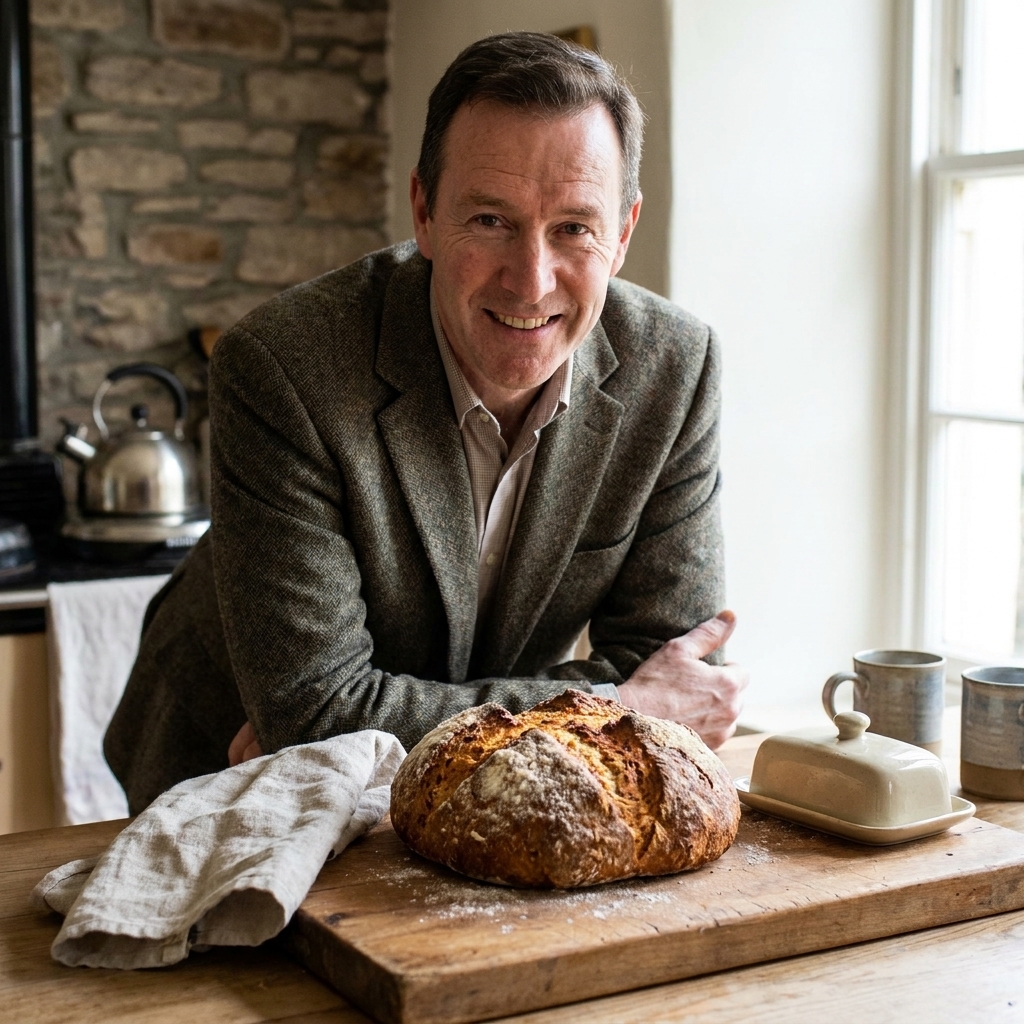
Traditional Irish soda bread is a quick bread. The lift comes from baking soda reacting with buttermilk, not from yeast. That’s why you can go from mixing bowl to warm slices in under an hour, cooling time included if you’re patient.
And yes, people do add bits and bobs at home, especially for sweet, fruit-studded “spotted dog” versions. But the classic country loaf is wonderfully plain: flour, salt, baking soda, buttermilk. That’s the one we’re baking here.
If you want the broader food context, I’ve also put together a guide to what locals actually eat day to day here: What Irish People Actually Eat: 8 Traditional Foods to Try.
Ingredients (the classic 4)
- 4 cups all-purpose flour (plain flour), about 500 g, plus extra for dusting
- 1 1/4 teaspoons baking soda
- 1 teaspoon salt
- 1 3/4 cups buttermilk (about 420 ml), plus a splash more if needed
Notes from Irish kitchens:
- Cups vary: Flour measures can swing wildly depending on how you scoop. If you can, use the gram weight for reliability. If you cannot, use a light hand when filling cups.
- Flour: Plain white flour is the standard for the simple loaf. If your flour is high-protein (some strong bread flours are), handle the dough even more gently and avoid adding extra flour unless you truly have to.
- Buttermilk: Real cultured buttermilk gives the right tang and the right reaction with soda. If your dough seems dry, add buttermilk a tablespoon at a time.
Equipment
- Large mixing bowl
- Wooden spoon (or your hand)
- Baking sheet or cast iron skillet
- Sharp knife
No stand mixer needed. In fact, soda bread gets tough if you overwork it. A skillet can give you a slightly stronger crust, while a baking sheet is a bit more forgiving. Either works.
Step-by-step
1) Preheat and prep
Heat your oven to 425°F (220°C). Lightly flour a baking sheet or line it with parchment.
2) Mix the dry ingredients
In a large bowl, whisk together the flour, baking soda, and salt. Take a second to break up any little lumps of soda. You do not want a bitter pocket hiding in the loaf.
3) Add buttermilk and bring it together fast
Make a well in the center and pour in the buttermilk, holding back 2 to 3 tablespoons. Stir with a wooden spoon until you’ve got a shaggy dough. Then switch to your hand and gently bring it together.
You’re aiming for: soft and slightly sticky, but not pourable. If it’s crumbly and dry, add the remaining buttermilk and then a small splash more if needed. If it’s wet and gluey, dust in a tablespoon of flour.
4) Shape the loaf without kneading
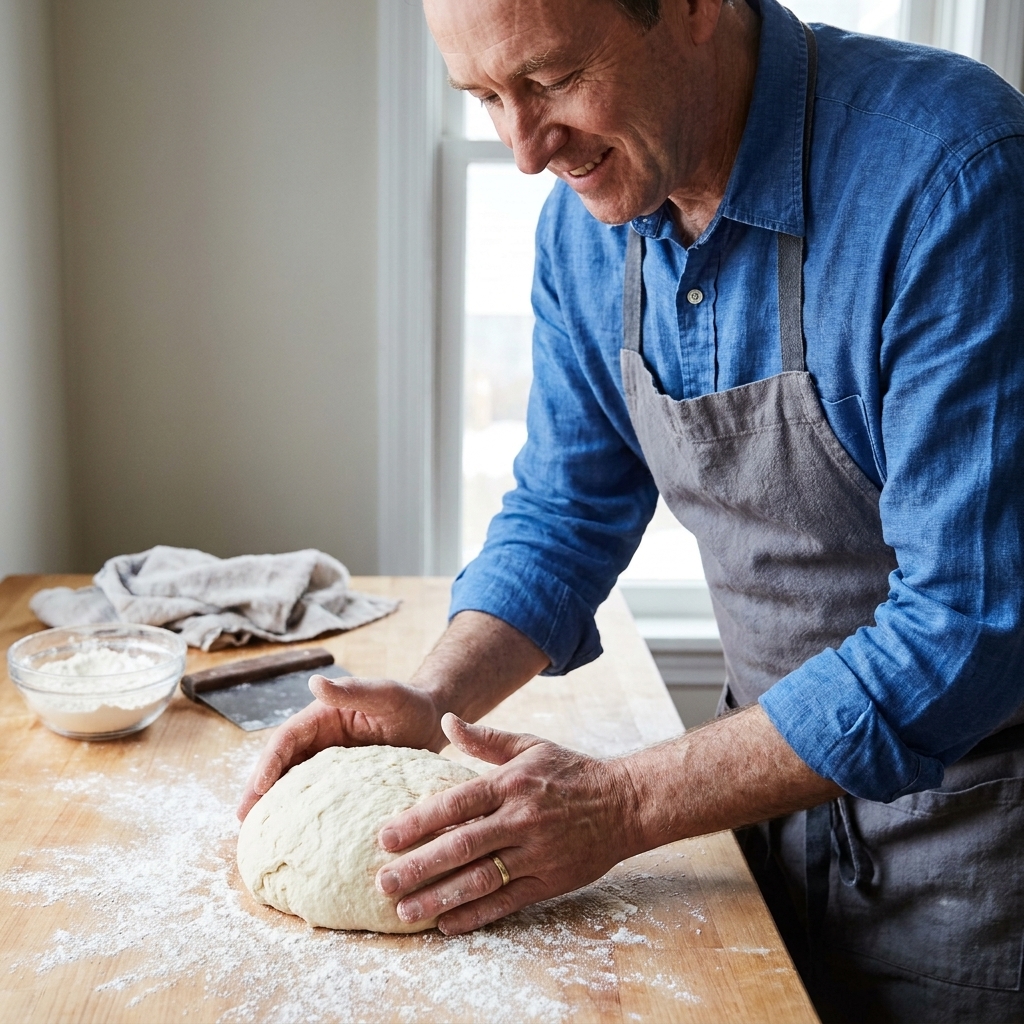
Tip the dough onto a floured surface and shape it into a round, about 1 1/2 to 2 inches thick and roughly 7 to 8 inches across. Handle it as little as you can. Think “gather and pat,” not “knead and punch.”
5) Cut the cross
Place the loaf on your tray or skillet. If you like, dust the top lightly with flour. With a sharp knife, cut a deep cross on top, about 1/2 inch deep.
You’ll hear all sorts of stories about “letting the fairies out.” The practical bit is that it helps the loaf expand and bake evenly.
6) Bake hot, then finish
Bake at 425°F (220°C) for 15 minutes, then reduce heat to 400°F (200°C) and bake for another 20 to 25 minutes.
How to tell it’s done:
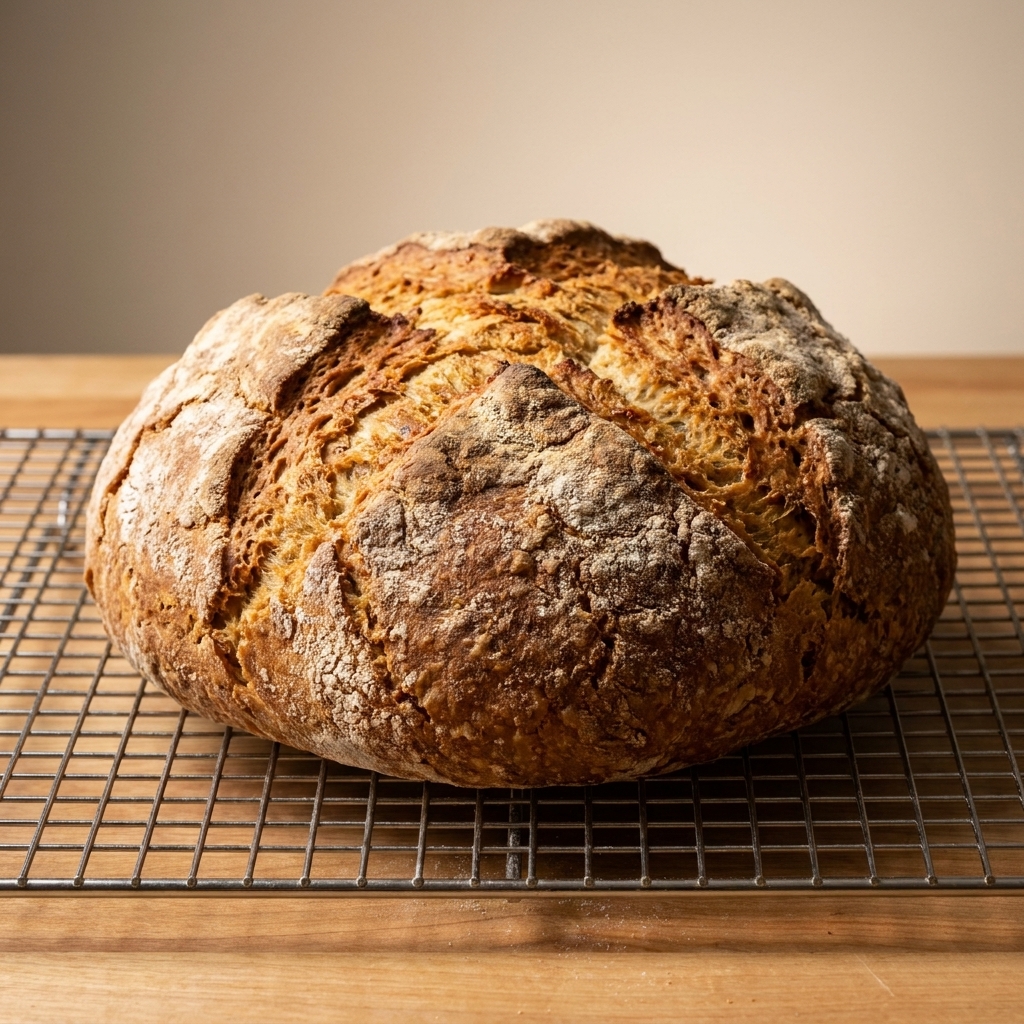
- The crust is deep golden brown.
- It sounds hollow when you tap the bottom.
- A skewer comes out clean from the center.
- If you like a sure thing, the center should read about 200 to 205°F (93 to 96°C) on a thermometer.
7) Cool (at least a little)
Move the loaf to a rack and let it cool for 20 minutes if you can stand it. Cutting too early can make the crumb gummy. Cutting a warm heel with butter is, of course, a very human mistake.
Texture tips
Do not overmix
Soda bread is tender when it’s handled gently. Overmixing develops gluten and turns the crumb chewy. Once it comes together, stop.
Measure flour with a light hand
If you scoop flour straight from the bag and pack it down, you can accidentally add too much. Fluff, spoon into the cup, then level, or better yet use the gram weight.
Trust a slightly sticky dough
A dry dough bakes dry. A slightly tacky dough bakes into a moist crumb with that proper, rustic bite.
Use fresh baking soda
If your soda is old, the loaf will bake up heavy. Baking soda should be punchy and fresh. If yours has been living in the back of the cupboard since last Christmas, replace it.
Common problems
My loaf is dense
- Check that your baking soda is fresh.
- Do not knead. Bring it together and quit.
- Make sure your oven is properly hot at the start.
It tastes bitter
- You likely used too much baking soda or it wasn’t mixed evenly.
- Whisk the dry ingredients thoroughly before adding buttermilk.
The crust is too hard
- Your oven may run hot, or the loaf baked too long.
- Cool it under a clean tea towel for a softer crust.
The middle is underbaked
- Your loaf may be too tall and tight. Shape it a bit wider and flatter.
- Cut the cross deep enough to help heat reach the center.
- If the crust is dark but the middle is lagging, drop the oven by 20°C (about 35°F) for the last 10 minutes.
Serving it the Irish way
My favorite is the simplest: a warm slice with a thick smear of butter and a mug of tea while the rain does its usual performance outside.
Other proper pairings:
- Soup, especially vegetable or seafood chowder
- Smoked salmon and butter
- Jam or honey if you like it sweet
If you’re planning a whole Irish spread, swing by the site’s recipe hub: Guide to Irish Recipes.
Storage and freezing
Storing
Soda bread is best the day it’s baked. After that, keep it wrapped at room temperature for up to 2 days. If you refrigerate it, it can go stale faster.
Freezing
Freeze it sliced, with parchment between slices, so you can grab what you need. Toast from frozen for a surprisingly lovely result.
FAQs
Can I make soda bread without buttermilk?
Buttermilk is the traditional partner to baking soda. If you cannot get it, you can sour milk by adding acid, but the flavor and texture won’t be quite the same as cultured buttermilk. If you do substitute, keep the dough soft and do not overmix.
Is the cross on top really necessary?
It’s not just for looks. It helps the loaf open up and bake through. I consider it part of the method, not decoration.
Can I add raisins or sugar?
You can, and plenty of households do. Just know that the four-ingredient loaf is the classic everyday bread. Once you start adding sweetness, you’re moving into a different (still delicious) tradition.
A final note
I’ve eaten soda bread in a hundred places, from cafe counters to kitchen tables where you’re offered a slice before you’ve even taken your coat off. The best loaves were never fussy. They were quick, warm, and meant to be shared.
If you bake this one, cut a thick heel, add butter while it’s still melting, and you’ll be unreasonably close to an Irish countryside kitchen, even if you’re a full ocean away.