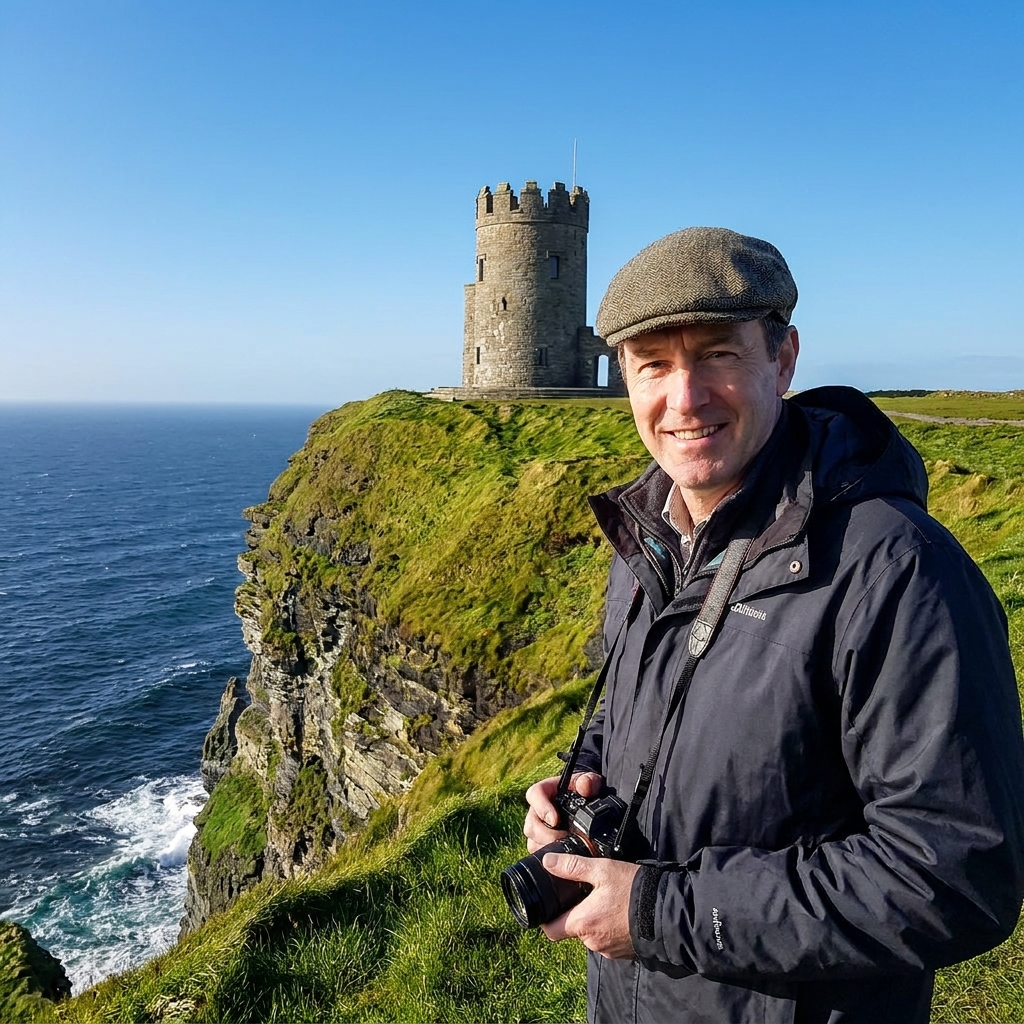

The first time I climbed up onto Derry’s walls, the city noise dropped away in a funny way, like someone had turned down the volume but left the story running. Up there you are walking a complete stone ring above rooftops, church spires, and the River Foyle, with centuries of arguments, courage, and everyday life packed into the view.
Derry-Londonderry is often described as the only completely walled city in Ireland, and it earns the headline. Built in the early 1600s, the walls still wrap the old city in a stout loop you can stroll from end to end without needing a ticket or a tour guide. This is my boots-on-the-stone guide to doing it well, with the history that matters, the cannons you should actually stop for, and the spots that make you pause and say, quietly, how did this survive?
Why the walls matter
Derry’s walls went up between 1613 and 1619, part of the Plantation era, when the city was reshaped as a fortified settlement. The circuit is about 1 mile (1.5 km) and sits high enough to feel like a ramparted promenade. It is not a ruin you peer at from behind a rope. It is a living walkway that locals use as casually as a park path.
Historically, the moment most people have heard about is the Siege of Derry (1688 to 1689), when the city held out for over 100 days. The story is tangled and politically charged, and you will feel that weight in plaques, murals, and conversations. My advice is simple: come curious, listen more than you declare, and let the stones do what they do best, which is to remind you that history was once a daily emergency.
If you like building a bigger context as you travel, you might enjoy my broader run-through of Irish history and oddities in Guide: Ireland Facts, and for a good mindset on slowing down in places with layers, I also love a gentle day plan like this one: Plan an Unhurried Day in an Irish Town.
Before you start
- Time needed: 45 minutes for a brisk loop, 90 minutes to do it right with stops, 2 hours if you add a museum, a cafe, or a slow wander into the Bogside afterwards.
- Difficulty: Easy walking, with steps and uneven surfaces in places. Wear shoes with grip if it is wet.
- When to go: Early morning for quiet photos and soft light, late afternoon for warmer tones over the Foyle.
- Weather reality: The walls are exposed. Wind off the river can feel sharp even on a mild day. If you want a truthful read on what “mild” means here, I wrote it out in The Truth About Irish Weather.
Getting up on the walls
The best thing about Derry’s walls is that you can join them like a local, by simply stepping up from street level. You do not need a single official “start point.”
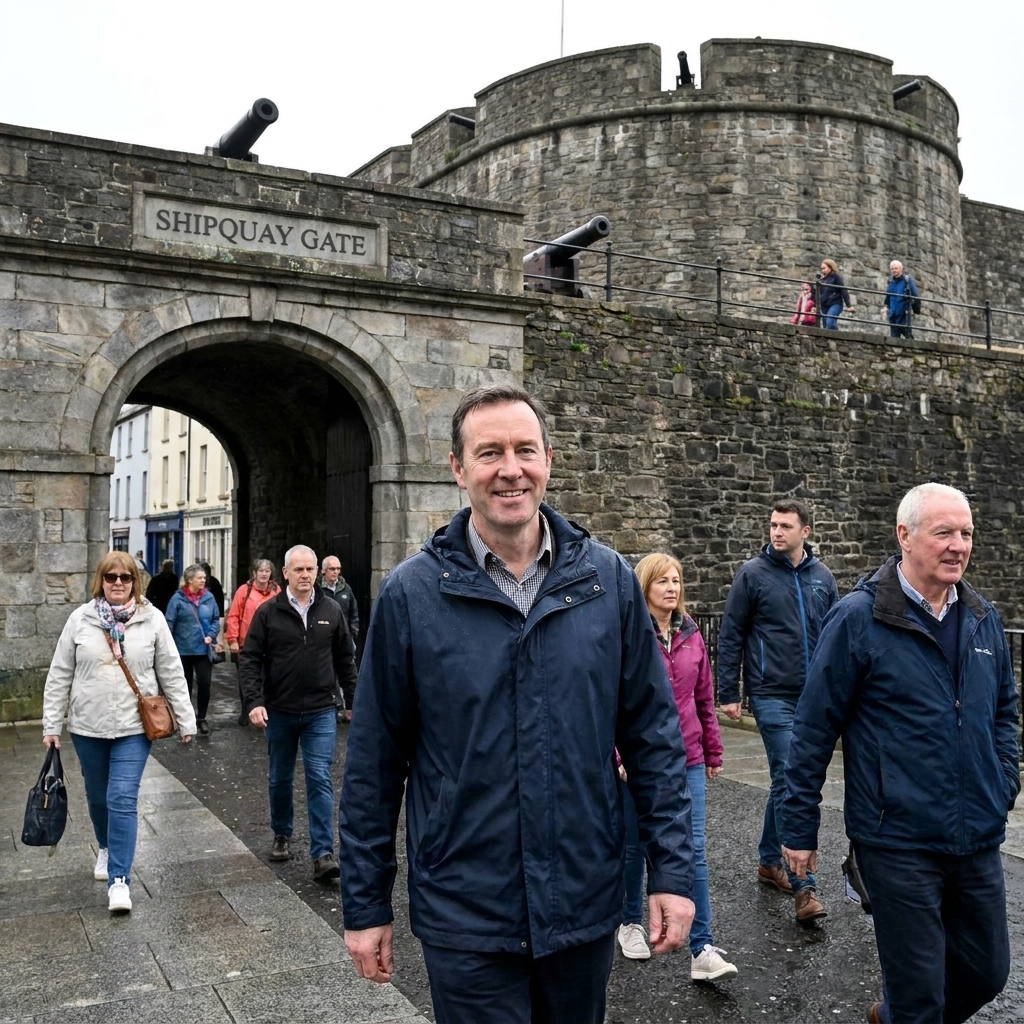
- Shipquay Gate: A natural front door, and easy to orient yourself from if you are arriving into the old city.
- Bishop’s Gate: Another straightforward access point, handy if you are coming from the east side of the city centre.
- Ferryquay Gate area: Useful if you are approaching from that side of the old city and want to join the circuit without backtracking.
Expect steps in places and some uneven stone underfoot. If you need step-free access, parts of the experience may be challenging. My practical workaround is to treat the walls like a series of viewpoints rather than a full continuous loop, and pick the most comfortable entry points for you.
Which way to walk
I usually go clockwise from Shipquay Gate. It is not sacred, but it suits the way the story opens out for me, with the river views arriving early. If you are chasing late-day light, try the opposite direction so the sun falls more kindly on the side you want to photograph. Either way, the circuit still reads like a sentence with a beginning and an end.
The route I recommend
You can start anywhere, but if you want a route that feels like a story with a beginning, middle, and a proper ending meal, do this.
1) Start at Shipquay Gate
Shipquay Gate is a natural “front door” to the walled city, close to the centre and easy to orient yourself from. From the wall-top nearby, you will get your first proper sweep of the city and a sense of the walls as an unbroken ring.
2) Follow the River Foyle side
As you follow the ramparts, keep glancing toward the River Foyle. This is where the geography clicks. Derry’s position was strategic for controlling approaches along the river and the movement in and out of the settlement. Up on the wall, you can see that logic in a single look.

3) Linger at the bastions
The walls are shaped with projecting platforms, called bastions, designed to give defenders overlapping lines of sight. For you, they are natural viewpoint balconies. Do not rush them. Stand at the outer edge, breathe, and watch the city move below.
4) Finish by Bishop’s Gate
I like ending near Bishop’s Gate because it feels ceremonial, like you have completed the circuit properly. From here you can drop back into the old streets for a warm plate of something, or simply keep wandering and let the day loosen.
Cannons and what they mean
You will spot cannons along the walls, some posed like they are still keeping an eye on things. Even if you are not a military history buff, they are worth pausing for because they anchor the place in physical reality. Many are historic, and some are positioned to help you see how artillery lines and sightlines worked. Either way, they do a useful job: they make the walls feel less like scenery and more like a serious piece of engineering.
A few tips for enjoying the cannon stops without turning your walk into a museum crawl:
- Look at placement: Cannons are often set where the view opens up. That is your clue to the defensive logic.
- Check the parapet height: The thickness and height of the stonework, especially around gun platforms, gives you a sense of how seriously defense was taken.
- Use them as pause points: The walls are best experienced in chapters. Cannon positions make good chapter breaks.

Best viewpoints
If you only have time to stop at a handful of places, these are the moments I would pick. They are not just pretty. They tell you something.
- River Foyle outlooks: Best for big-sky photos and understanding why this site mattered.
- Over the Bogside: The view toward the Bogside opens into modern history and lived memory. Take it in respectfully. It is not just a “view.”
- St Columb’s Cathedral area: A classic old-city feel with stone, spires, and tight streets. From the walls, the cathedral scene looks like a page from a different century.
- Any bastion in brisk weather: Windy days sharpen the experience. You feel the exposure that defenders would have endured for hours at a time.

Details people miss
I have walked these walls in sunshine, sideways rain, and that grey Northern light that makes everything look like an old film. The big sights are obvious. The smaller pleasures take a slower pace.
- Changes in stonework: Watch for subtle shifts in masonry. Repairs and reinforcements leave fingerprints.
- Street sounds drifting up: Faint bus brakes, a snatch of laughter, church bells. It is a reminder the walls are not frozen in time. The city is living inside them.
- Gates as thresholds: Every gate has the feel of crossing between two tempos. Outside is modern bustle. Inside is a tighter, older rhythm.
Safety and etiquette
The walls are broad, but they are still elevated stonework in a place where rain and wind turn up without much warning. Keep back from edges in gusty weather, take extra care on steps, and give yourself space around narrow pinch points.
And when you are looking out toward areas with deep living memory, like the Bogside, treat the view like you would a conversation. Quiet attention goes a long way in Derry.
Pair it with something nearby
If you are already in a wandering mood, Derry is a brilliant launchpad for the north-west. Depending on your route, these may fit nicely around your day:
- Compare iconic coastlines: If you are weighing big cliff stops elsewhere on the island, I wrote a straight-shooting comparison here: Cliffs of Moher vs Slieve League.
- Decode place names as you go: This helps you read what you are seeing on road signs: Reading Irish Road Signs and Gaelic Place Names.
- End on something warm: After a wind-whipped loop on the walls, I always crave comfort food. If you want a handy list of classics, start here: What Irish People Actually Eat.
FAQ
Is the wall walk free?
Yes. Walking the walls is generally free and open, which is part of what makes Derry so special. Individual attractions you visit off the walls may charge admission.
How long is the walk?
Plan about 1 mile (1.5 km) for the full circuit, but your real time depends on how often you stop to look out, read plaques, and take photos.
Is it suitable for kids?
For most families, yes. Just keep an eye on smaller children near drops and steps, especially in wet or windy weather.
Is it wheelchair accessible?
Some sections involve steps and uneven stone, so the full continuous circuit may not be accessible for every visitor. If mobility is a concern, I would approach it as a choose-your-own walk: pick the most comfortable access point, enjoy the views, and do shorter out-and-back stretches.
What is the best time of day for photos?
Early morning is calm and clean, with fewer people on the path. Late afternoon can be gorgeous too, especially when the light slants across the stone.
Final note
I have a soft spot for places you can understand with your feet. Derry’s walls are exactly that. You do not just learn the city’s shape. You feel it. One slow lap, a few thoughtful pauses by the cannons, and the skyline starts to read like a timeline.
If you are building a wider itinerary of places worth slowing down for, my hub page for traveler favorites is here: Guide: Places to Visit in Ireland. For more about me and how I travel, you can find my story on Declan MacGowan.