

There’s a version of St. Patrick’s Day in Ireland that feels like a theme park. The same songs on loop, plastic hats, a bouncer at the door, and a pub so packed you can’t tell if the music is live or coming from a speaker in the rafters.
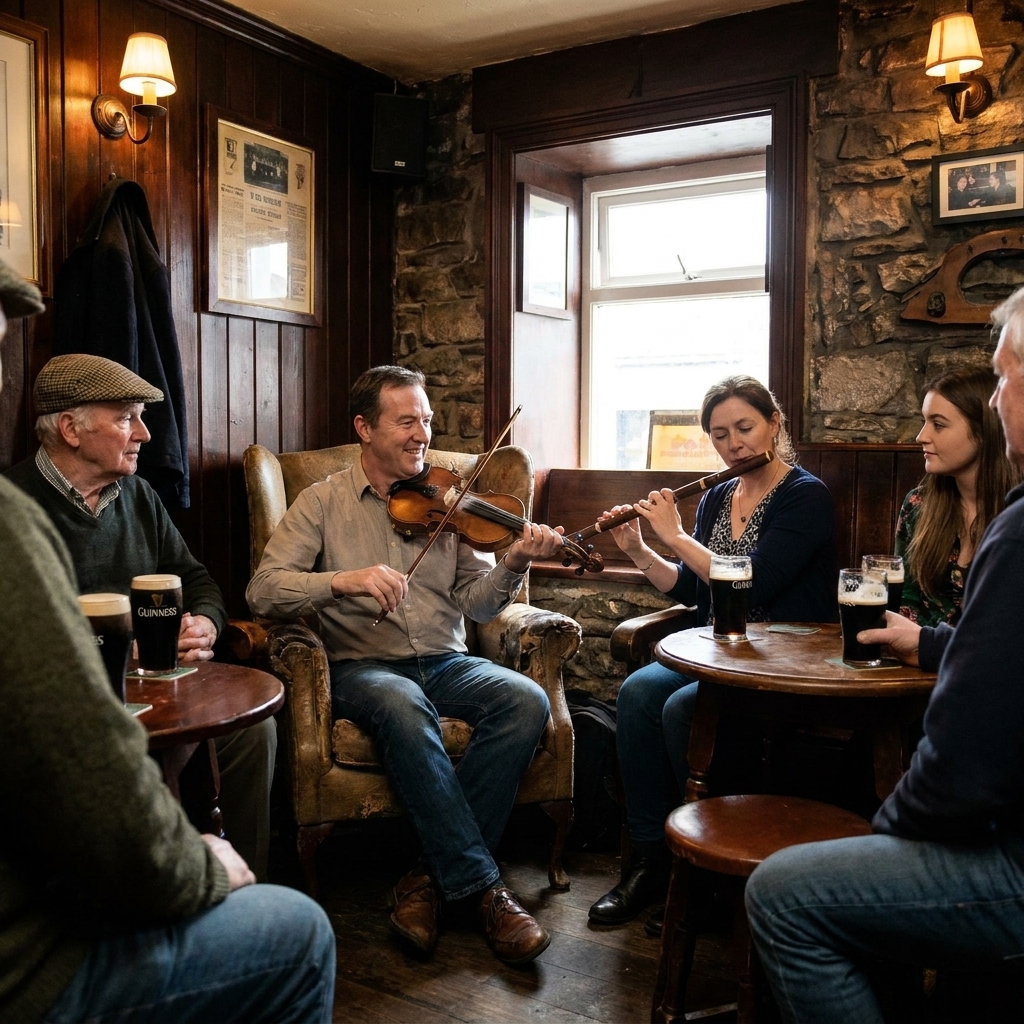
And then there’s the other version. A corner table held by fiddles and flutes. A pint sweating quietly on a windowsill. A few locals half-watching, half-listening, because this is not a “show” so much as a thing that happens when the right people are in the right room.
If you want that second version on the biggest weekend of the year, you can get it. You just need a different approach than “Google best pubs” and hope for the best.
First, know what a session is
On St. Patrick’s Day weekend, plenty of pubs advertise “live trad” and deliver a stage, microphones, a set list, and a band facing the crowd. That can still be great craic, but it isn’t always a session.
A proper session is usually informal and musician-led. The music is for the room, not performed at the room. You’ll often see players in a circle or clustered at a table, with minimal amplification or none at all. Tunes often come in sets, rather than as tidy, single songs with a big stop and start between each one.
Quick tells you’ve found the real thing
- Musicians are seated together at a table or in a corner, not lined up on a stage.
- Little to no amplification. Maybe one mic, maybe none.
- Tune sets (jigs, reels, hornpipes) are common, even if there are the odd pauses, chats, or applause.
- No one is “hosting” the band like it’s a scheduled act.
- People are chatting through it, but not shouting over it. There’s a difference.
Think of it like walking in on a kitchen conversation that happens to be made of music. You’re welcome, but you’re a guest in the rhythm of the room.
How to find sessions on a busy weekend
St. Patrick’s Day weekend is tricky because the tourist-facing pubs book entertainment months out, while true sessions can be more fluid. And in some towns on March 17, it really can be booked bands everywhere, with fewer casual corners to slip into. Here’s what has worked for me, year after year, from Dublin to Donegal.
1) Start with towns off the brochure
If you’re trying to find an intimate session in the most famous pubs in Temple Bar at 9 pm on March 17, you’re essentially trying to buy peace and quiet on O’Connell Street at rush hour.
Instead, build your day around smaller towns where locals still go out on St. Patrick’s Day because it’s their day, not a package itinerary.
If you want a short list of places where the celebrations feel more local and the pubs are still pubs, I put together a set of ideas here: 7 best small-town St. Patrick’s Day celebrations to escape Dublin crowds.
2) Aim for shoulder hours
The best sessions on the holiday weekend often happen when the room has breathing space.
- Late afternoon (roughly 3 to 6 pm): musicians can actually hear each other, and you can actually hear them.
- Early evening (6 to 8 pm): still possible in smaller towns, especially away from parade routes.
- Late night (after 10 pm): can be brilliant, but only if you’re in a pub that can still function when it’s busy.
My sweet spot is late afternoon, when the parade crowd has drifted, the fire is going, and the musicians are settling in for the long haul.
3) Walk one street off the parade route
This is the simplest trick and the one most visitors skip. The pubs directly on the main drag are under pressure to serve fast and entertain big crowds. One street over, you find places where the bar staff still recognize faces and the music is for the room.
In practice: once you reach the loudest, most packed pub, turn around and walk three minutes in the opposite direction. Look for smaller front windows, less signage, and a door that isn’t being guarded like a nightclub.
4) Listen before you commit
I do this all the time. Open the door, pause for a few seconds, and listen.
- If you hear a steady pulse of tunes with minimal talking over the top, that’s promising.
- If you hear one singer and a backing track, or the same chorus being shouted by 200 people, you’ve found a party pub, not a session pub.
- If you can’t hear anything except the roar of a crowd, the music will not be subtle once you’re inside.
5) Ask the right question
In Ireland, the phrasing matters. If you walk up to a bartender on St. Patrick’s Day and ask, “Where’s the best trad?” you’ll likely be pointed to the nearest place with a stage and a marketing budget.
Try this instead:
- “Any session on later?”
- “Is there a corner session anywhere nearby?”
- “Would there be music after the parade?”
And ask someone who looks like they actually live there. The older fella with the newspaper. The woman in muddy boots. The staff member pouring pints nonstop. Locals often know where the musicians drift to when they are not on a paid slot, but in bigger places you might need to ask twice and triangulate.
6) Follow the instruments, not the posters
On the holiday weekend, posters and chalkboards can be pure theatre. Instruments are harder to fake.
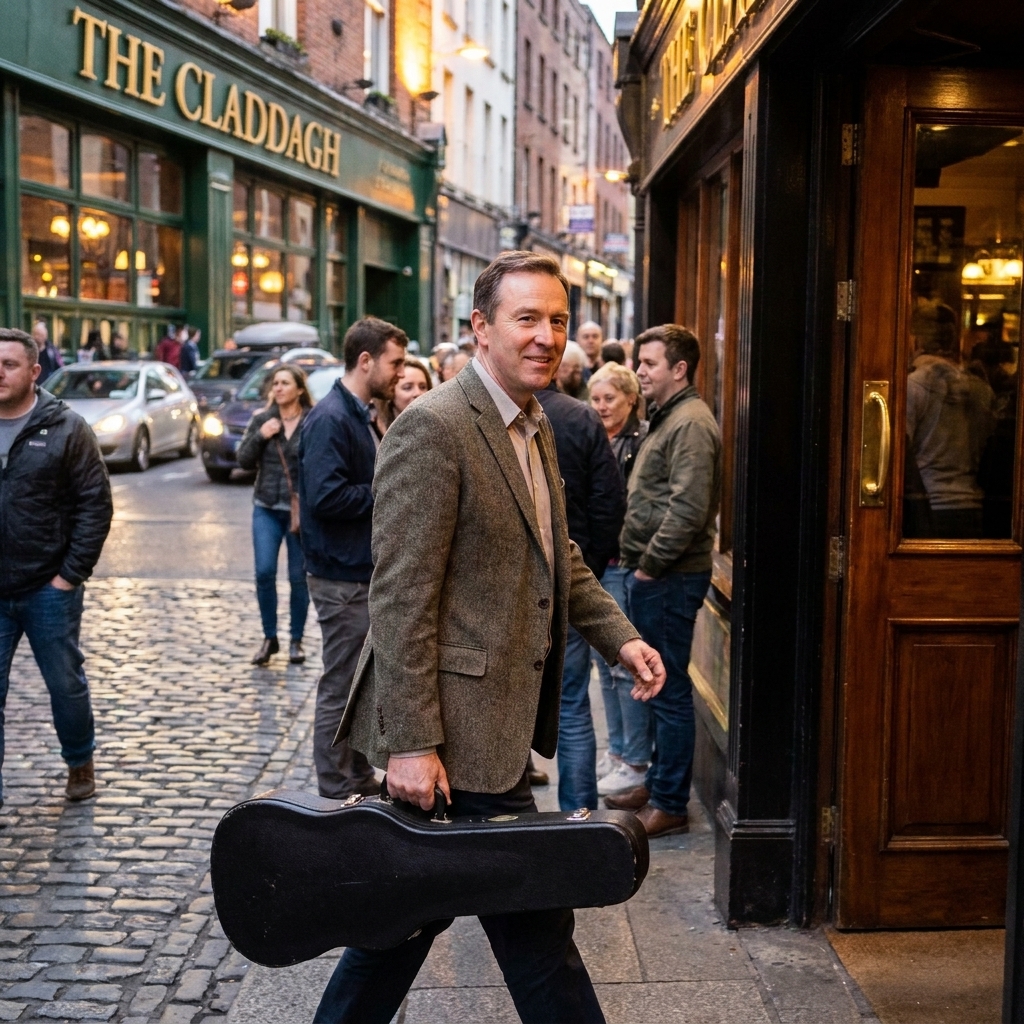
If you see people walking in with a fiddle case, a bodhrán, a concertina box, or a banjo slung over the shoulder, quietly note which door they disappear through. That is often your session.
Once you find one, don’t wreck it
This is the part nobody tells you, and it’s the difference between being welcomed back and being remembered for all the wrong reasons.
Choose your seat like a living room
- Do not take the musicians’ table. Even if there are empty chairs, that space is often being saved for players who haven’t arrived yet.
- Sit slightly away from the circle so the sound can travel.
- If you’re filming, don’t hover. A quick clip from your seat is grand. A phone inches from a fiddler’s bow is not.
Keep your order simple
On St. Patrick’s Day, the bar is doing battle. If you want to be kind to the staff and keep the pub moving, don’t make it complicated. A pint, a whiskey, a soft drink. Save the five-part cocktail for another night.
If Guinness is your choice, I wrote down the little local rhythms around ordering it here: how to order a Guinness like a local.
Know when to talk
Sessions are social. Conversation is part of the atmosphere. But there’s a line.
- Chat away between sets.
- During a quiet tune, lower your voice.
- If the room is really listening, follow the room.
Don’t request songs like it’s a wedding band
A session isn’t a jukebox. You can absolutely compliment the music and ask what a tune was called. But shouting “Play Galway Girl!” across a circle of musicians is a reliable way to get politely ignored.
If you play, ask before you join
I’ve met brilliant musicians who still wait until they’re invited. The easiest, most respectful entry is a quiet question during a pause: “Mind if I join for a set?” If the answer is yes, start gently. If it’s no, don’t take it personally. Sometimes the circle is already full, sometimes it’s a tight group, and sometimes the pub is simply too loud to add another instrument.
A quick word on bodhráns
The bodhrán is a great instrument in the right hands, and a session wrecker in the wrong ones. On a packed holiday weekend, a loud beginner bodhrán can drown out everything else, fast. If you’re learning, ask first, keep it light, and be ready to sit out if the vibe is already on a knife edge.
Where genuine sessions are most likely
I’m not going to pretend there’s a single magic county where every pub becomes an oasis of pure tradition on March 17. The truth is simpler: you’re looking for places with a strong local music culture and enough pubs that musicians can choose where they want to play.
Better odds: small hubs with music DNA
- West coast towns along the Wild Atlantic Way, where music is part of the normal weekend rhythm.
- University towns that have both energy and a deep bench of players.
- Market towns where families come in after parades and the night evolves naturally.
Harder mode: city center hotspots
Dublin city center on St. Patrick’s Day is an experience, but it’s rarely subtle. If your heart is set on Dublin, consider stepping away from the busiest tourist zone and letting the day breathe. I also have a blunt, locals-first take on avoiding the common traps here: how locals actually celebrate St. Patrick’s Day in Ireland (and tourist traps to avoid).
A simple session game plan
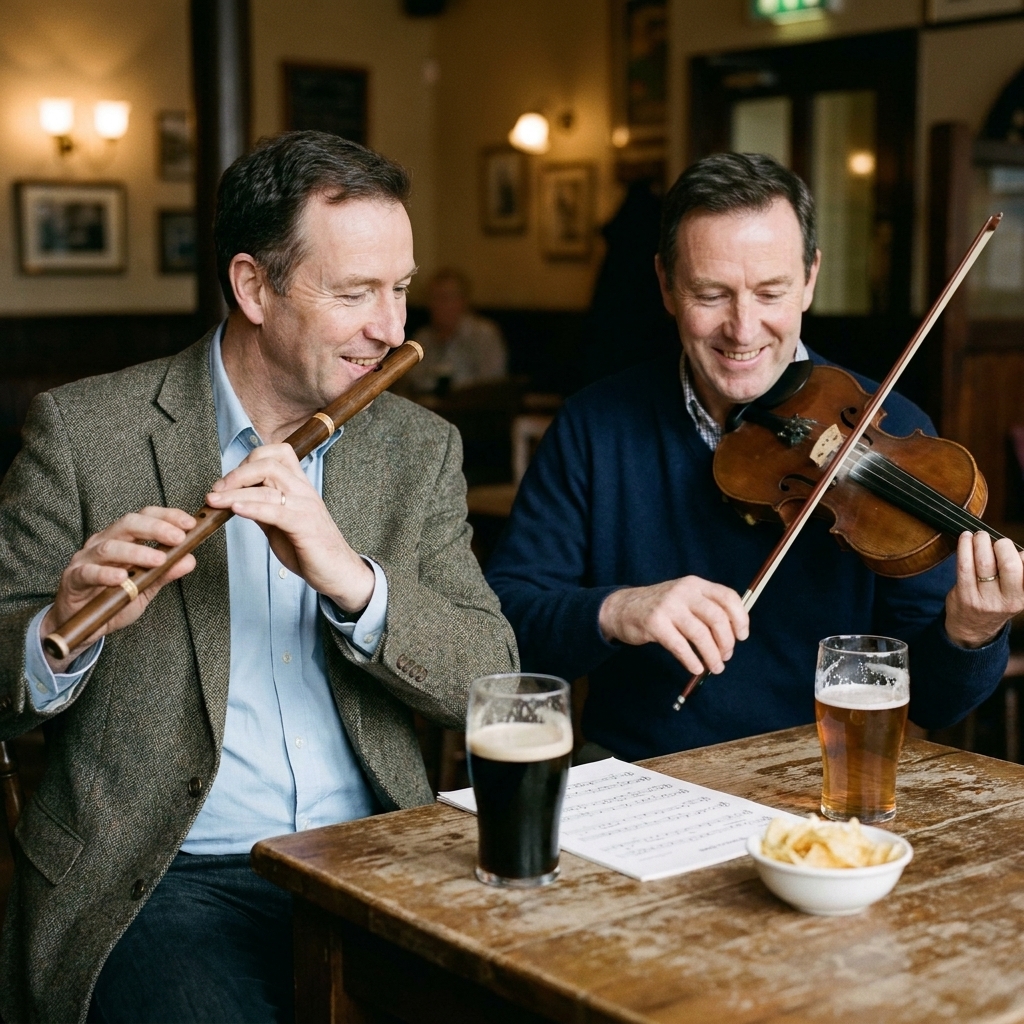
If you only remember one strategy, make it this: pick a town, arrive early, and let the music find you.
- Morning: parade and a walk, not a pub crawl. Give yourself space to enjoy the day.
- Early afternoon: choose one quieter pub off the main street for a first pint and a listen.
- Late afternoon: if you hear tunes starting, settle in. If not, ask staff, “Any session on later?” and try the next place.
- Evening: once you find a real session, stop hunting. Stay put. Order simply. Let it unfold.
The best St. Patrick’s Day nights I’ve had were never the nights I tried to engineer down to the minute. They were the nights I found a warm corner, the first reel kicked off, and time politely disappeared.
Quick FAQ
Do sessions happen on St. Patrick’s Day itself, or just the weekend?
Both. In many places the whole weekend becomes a long, wandering celebration. The day itself can be busy and chaotic, so you often get the most listenable sessions on the nights just before or just after March 17. And in some towns, March 17 leans heavily toward booked acts, so flexibility helps.
Should I tip the musicians?
If there’s a jar out, it’s fine to throw a few euro in. If there’s no jar, don’t push money on people mid-tune. Buying a round can be appreciated in some friendly rooms, but it’s never expected, and plenty of musicians are driving, pacing themselves, or not drinking at all.
Is it rude to record?
A quick, discreet clip from your seat is usually fine. What’s not fine is standing over players, filming faces up close without asking, or using flash. If the session is small and intimate, I’ll often ask first.
What instruments are common in a trad session?
Fiddle, flute, tin whistle, uilleann pipes, concertina, accordion, banjo, guitar, bouzouki, and bodhrán are all common. You might also hear sean-nós singing in the right place at the right moment.
Are there family-friendly sessions?
Sometimes, yes. Daytime and early-evening music in smaller towns can be more mixed-age and easier to enjoy with kids, while late-night sessions skew louder, later, and more adult. If you’re travelling as a family, your best move is to aim for that late-afternoon window.