

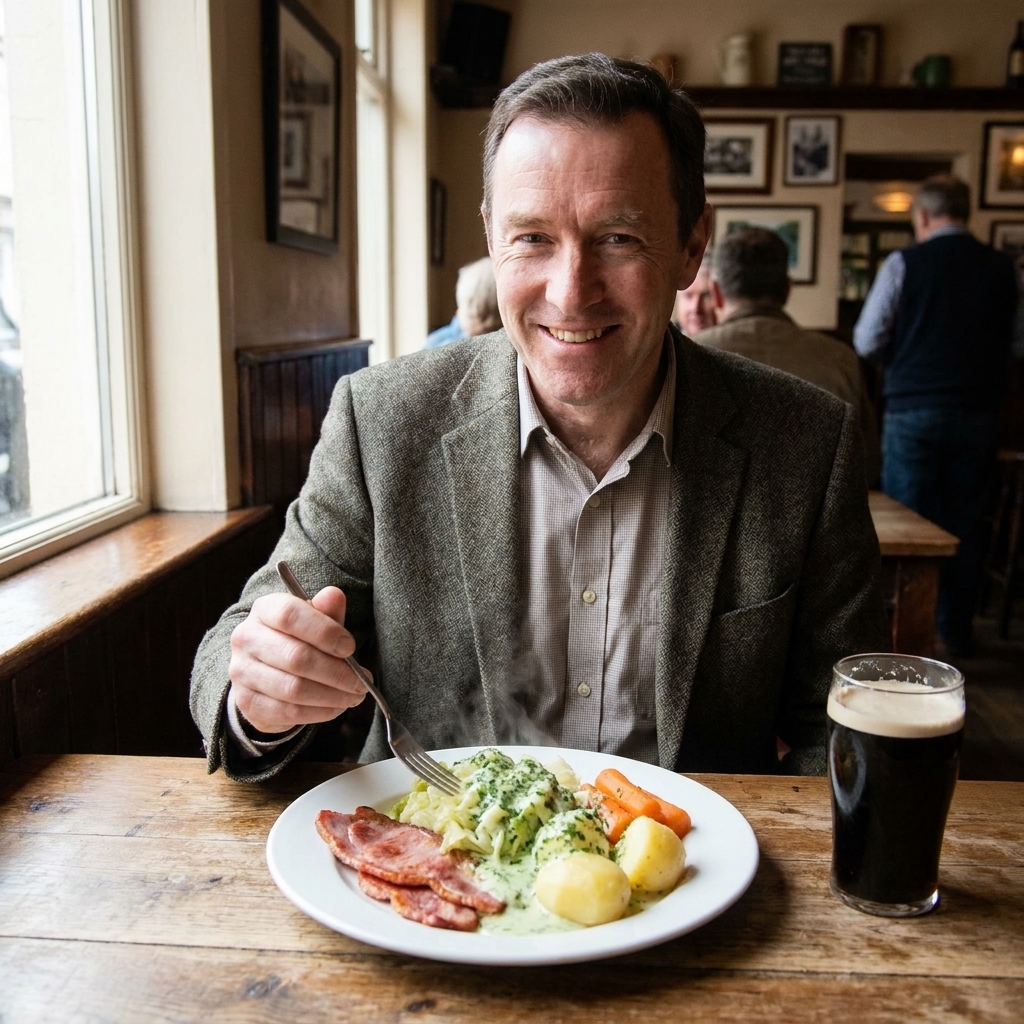
Every March 17th, I get the same question from travelers nursing a pre-parade coffee (or a pre-parade pint): “So is corned beef and cabbage actually an Irish thing?”
Here’s the honest answer, from years of wandering into small town pubs and chatting with cooks in the back: in Ireland, the traditional dinner is far more likely to be bacon and cabbage. Corned beef, meanwhile, is the beloved Irish-American cousin that showed up to the party with its own backstory.
Let’s sort the myths from the menu, and then I’ll tell you what I’d actually order at a traditional Irish restaurant on St. Patrick’s Day.
The Irish classic: bacon and cabbage
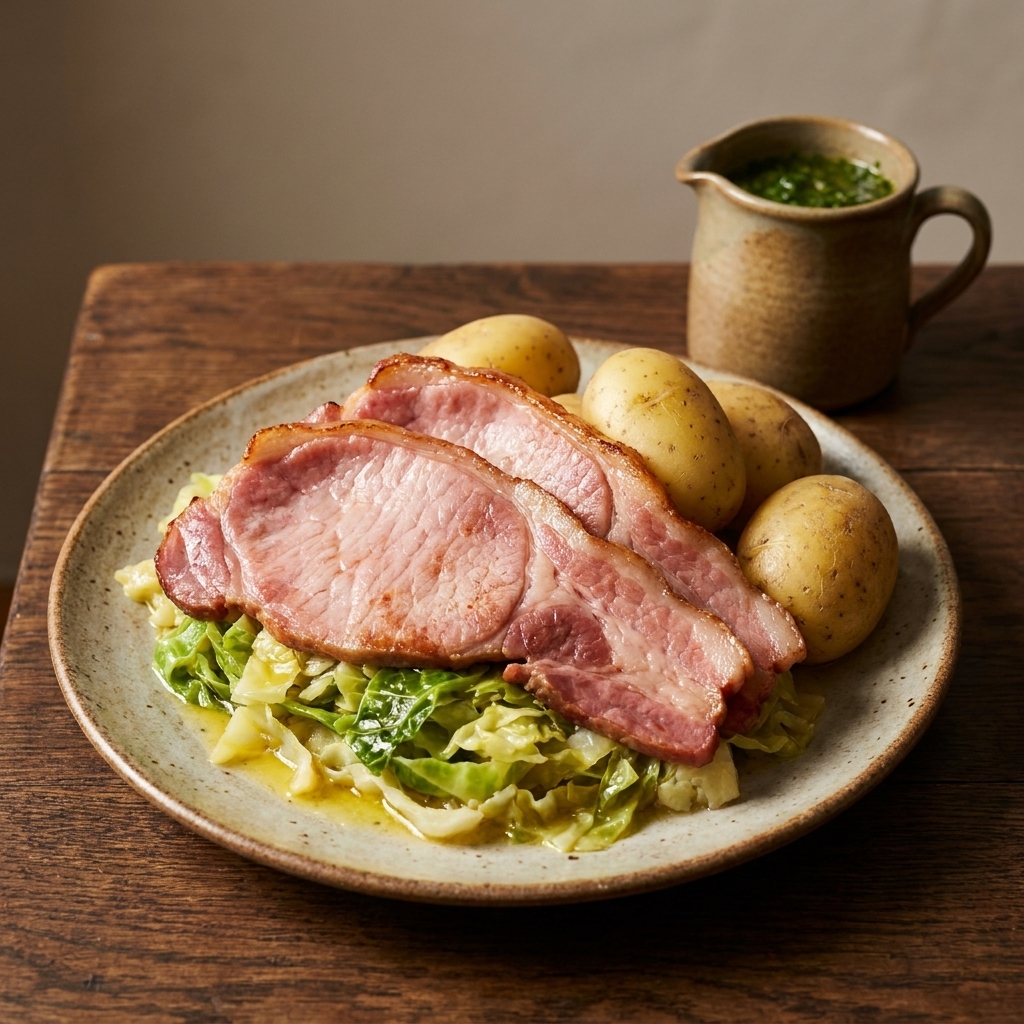
If you want the dish that feels like it’s been in Irish kitchens forever, you’re looking for bacon and cabbage. And when we say “bacon” in Ireland, we usually mean back bacon (meatier rashers from the loin), sometimes with a little streaky strip depending on the cut. It is not always the crispy, all-belly strips many Americans picture.
What it tastes like (and why it works)
The magic is the simplicity. The pork is salty and meaty, the cabbage turns sweet as it softens, and the whole plate usually arrives properly steaming, begging for a spoon of something comforting like parsley sauce or a dab of mustard. It’s plain food in the best way, built for damp evenings and big appetites.
- The meat: cured back bacon, rashers, or a bacon joint
- The veg: cabbage, often with carrots or turnip
- The sidekick: boiled potatoes, champ, or colcannon
If you’ve never tried the potato pairings, I’ve got you covered here: Colcannon vs. Champ.
Quick menu decoder: depending on the pub or carvery, you might see this listed as “bacon and cabbage,” “boiled bacon,” “bacon joint,” or even just “ham” with cabbage and spuds. If it looks like a thick, tender slice of cured pork rather than deli ham, you’re in the right neighborhood.
The Irish-American icon: why corned beef took over
Corned beef and cabbage is real tradition, just not the kind most people assume. It’s a tradition rooted in Irish-American immigrant life, especially in the United States.
So what is “corned” beef anyway?
“Corning” refers to curing meat with large grains (or “corns”) of salt. Corned beef is usually brisket cured in a salty brine, often with spices. In some places you’ll also see it made from round or silverside. Either way, it’s rich, sliceable, and built to feed a crowd.
How it replaced bacon for many immigrants
One widely cited reason is practical: in 19th century Ireland, pork was a common everyday meat for many families, while beef could be comparatively costly as a regular home dinner, even though Ireland also had a long history of beef curing and export. When Irish immigrants landed in American cities, they found different prices, different butchers, and different cuts. In many neighborhoods, corned beef (often brisket) was an affordable stand-in for the cured pork they missed, and it played nicely with the same familiar partners: cabbage and potatoes.
Add cabbage, keep the spuds, and you’ve got a hearty meal that feels Irish in spirit, even if it’s not the one your great aunt in Mayo was making on a Tuesday.
One small wrinkle worth knowing: when people say “corned beef” in an American St. Patrick’s Day sense, they typically mean the pink, spice-cured brisket. Older Irish references to corned beef can point to other salted and cured beef traditions, not always the parade-day version.
Quick comparison: bacon and cabbage vs. corned beef
| Feature | Bacon and cabbage (Ireland) | Corned beef and cabbage (Irish-American) |
|---|---|---|
| Main protein | Cured back bacon, rashers, or bacon joint | Brined beef (usually brisket) |
| Flavor | Porky, gently salty, often lighter | Beefy, salt-forward, spiced |
| Most common place to see it | Homes, carveries, traditional pubs | Irish-American homes and parades, US Irish pubs |
| Feels like | Sunday dinner comfort | Festival food for a crowd |
What to order on March 17th in Ireland
If you’re in Ireland for St. Patrick’s Day, you can absolutely eat whatever makes you happy. Nobody is going to confiscate your plate at the door. But if your goal is to eat like you’re actually here, these are the orders that tend to ring true in traditional spots.
1) Bacon and cabbage (if you see it, grab it)
It’s the most on-the-nose “Irish dinner” option. Bonus points if it comes with parsley sauce and properly floury potatoes that fall apart the second your fork looks at them.
2) Irish stew (the other gold-standard comfort dish)
On a cold March evening, stew makes perfect sense. Look for lamb or mutton based versions in more traditional kitchens. If you want the deeper story and what “real” stew tends to look like, start here: Traditional Irish Stew.
3) Dublin coddle (especially if you’re in Dublin)
Coddle is the kind of humble, local classic that tourists often miss, and it’s exactly why I like recommending it. It’s sausages, bacon, onions, and potatoes, slow cooked into something that tastes like a warm blanket. Here’s a proper intro: Dublin Coddle.
4) Seafood chowder (quietly one of the best meals you can have)
This is my personal move when the pubs are shoulder-to-shoulder and the kitchen is pumping out the biggest sellers. A good chowder is fast, filling, and very much an Irish coastal staple if you’re anywhere near the sea.
Ordering without sounding rehearsed
One of the easiest ways to keep things natural is to use the words locals use. A few phrases that work almost anywhere:
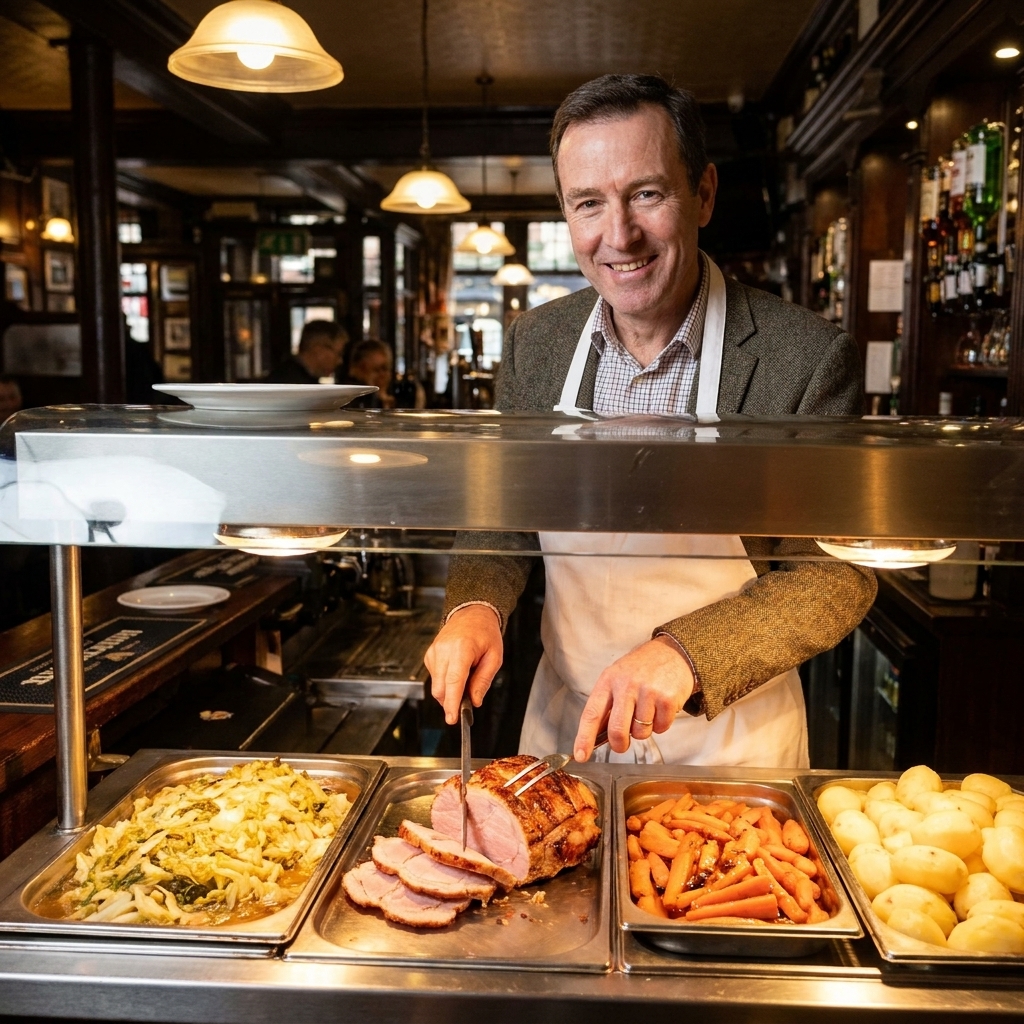
- “What’s the carvery today?” (If the place has a carvery, you’ll get the real lineup.)
- “Do you have bacon and cabbage on?” (Simple, direct.)
- “What’s good for a hearty dinner?” (Let the server steer you toward what’s actually fresh.)
And if you’re pairing dinner with a Guinness, it helps to know the rhythm of it. I wrote this after watching more than one visitor panic at the two-part pour: How to Order a Guinness Like a Local.
So which one is more Irish?
If we’re talking Ireland on the ground, bacon and cabbage wins the title. If we’re talking Irish-American history, corned beef and cabbage is absolutely authentic to the immigrant experience, especially in the United States.
My own take: you do not have to choose sides. Think of it as two branches of the same family tree. One stayed close to the home kitchen. The other adapted overseas, kept the spirit, and fed a community that needed a taste of home.
St. Patrick’s Day dinner FAQs
Do people in Ireland eat corned beef on St. Patrick’s Day?
Sometimes, especially in tourist-heavy areas where menus lean into what visitors expect. But it’s not the default traditional choice in Irish homes. Bacon and cabbage, stew, and other comfort dishes are more typical.
What’s the difference between Irish bacon and American bacon?
Irish “bacon” is usually back bacon, which is meatier and more like a cured pork loin. Some cuts include a little streaky strip. American bacon is typically streaky bacon from pork belly, with more fat and crispness.
Is corned beef Irish at all?
It’s connected to Ireland historically through salting, curing, and trade, but the St. Patrick’s Day corned beef tradition most people mean is largely Irish-American, shaped by availability and affordability in immigrant neighborhoods.
If I’m eating in an Irish restaurant on March 17th, what’s the safest traditional order?
Bacon and cabbage if it’s on the menu. If not, Irish stew is usually the sure bet, and you will almost never regret a good seafood chowder.
Where can I read more about St. Patrick beyond the food?
If you want the history without the fluff, I pulled together a traveler-friendly starting point here: Where to Find the Real History of St. Patrick in Ireland. And for parade planning, towns, and the general March 17th scene, hop over to: Guide to St. Patrick’s Day.