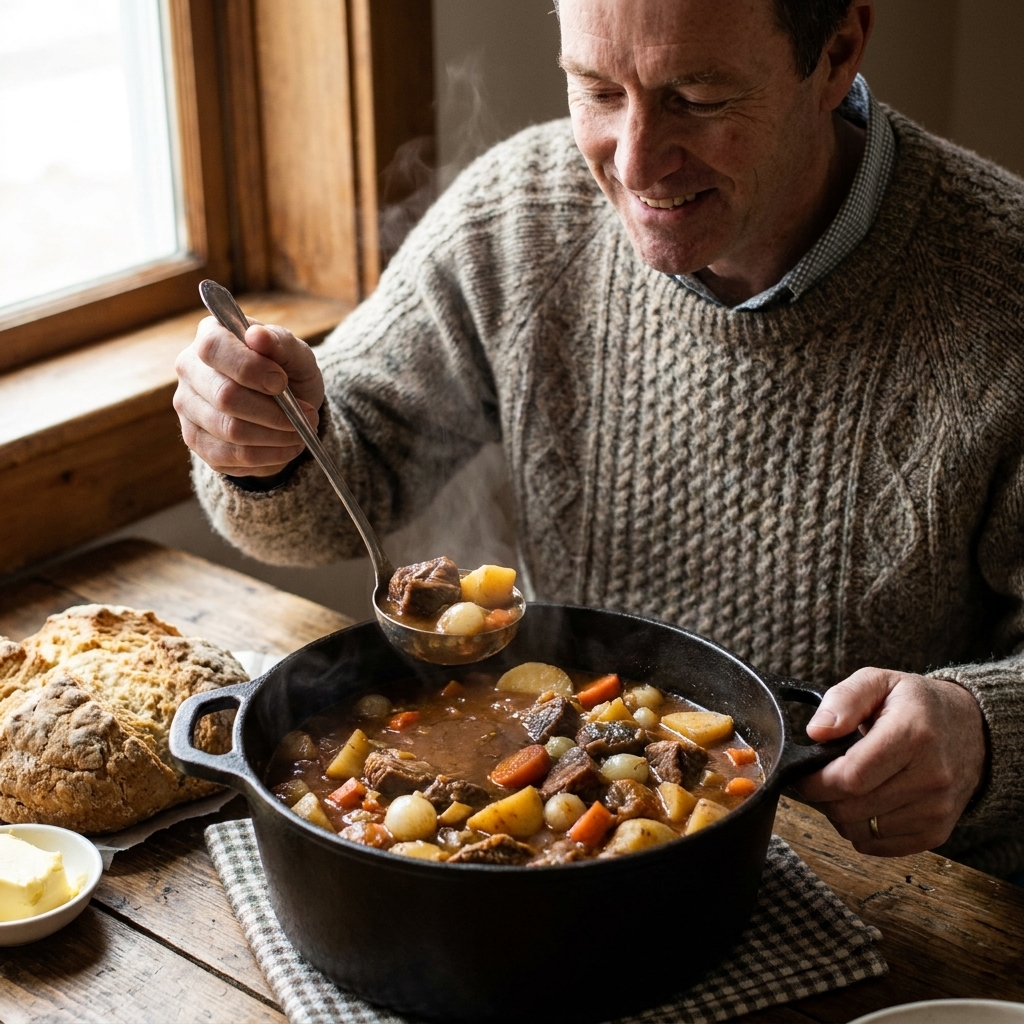

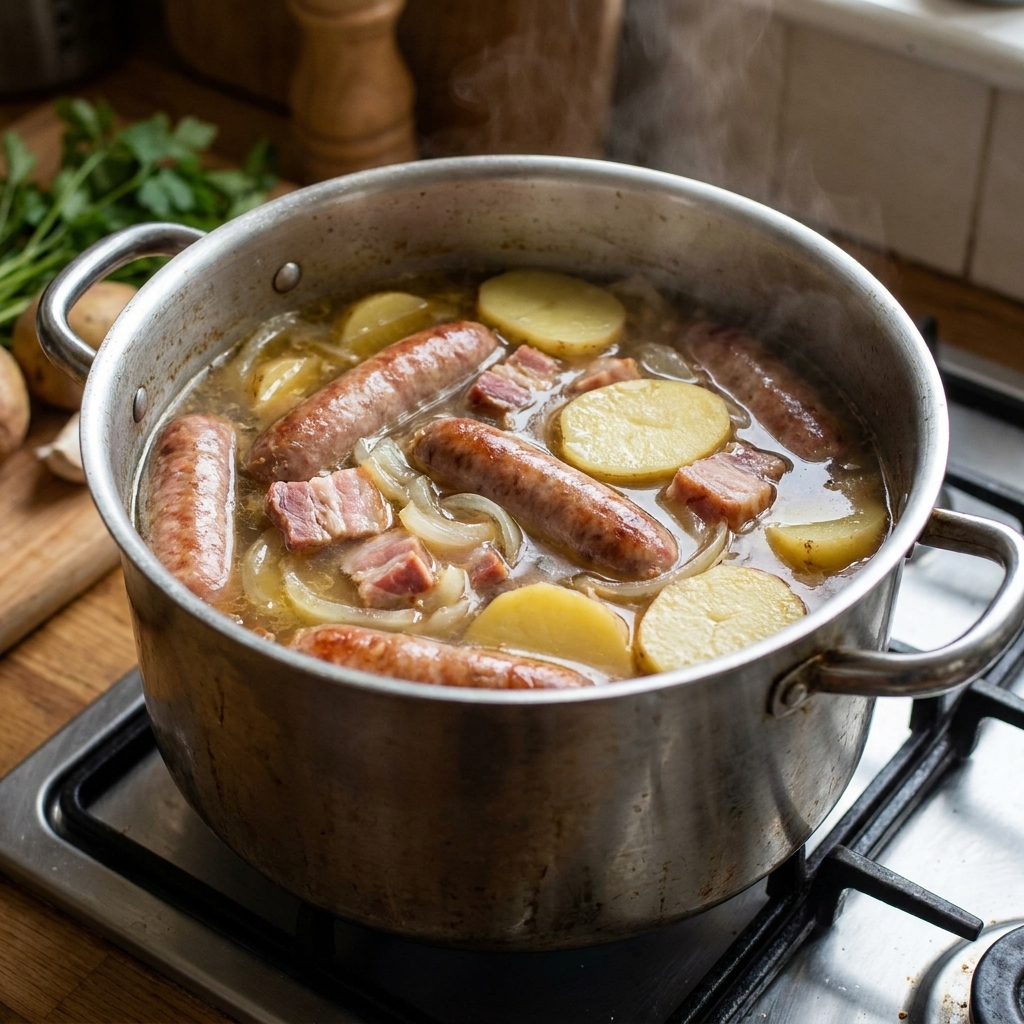
The first time I had a proper bowl of Dublin coddle, it was on a wet evening when the city felt like it had shrunk down to a few glowing pub windows and the mist off the Liffey. The coddle arrived looking humble enough, a pale broth with sausages and potatoes. Then the smell hit me: pepper, pork, soft onions, and that deep, gentle comfort you only get from something that has been left alone to do its thing.
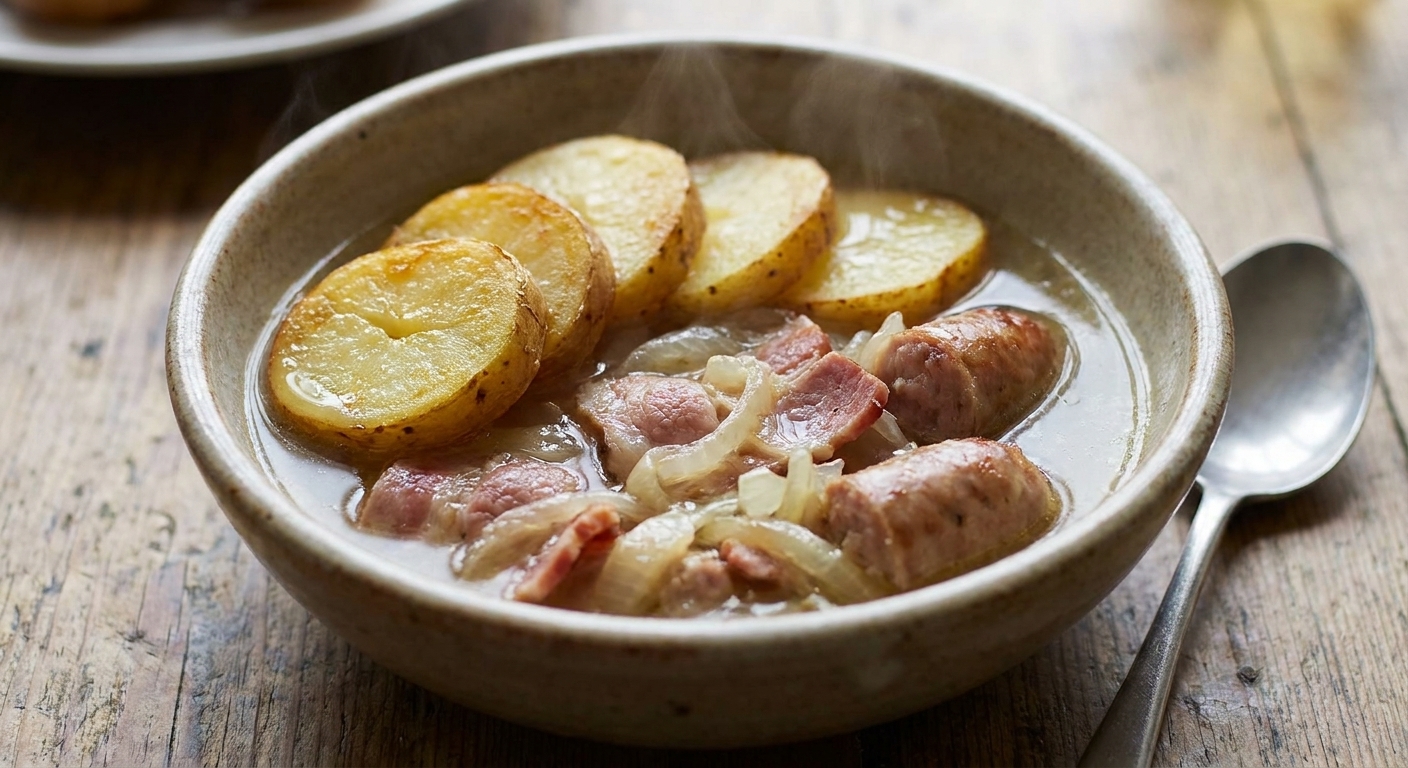
Dublin coddle is not a showy stew. It is a working-class dish built for cold nights, tight budgets, and whatever you had on hand: sausages, rashers, onions, and spuds, all slowly “coddled” until the broth turns rich and the onions practically melt. If you are expecting a thick gravy, you will miss what makes it special. It is meant to be a light, pepper-forward broth, comforting rather than flashy.
I have always thought coddle carries a bit of a literary feeling in Dublin, not because it is some grand symbol, but because it is the sort of everyday pot that turns up in conversation and memory. The city has a way of romanticising the plain stuff, and coddle fits right in: plainspoken, a little rough around the edges, and oddly sentimental when the weather turns.
This recipe keeps the spirit of the classic intact: a gentle simmer, plenty of black pepper, and no flour or roux, just the natural body you get as the potatoes soften into the broth. If you have ever made traditional Irish stew, think of coddle as its Dublin cousin, lighter in color, heavier on pork, and absolutely made for a slow pot.
Where Dublin coddle comes from
Ask three Dubliners about coddle and you might get five opinions, but the roots are fairly consistent. It is a dish shaped by thrift and timing. You will often hear that it began as a way to use up rashers and sausages, then leave a pot to tick along gently for the next day. The word “coddle” fits the method: low heat, no hard boil, just a quiet pot on the edge of the range.
It also suits the city’s old tenements and small kitchens. One pot. Familiar ingredients. A meal that feeds a family and tastes even better once it has had time to settle. If you are new to it, do not judge it by the pale broth. The flavor is the point: porky, peppery, and softened by onions and potatoes that have done their slow, steady work.
Why this coddle works
- Low-and-slow is the whole point. A gentle simmer keeps the sausages tender, coaxes flavor from the bacon, and turns onions silky.
- Potatoes thicken the broth naturally. You do not need flour or roux. The starch from the spuds gives you that soft, comforting body.
- Simple seasoning, big payoff. Salt, black pepper, and bay do a lot when the ingredients are good and the pot gets time.
- Better the next day. Like so many Irish comfort dishes, the flavors knit together after a rest, making leftovers a small gift.
Ingredient notes
Sausages
Traditional coddle is often made with Irish pork sausages. If you can find them, grab them. If not, use good-quality pork sausages that are not heavily herbed or sweet. You want pork flavor first.
Rashers or bacon
In Ireland, you will hear “rashers,” which usually means back bacon, not streaky American bacon. Either can work. Back bacon keeps the dish a bit meatier and less smoky. Streaky bacon will add more fat and a stronger cure flavor.
Potatoes
Floury potatoes (like Rooster in Ireland) break down a touch and help thicken the broth. Waxy potatoes hold their shape more. Either is fine, but if you like a slightly more velvety bowl, lean floury.
Onions
Do not skimp. The onions are what make the broth taste like it has been simmering all day, even if you start it after work.
Stock or water
Some families use water and let the meat do the work. I like a light stock because it gives you a rounder broth from the start. Keep it gentle though. If your stock is very salty, you will want to hold back on extra salt until the end.
Black pepper and bay
Black pepper is classic in coddle. Bay adds that quiet, savory backbone that makes the whole pot smell like home.
Equipment
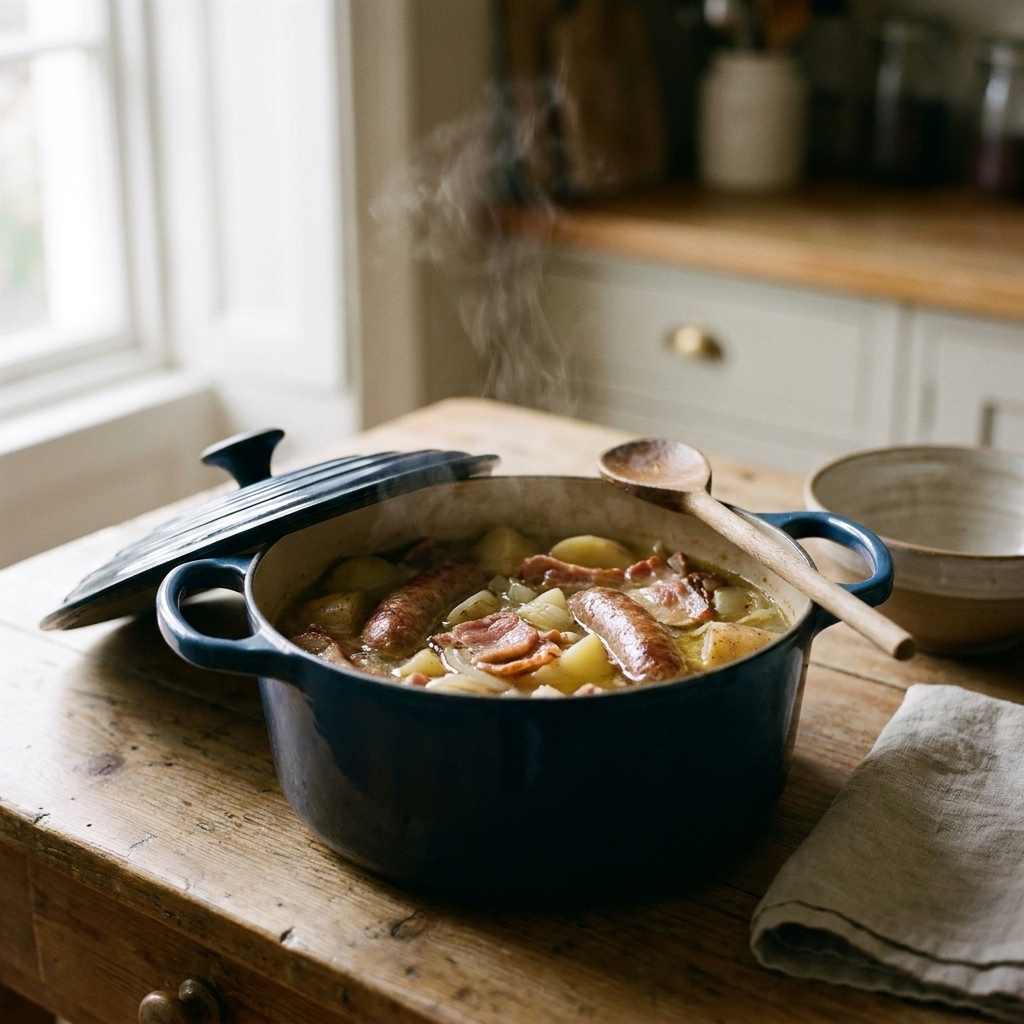
- Large heavy pot or Dutch oven with a lid
- Sharp knife and chopping board
- Tongs for turning sausages
- Ladle for serving
A slow cooker can work too, but coddle is at its best when you can control the heat and keep the simmer gentle, not bubbly.
Pro tips
- Brown lightly, not aggressively. A little color on the sausages and bacon helps, but coddle is not meant to taste roasted. Think soft, not seared.
- Keep it at a bare simmer. If the pot is boiling hard, the sausages can split and the broth can turn greasy.
- Layer for even cooking. Onions and potatoes act like a cushion. They protect the meat and cook evenly as the steam circulates.
- Taste at the end. Bacon and stock vary wildly in salt. Season late so you do not overshoot it.
- Let it rest if you can. Even 15 to 20 minutes off the heat helps the broth settle and the flavors deepen.
Substitutes
- No Irish sausages? Use mild pork sausages. Avoid strongly flavored Italian-style sausages if you want the traditional taste.
- No rashers? Use thick-cut bacon, pancetta, or even a small piece of ham. Keep portions modest so it does not dominate.
- No stock? Water works. Add an extra pinch of pepper and a bay leaf and trust the simmer.
- Gluten-free? Good news. Classic coddle is naturally gluten-free if your sausages are.
Variations
- Carrots or leeks: Not strictly necessary, but a small amount can add sweetness. Keep it subtle.
- A splash of stout: A small pour can deepen the broth. Do not turn it into a Guinness stew. Just a hint.
- Herbs: Parsley at the end is the safest. Thyme can be lovely, but use a light hand.
- Oven-coddled: Simmer briefly on the hob, then cover and cook low in the oven. It is a very steady, forgiving heat.
Serving ideas
- With bread for dipping: Soda bread is perfect. If you fancy baking, try my authentic Irish soda bread.
- With mashed potatoes: Some households serve coddle over mash instead of sliced potatoes. If you go that route, cut back the potatoes in the pot and make mash separately.
- With a proper breakfast spread: If you love the sausage-and-bacon comfort of coddle, you will probably enjoy making a full Irish breakfast at home for a weekend brunch.
Storage and reheating
- Refrigerate: Cool, cover, and refrigerate for up to 3 days.
- Freeze: You can freeze coddle, but the potatoes may soften further on thawing. If you are planning ahead, consider cooking with slightly thicker potato slices.
- Reheat: Warm gently on the stove over low heat until steaming hot. Avoid a rolling boil so the sausages stay intact.
Common mistakes to avoid
- Boiling hard: This is the fastest way to split sausages and make the broth greasy.
- Over-salting early: Bacon and stock concentrate as they simmer. Taste late.
- Making it too thick: Coddle is brothy. If you want a thicker stew, you might prefer traditional Irish stew instead.
- Using strongly spiced sausages: Coddle’s flavor is gentle. Let pepper and pork lead the way.
FAQ
Is Dublin coddle supposed to be watery?
It is meant to be brothy rather than thick. The broth should taste deeply savory and slightly peppery, with a bit of body from the potatoes.
Do you brown the sausages first?
Many cooks do, and I recommend it for a touch more depth. You do not need a hard sear. Just light browning.
What potatoes are best?
Floury potatoes give a softer, slightly thickened broth. Waxy potatoes hold their shape. Both are fair game.
Can I make coddle in a slow cooker?
Yes. Brown the sausages and bacon first if you can, then cook on low until the potatoes are tender. Keep an eye on texture so the potatoes do not turn to puree.
What do you serve with coddle?
Bread is the classic partner, especially soda bread. Some people add a spoon of mash on the side, but the best accompaniment is something that soaks up broth.
Recipe
Dublin Coddle (Slow-Cooked Sausage and Potato Stew)
A classic Dublin comfort dish of gently simmered sausages, bacon, onions, and potatoes in a peppery broth. Simple ingredients, slow-cooked flavor.
- Prep
- 15 minutes
- Cook
- 1 hour 15 minutes
- Total
- 1 hour 30 minutes
- Servings
- 4
Ingredients
- 8 pork sausages (about 600 g total)
- 200 g bacon rashers or thick-cut bacon, cut into large pieces
- 2 large onions, sliced
- 900 g potatoes, peeled and sliced into 1 cm rounds
- 750 ml chicken stock (or water)
- 2 bay leaves
- 1 tsp freshly ground black pepper, plus more to taste
- Salt, to taste (often minimal or none until the end)
- 1 tbsp butter or a small splash of oil (optional, for browning)
- Chopped fresh parsley, to serve (optional)
Instructions
- Lightly brown the meat. Set a large pot or Dutch oven over medium heat. Add the butter or a small splash of oil if needed. Add the sausages and cook for 4 to 6 minutes, turning, just until lightly browned. Transfer to a plate. Add the bacon pieces to the pot and cook for 2 to 3 minutes, stirring, until the edges start to color. (You are building flavor, not crisping everything.)
- Soften the onions. Add the sliced onions to the pot with the bacon drippings. Cook for 5 to 7 minutes, stirring occasionally, until the onions begin to soften and turn translucent.
- Layer the pot. Add half the potatoes in an even layer over the onions. Nestle in half the sausages and half the bacon. Sprinkle over half the black pepper and add 1 bay leaf. Repeat with remaining potatoes, sausages, bacon, remaining pepper, and the second bay leaf.
- Add broth. Pour in the stock (or water). The liquid should come up close to the top layer without fully drowning everything. If needed, add a small splash more water to just barely cover the top potatoes.
- Simmer gently. Bring the pot to a very gentle simmer over medium heat, then reduce to low. Cover with a lid slightly ajar and cook for 60 to 75 minutes, keeping the simmer calm, until the potatoes are tender and the broth tastes rich and porky.
- Finish and season. Turn off the heat and let the pot stand for 10 minutes. Remove bay leaves. Taste the broth, then add salt only if needed. Add more black pepper if you like it properly Dublin-style.
- Serve. Ladle into bowls, making sure everyone gets sausage, bacon, onions, and plenty of broth. Top with chopped parsley if using.
Notes
- Broth level: Coddle is traditionally brothy. If you prefer it slightly less soupy, use 600 ml stock and add more only if needed as it simmers.
- Make-ahead: Coddle often tastes better after a night in the fridge. Reheat gently so the sausages stay intact.
- Salt: Depending on your bacon and stock, you may not need any extra salt at all.