

The first time I tried to cook a full Irish back in my tiny Dublin rental, I did what every confident amateur does: I threw everything into the pan at once and hoped for the best. What I got was a smoky kitchen, rubbery eggs, and sausages that were somehow both pale and burnt. The full Irish is not difficult, but it is particular. It has its own rhythm, its own order, and a few ingredients that matter more than people realize.
This is the guide I wish I had then: what belongs on the plate, what you can swap without offending the breakfast gods, and how to get that proper Irish cafe sizzle and comfort at home.
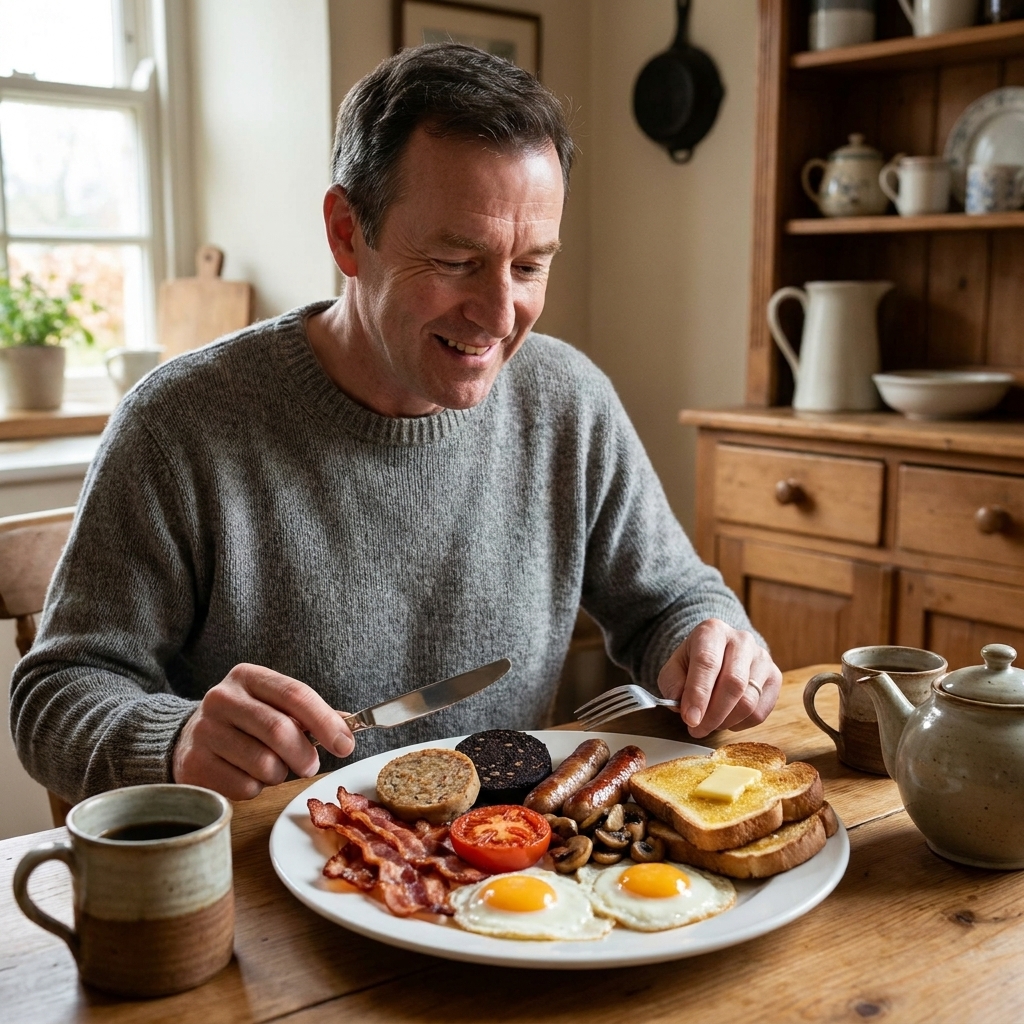
What is a full Irish
A full Irish is hearty, salty, and built around pork. You will see slight regional and household differences, but a classic plate usually includes:
- Rashers (Irish bacon slices, usually back or loin bacon)
- Sausages (pork sausages, often a bit herby)
- Black pudding
- White pudding
- Eggs (fried is the usual, but scrambled shows up plenty)
- Tomato (halved and grilled or fried)
- Mushrooms (fried or sautéed)
- Toast (or soda bread)
- Tea, strong and plentiful
Sometimes you will also see baked beans, hash browns, or fried bread. They are common additions, especially in hotels and modern cafes, but they are not the core of it. The soul is rashers and pudding, cooked with a bit of patience.
If you want a broader sense of what people actually eat day to day, I have a separate guide here: What Irish people actually eat (8 traditional foods to try).
What to put on the plate
If you want a reliable, not-too-mad portion, this is the rough on-plate guide per person:
- 2 rashers
- 2 sausages
- 1 egg (2 if you are hungry)
- 1 to 2 slices black pudding
- 1 slice white pudding (or 2, if you love it)
- A handful of mushrooms
- Half a tomato
- 1 to 2 slices toast (buttered properly)
Essential ingredients
Rashers: the make-or-break item
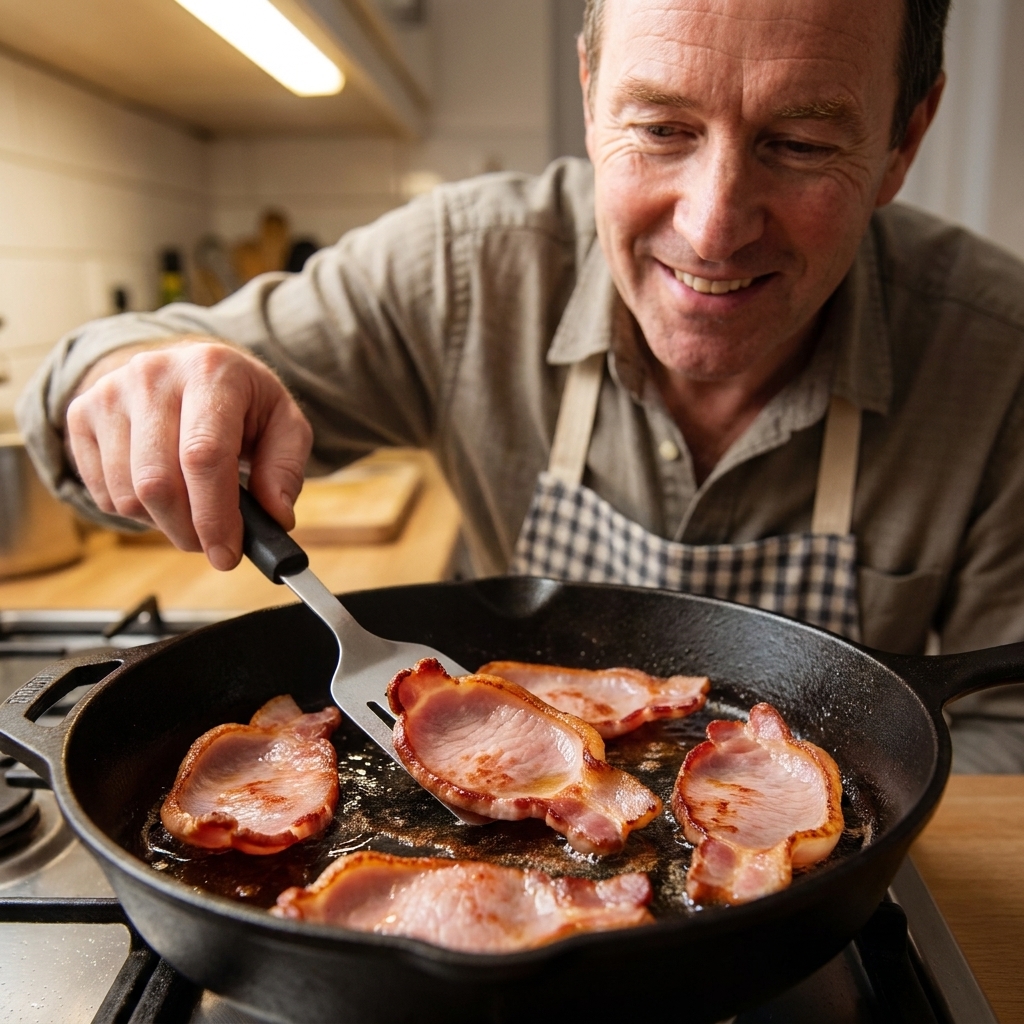
In Ireland, people will say “rashers” to mean bacon slices in general, but what most visitors encounter on a proper breakfast plate is back bacon (sometimes called loin bacon). It is meatier than streaky bacon, and it cooks up with a tender bite instead of shattering into salty shards.
- What to look for: back or loin bacon, smoked or unsmoked, sliced medium thickness
- What to avoid (if you want it close to an Irish cafe plate): very thin streaky bacon as the only “rasher” on the plate
- Substitution if you cannot find it: Canadian bacon can work in a pinch, but it is often too lean. Better is to ask a butcher for back bacon cut with a little fat left on.
Black pudding: rich, savory, and hard to replace
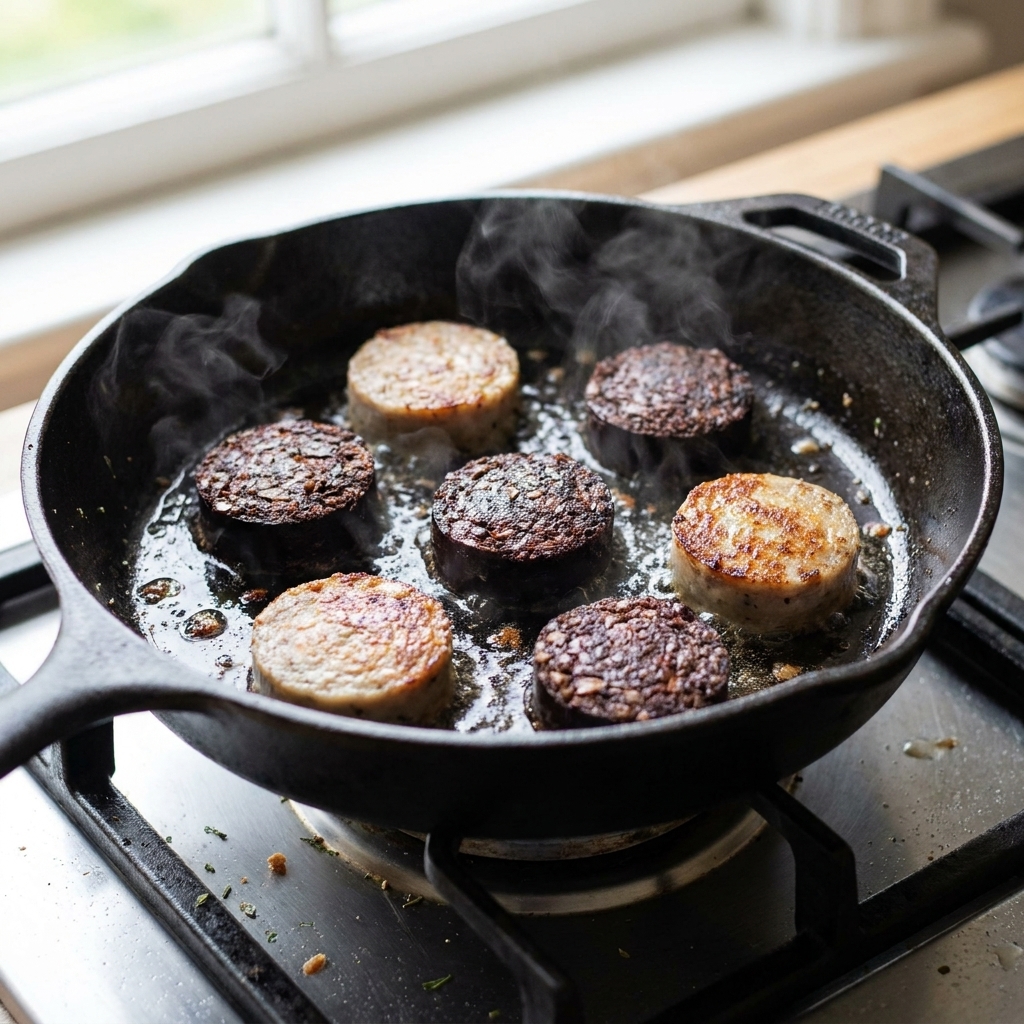
Black pudding is a blood sausage, usually made with pork blood, oats or barley, and seasoning. Fried in slices, it goes crisp at the edges and creamy in the center. If you are nervous about it, this is the friendliest way to meet it: hot pan, quick fry, done.
- What to look for: a pudding with visible oat texture, sold in a chub you slice yourself
- Cooking note: it is often sold pre-cooked, so you are heating and crisping. Still, check the pack and cook according to the label if yours says otherwise.
White pudding: the underrated twin
White pudding is similar, minus the blood. Most versions are pork and fat (or suet), cereal like oats, and a simple spice mix. In a full Irish, it adds balance because not everything on the plate is trying to shout over everything else.
- What to look for: firm texture, sold alongside black pudding
- Substitution: there is not a perfect substitute. If you must, add an extra rasher and call it your own breakfast, not a “full Irish.”
Sausages: choose pork, not sweet links
Irish sausages tend to be pork-forward with mild seasoning. You want a sausage that browns well and does not taste sugary.
- What to look for: good-quality pork sausages, not overly fine or emulsified
- Tip: if you are shopping outside Ireland, ask for “Irish-style bangers” or a simple pork sausage with herbs.
Eggs, mushrooms, tomatoes, bread
- Eggs: the fresher the better. Fried eggs with set whites and runny yolks are the classic.
- Mushrooms: button mushrooms are traditional, sliced thick.
- Tomatoes: half a tomato, cut-side down in the pan until it softens and caramelizes.
- Bread: thick toast with real butter. If you have time, soda bread is a very Irish option. This recipe is the one I use when I want the house to smell like an Irish morning: Authentic Irish soda bread (4 ingredients).
Find rashers and pudding outside Ireland
If you live in Ireland, you are spoiled. Most supermarkets will do, and any half-decent butcher will set you up. Outside Ireland, it becomes a little treasure hunt. Here is the order I would try:
- A local butcher: ask specifically for back bacon (or loin bacon) cut into rasher-style slices, with a bit of fat left on. Many butchers can do this even if it is not in the case.
- Irish or British specialty shops: these often stock imported puddings and rashers, especially around big holidays. Call ahead.
- Well-stocked supermarkets: look for back bacon in the refrigerated section, sometimes labeled “loin bacon.”
One important safety and quality note: black and white pudding are perishable. If you are ordering them online (from anyone), make sure they ship chilled and arrive properly cold. If it turns up warm, do not gamble on it.
Cooking order
The biggest secret to a great full Irish is not a fancy ingredient. It is timing. You want the plate to land with everything hot, not half of it waiting under foil while the other half finishes.
Simple setup
- One large frying pan or skillet (cast iron is brilliant for this)
- One second small pan for eggs, or cook eggs last in the same pan
- A warm oven (very low) with an empty tray to hold finished items
Set your oven to a low heat, just enough to keep things warm, not cook them further. Think of it as a holding bay.
Step-by-step (serves 2)
- Start with sausages. Medium heat, a little oil if your pan is dry. Turn them often. You are aiming for deep browning and cooked-through centers. If you are ever unsure, cut into one and check there is no pink in the middle.
- Add rashers once the sausages are underway. They cook faster than you think. Give them room so they fry rather than steam.
- Cook mushrooms in the same pan, nudged to a side, or in a second pan with a knob of butter. Do not crowd them or they will weep and go soggy.
- Tomato goes cut-side down. Let it sit and take color before you move it. A pinch of salt helps it taste like itself.
- Black and white pudding next. Slice them about 1 to 1.5 cm thick and fry quickly. (Again, check the pack if yours needs more cooking time.) They can break if you bully them, so use a gentle turn.
- Eggs at the very end. This keeps the yolks glossy and the whites tender. Fry in a little fat from the pan, or wipe the pan and add fresh butter if things got too dark. Cook eggs to your comfort level.
- Toast while the eggs cook. Butter it immediately so it melts the way it does in an Irish cafe.
If your pan starts smoking, your heat is too high. A full Irish should sizzle, not set off alarms.
Small tips that matter
Do not rush the browning
Color equals flavor here. Medium heat and patience will beat high heat and panic every time.
Use the fat, but keep it clean
The pan fat from rashers and sausages is part of the taste. If it starts to burn, drain it carefully and add a fresh knob of butter or a splash of neutral oil.
Season the vegetables, not the meats
Rashers, sausages, and pudding are already seasoned. Mushrooms and tomato need salt and pepper more than anything else on the plate.
Warm plates are practical
A full Irish cools quickly. If you can, warm your plates in the oven for a minute before serving.
Variations you will see
This is where the purists start clearing their throats. The truth is, breakfasts shift by region, venue, and habit.
- Fried bread is older-school than hash browns in a lot of places, and it is dangerously good.
- Beans show up often in hotels and modern cafes, less so in some homes.
- Potato farls are more associated with the North and an Ulster fry, but you will absolutely see them offered across Ireland too.
Call it a full Irish, call it a fry, call it breakfast. Just cook it with care and it tastes like the real thing.
Common swaps
- No puddings available: you can still make a fantastic Irish-style fry, but it will taste closer to an all-day breakfast than a full Irish. Add extra mushrooms and tomato, and lean on good rashers.
- No rashers: use the best back bacon you can find. If all you have is streaky bacon, cook it separately so it does not dominate the whole plate with salt.
- Vegetarian version: use vegetarian sausages and vegetarian black pudding if you can find it, plus mushrooms, tomato, eggs, and toast. It will be tasty, just different.
- Additions like beans or hash browns: they are common and totally acceptable, especially if you are feeding a crowd. Just do not let them push the pudding off the plate.
Shopping list (for 2)
- 4 pork sausages
- 4 rashers (back or loin bacon), more if you are ambitious
- 4 slices black pudding
- 4 slices white pudding
- 4 eggs
- 200 to 300 g mushrooms, sliced
- 1 large tomato, halved
- Bread for toast (or soda bread)
- Butter
- Salt and pepper
- Tea
Serving it
I serve a full Irish with a mug of strong tea and enough butter to make a cardiologist sigh. If you want the whole experience, put everything in the middle of the table and let people build their own plate. That is how it feels in a busy B and B kitchen, where someone is always reaching for the toast while you are trying to slide the eggs out of the pan without breaking the yolks.
And if you are eating this in Ireland, it helps to know the little language quirks you will spot on menus, labels, and packaging, especially when you are hunting for rashers in a shop: Reading Irish road signs and Gaelic place names.
Quick FAQ
Is corned beef part of a full Irish?
No. Corned beef exists in Ireland, but the cabbage-and-corned-beef St Patrick's Day staple is more Irish-American than Irish. A full Irish is built around rashers, sausages, and pudding.
Do I need beans?
You do not need them, but you can add them. If you do, keep the portion modest so they do not flood the plate.
Should I grill or fry?
Most home kitchens fry because it is easy and it tastes right. Some Irish cafes grill to manage grease and volume. Either method works if you get good browning and keep things hot.
What is the best pan?
A heavy skillet that holds heat, ideally cast iron or a thick stainless pan. Nonstick is fine for eggs, but you will get better color on rashers and sausages in a pan that can really sear.