

The first time I made a proper Irish stew in my campervan, the rain was coming in sideways outside a lay-by in Connemara, and I had exactly two options: drive on miserably, or put the kettle on and make the place smell like home. I chose the stew. Within an hour, the windows were fogged, my socks were drying on the dash, and the whole van smelled like lamb, onions, and comfort.
Traditional Irish stew is not fussy food. It is honest food. Historically, it was built around what a household actually had: mutton or lamb, potatoes, onions, and time. That is the secret ingredient most recipes forget. Give it a slow simmer and the broth turns silky, the lamb goes spoon-tender, and the potatoes start to thicken everything into that bowl-hugging texture that feels like it was invented for dark evenings.
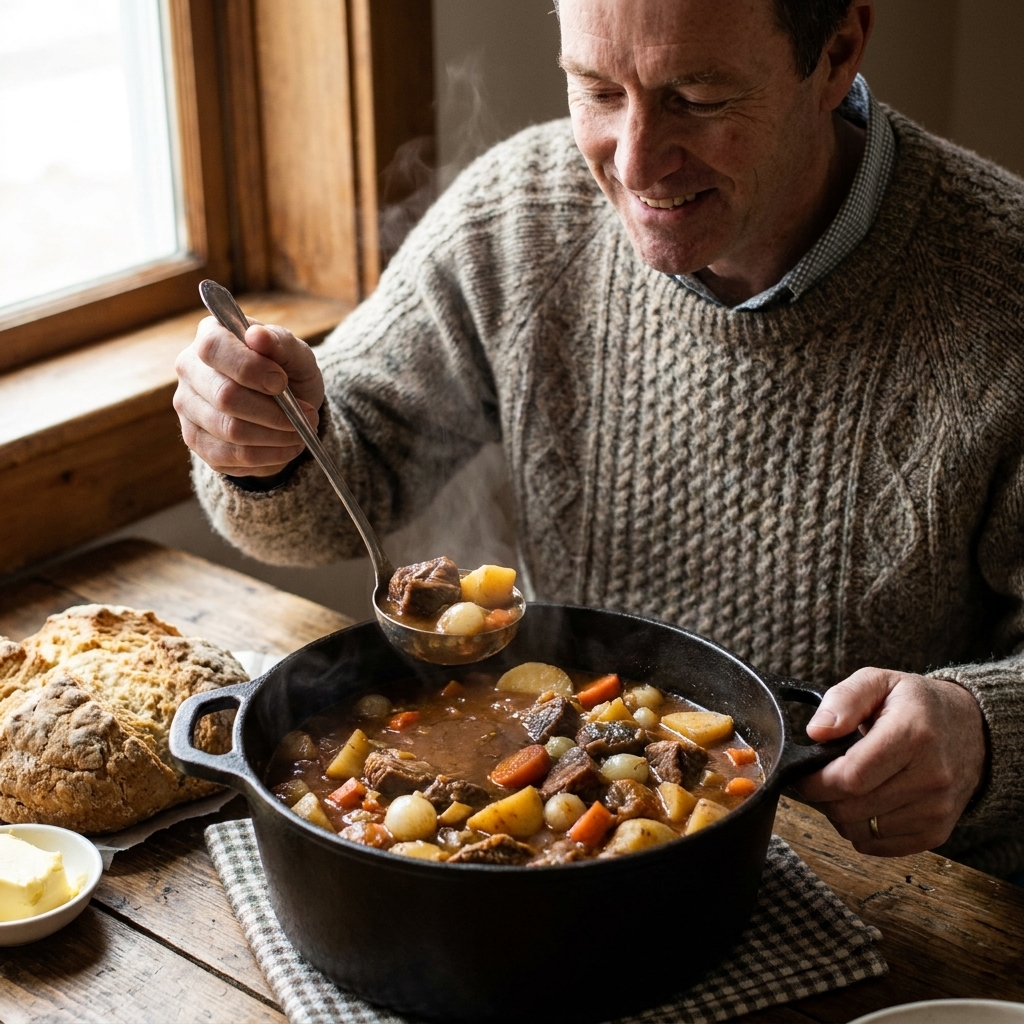
In this recipe, I keep it rooted in the old style while still being practical for a modern kitchen. Expect a simple, savory bowl, gently herbed, rich with lamb, and built for slow, steady cooking. You will use bone-in lamb for flavour, a straightforward aromatic base, and a patient simmer that does the heavy lifting.
If you are curious about what Irish people actually eat beyond the postcards, this stew fits right in with the everyday classics I talk about in what Irish people actually eat. And if you want more island staples after this, my Irish recipes guide is a good place to wander next.
A note on old-style stew
If you go far enough back, Irish stew was often made with older sheep (mutton), plus onions and potatoes, then stretched to feed a crowd. Carrots are commonly used in modern versions, and I include them because they are affordable, easy to find, and genuinely lovely here. What I avoid is turning the pot into a kitchen sink: no tomatoes, no heavy wine sauces, no hot spices doing backflips. This aims to taste like Ireland on a damp evening.
What to expect
- Deep lamb flavour from browning and bone-in cuts
- A broth that thickens naturally as potatoes soften
- Root-veg sweetness that rounds out the savoury base
- A calm, steady method you can leave alone while the house warms up
Make it once and you will understand why people argue about “the right way” to do it. The right way is the way that makes everyone go quiet at the table.
Why this stew works
- Bone-in lamb builds a richer broth. Collagen and marrow melt into the liquid as it simmers, giving you body without floury tricks.
- Low heat keeps lamb tender. A hard boil tightens meat. A gentle simmer relaxes it.
- Potatoes do the thickening. As they soften, a little starch drifts into the broth, turning it from soup into stew.
- Simple seasoning lets the ingredients speak. Salt, pepper, thyme, and bay leaf are enough when the lamb is good.
Ingredient notes
Lamb (or mutton)
If you can, use bone-in lamb shoulder or neck, cut into large chunks. Shoulder has the fat and connective tissue that turns meltingly tender over time. Lean leg meat can work, but it dries more easily and tastes less like the classic pub-bowl version.
Potatoes
Go for floury potatoes that soften and slightly crumble, because that is your natural thickener. Waxy potatoes hold their shape but can leave the broth thin.
Onions
Onions are not just background here. They are part of the stew’s soul. Let them soften well before the liquid goes in, and they will sweeten the whole pot.
Carrots (optional but common)
Not every old-school pot had carrots, but plenty of modern Irish kitchens do. They bring sweetness and color, especially welcome in winter.
Stock or water
Traditionally, water was often used. I like a light lamb or chicken stock for extra savor. If your stock is very salty, go easy on the salt until the end.
Fresh herbs
Parsley at the end makes it taste alive. Thyme and a bay leaf taste like the Irish countryside in a spoon.
Equipment
- Heavy pot with a lid (Dutch oven is perfect)
- Tongs for browning lamb
- Wooden spoon for scraping up the tasty browned bits
- Sharp knife and board for chunky, rustic prep
If you only have a thin pot, keep the heat very low and stir a bit more often so the bottom does not catch.
Pro tips from my rainy-day kitchen
- Brown the lamb in batches. Crowding the pot steams the meat. You want golden edges and that fond on the bottom.
- Keep the simmer gentle. Look for lazy bubbles, not a rolling boil.
- Cut vegetables chunky. Irish stew is meant to be rustic. Small dice can turn to mush before the lamb is tender.
- Skim if you need to. If you see excess foam or fat early on, skim a little for a cleaner broth.
- Let it rest off the heat. Ten to fifteen minutes before serving helps the flavors settle and the broth thicken slightly.
Substitutes
- No lamb? Beef chuck will make a hearty stew, but it will taste different. Keep the method the same.
- No stock? Use water and season carefully. Add an extra onion and a little more thyme for depth.
- No fresh parsley? Use a small amount of dried parsley, or skip it and finish with extra black pepper.
- Gluten-free? This version is naturally gluten-free as written, as long as your stock is.
Variations (still true to the spirit)
Stout-kissed stew
Add a small splash of stout to the pot after the onions soften, then let it reduce for a minute before adding stock. Keep it subtle so it supports the lamb rather than taking over. If you are pouring stout, you might enjoy my guide on how to order a Guinness like a local.
More roots, more sweetness
Add parsnip or a little turnip for extra earthy sweetness. Keep amounts modest so the pot does not drift into vegetable soup.
Herb-forward
Tie thyme and parsley stems into a small bundle and fish it out at the end for a cleaner finish.
Serving ideas
- With brown bread for dunking and mopping the bowl clean
- With buttered cabbage on the side if you want a proper dinner-table spread
- With a spoon of parsley and a few twists of black pepper right before serving
If you are planning an Ireland-inspired night, I like pairing stew with other straightforward favorites from the Irish recipes guide rather than anything too fancy. The whole point is cozy.
Storage and reheating
- Fridge: Cool, cover, and refrigerate for up to 3 days.
- Freezer: Freeze in airtight containers for up to 3 months. Thaw overnight in the fridge.
- Reheat: Warm gently on the hob over low heat until piping hot, adding a splash of water or stock if it has thickened too much.
Like most stews, this one often tastes even better the next day.
Common mistakes to avoid
- Boiling instead of simmering: it can make lamb chewy and the broth cloudy.
- Going too lean: very lean lamb can taste dry and one-note after a long cook.
- Over-stirring late in cooking: once potatoes are soft, stirring too much can turn the pot gluey.
- Over-salting early: the stew reduces as it cooks. Season lightly at first, then adjust at the end.
FAQ
Is Irish stew traditionally lamb or beef?
Traditionally it was most associated with mutton or lamb, plus potatoes and onions. Beef shows up in plenty of modern Irish homes and pubs, but lamb is the classic when you are aiming for the old taste.
Do I need to thicken Irish stew with flour?
No. If you use floury potatoes and simmer gently, the stew thickens naturally. If you want it thicker, you can press a few potato chunks against the side of the pot near the end and stir lightly.
Can I make Irish stew in a slow cooker?
Yes. Brown the lamb and soften the onions first, then cook on low until the lamb is tender. Add potatoes for the last few hours so they do not disappear completely.
What is the best cut of lamb for stew?
Shoulder and neck are my favorites for traditional stew. They are made for slow cooking and give you a fuller broth.
Why does my stew taste flat?
Usually it needs one of three things: a bit more salt, a bit more time, or a fresh finish. Try an extra pinch of salt, let it simmer another 15 minutes, and finish with parsley and black pepper.
Recipe
Traditional Irish Stew
A traditional, slow-simmered Irish stew built around lamb, onions, potatoes, and root vegetables, finished with parsley for a warm, hearty bowl that tastes like a west-coast evening.
- Prep
- 20 minutes
- Cook
- 2 hours 15 minutes
- Total
- 2 hours 35 minutes
- Servings
- 6 servings
Ingredients
- 2 tbsp vegetable oil or beef dripping
- 2 to 2.5 lb (900 g to 1.1 kg) bone-in lamb shoulder or neck, cut into large chunks
- 1 1/2 tsp fine salt, plus more to taste
- 1 tsp freshly ground black pepper, plus more to finish
- 2 large onions, sliced thickly
- 3 garlic cloves, minced (optional)
- 3 medium carrots, peeled and cut into large chunks
- 2 lb (900 g) floury potatoes, peeled and cut into large chunks
- 1 tbsp tomato paste (optional, for depth but keep it subtle)
- 4 cups (950 ml) lamb stock, chicken stock, or water, plus more as needed
- 2 to 3 sprigs fresh thyme (or 1 tsp dried thyme)
- 1 bay leaf
- 1 tbsp Worcestershire sauce (optional)
- 2 tbsp chopped fresh parsley, to finish
Instructions
- Brown the lamb: Heat the oil in a heavy pot over medium-high heat. Pat the lamb dry and season with the salt and pepper. Brown the lamb in batches, 3 to 5 minutes per side, until deeply golden. Transfer browned lamb to a plate.
- Soften the onions: Reduce heat to medium. Add the onions to the pot and cook 6 to 8 minutes, stirring and scraping up the browned bits, until softened and lightly golden. Add the garlic (if using) and cook 30 seconds.
- Build the base: Stir in the tomato paste (if using) and cook 1 minute to take the raw edge off. Return the lamb and any juices to the pot.
- Add liquid and herbs: Pour in the stock (or water). Add thyme and bay leaf. Bring to a gentle simmer.
- Simmer gently: Cover with the lid slightly ajar and simmer on low for 60 minutes. Keep the heat low enough that the surface only bubbles lazily.
- Add vegetables: Add carrots and potatoes. The liquid should come about three-quarters of the way up the solids. Add a splash more stock or water if needed.
- Cook until tender: Continue simmering, partially covered, for 60 to 75 minutes more, until the lamb is spoon-tender and the potatoes are soft. Stir only occasionally and gently.
- Finish and season: Remove thyme sprigs and bay leaf. Stir in Worcestershire sauce (if using). Taste and adjust salt and pepper. Let the stew rest off the heat for 10 to 15 minutes to settle.
- Serve: Ladle into warm bowls and finish with chopped parsley and a final twist of black pepper.
Notes
- About the tomato paste and Worcestershire: They are optional and not strictly old-style, but used lightly they add depth without changing the soul of the stew.
- For a thicker broth: Press a few potato chunks against the side of the pot near the end and stir gently.
- For a clearer broth: Skim excess foam and fat during the first 20 minutes of simmering.