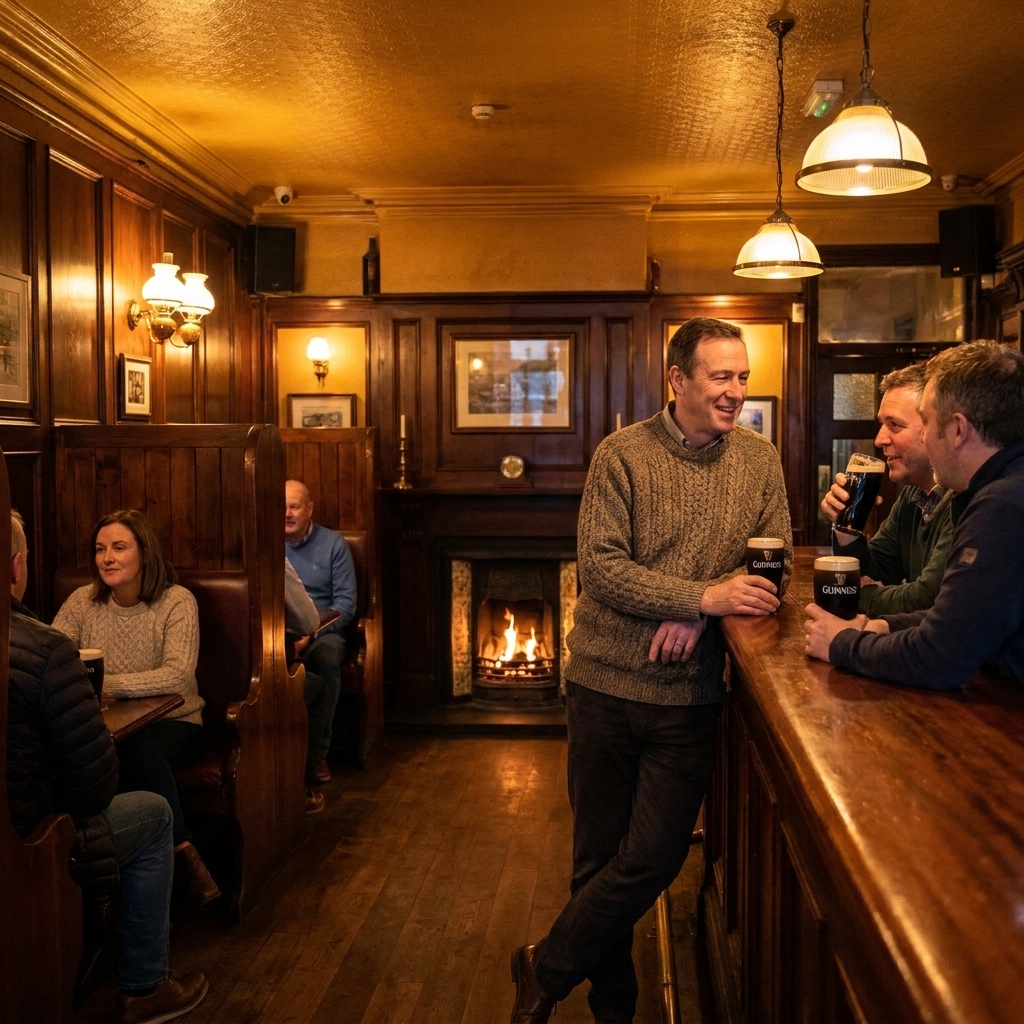

The first time I tried to order a Guinness “properly” in Ireland, I made the classic mistake: I treated it like any other drink. I said the brand, paid immediately, and hovered like a nervous seagull near a chipper. The barman gave me the pint, sure, but the whole exchange had the faint air of a tourist asking where the “real Ireland” is.
The truth is, Guinness isn’t just a beer here. It’s a little ritual that sits inside a bigger ritual: the Irish pub. And like any good ritual, half the rules are unspoken.
First, know what you are ordering
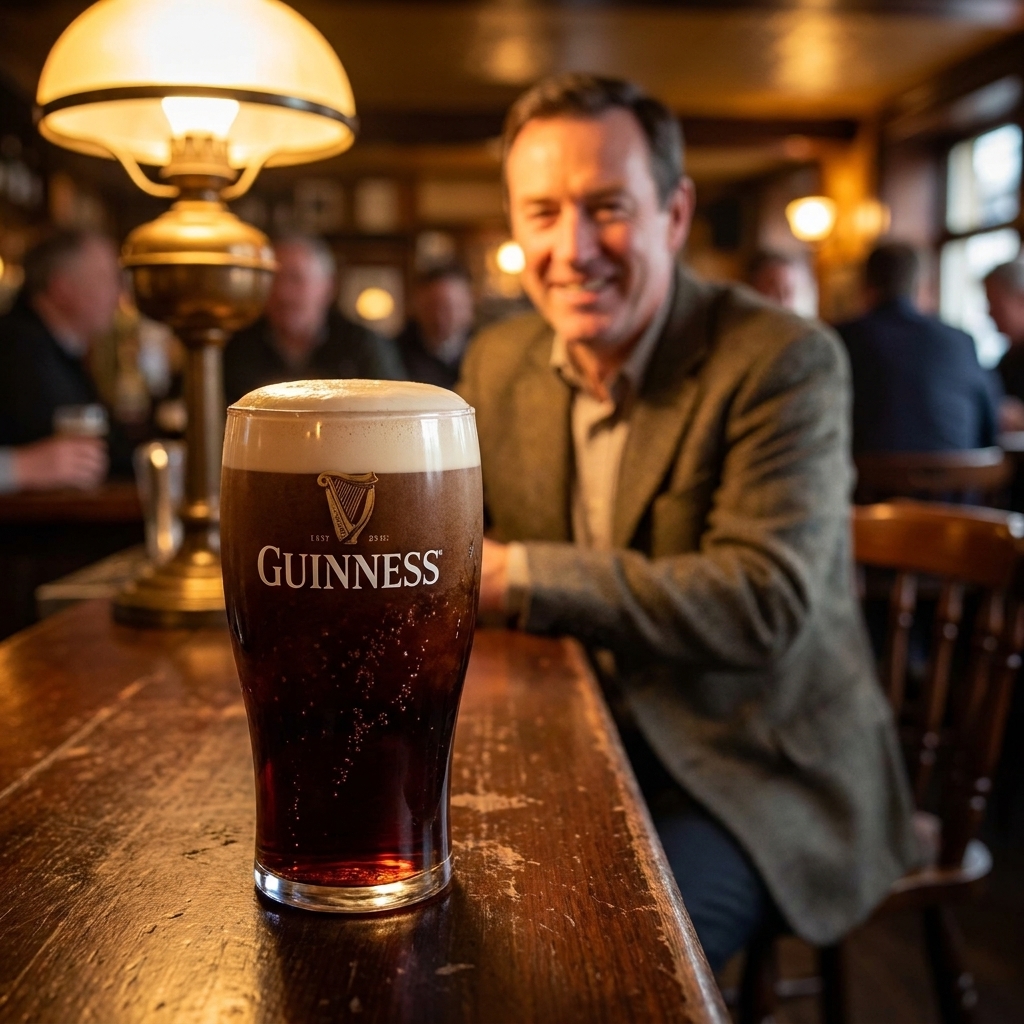
In many Irish pubs, when someone says “a Guinness,” they mean Guinness Draught from the tap, in a pint glass. You usually don’t need to say “draught” unless there’s confusion, or the bartender asks “pint or glass?”
You might also see, depending on the pub:
- Guinness 0.0 (non-alcoholic): increasingly common and totally normal to order.
- Guinness Extra Stout (bottle): a different taste and texture, with more bite than draught.
- Half pint (or “a half one”): perfectly acceptable. It’s not an insult to the drink or to the nation.
If you are with a group and want to sound comfortably human rather than rehearsed, keep it simple: “A pint of Guinness, please.”
The two-part pour
You’ve probably heard about “the two-part pour” like it’s a sacred ceremony. It is real, but it’s not magic. It’s physics and consistency.
What’s happening
Guinness Draught is typically served using a nitrogen and CO2 gas blend, which helps create that tight creamy head and the famous settling effect. A good pour usually goes like this:
- Stage 1: Glass tilted, filled most of the way.
- Wait: The pint settles, the dark body clears, the head forms.
- Stage 2: Topped up to the brim, usually straight-on to finish the head.
In a busy pub, the “wait” might be short. In a quiet pub, it might be treated like a small moment of peace.
The local rule: don’t rush the pint
If the barman sets your Guinness down before it’s fully topped up, don’t panic and don’t pester. That’s common enough in some places. They’re finishing another order and they’ll be back to crown it.
Also, do not do this: do not grab the half-finished Guinness and walk off. It’s the pint equivalent of leaving the cinema halfway through the opening scene and saying you got it.
Ordering at the bar
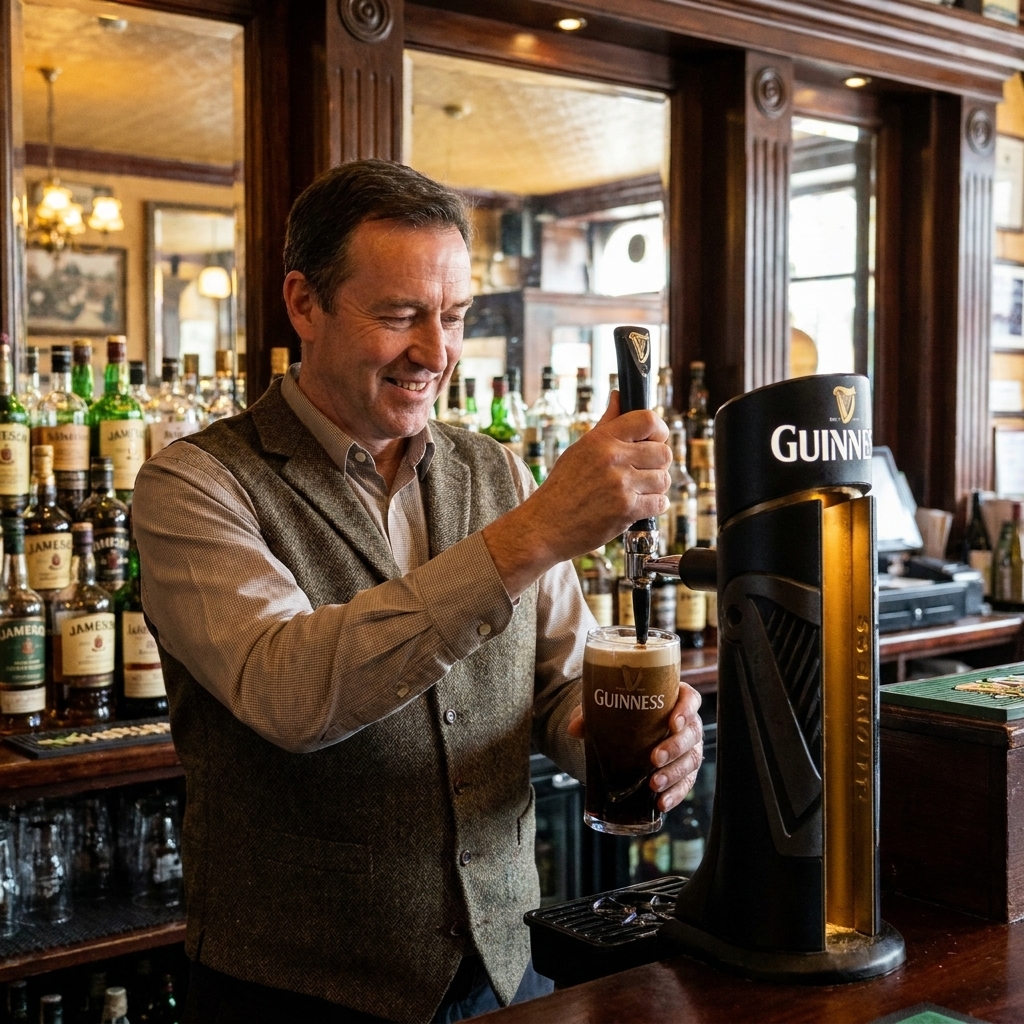
The pub bar looks casual, but there’s a social map to it.
Getting served without waving
- Approach the bar and hold your spot. No elbowing. No dramatic leaning.
- Make eye contact when it’s your turn. A nod is enough.
- Don’t wave money. In most pubs, you pay when served, but you don’t need to brandish a card like a badge.
Irish bar staff are masters of invisible queues. They often know who’s next even if you don’t. Hover calmly, be ready with your order, and you’ll be fine.
Say your full order in one go
If you’re buying for two or three people, don’t drip-feed the order like a suspense novel. Locals typically place the whole order cleanly:
- “Two pints of Guinness and a lager, please.”
- “One Guinness and one Guinness 0.0, please.”
Then let the barman work.
Know when to move away from the bar
If you’re taking the pint to a table, the polite moment is simple: once you’ve paid and you’ve got the drinks safely in hand, step aside so the next person can get in. The bar is a tiny stage, and nobody wants a long-running solo.
Rounds
If you spend time in Irish pubs, you’ll run into the round system. One person buys drinks for the group, then the next person does, and so on.
The rule: if you join a round, you owe a round
This is where visitors accidentally step on toes. It’s not about money, exactly. It’s about fairness and belonging. Accepting a drink is, quietly, accepting the social contract.
If you’re only staying for one drink, you’ve got options:
- Offer to buy first. “I’ll get these.” That sets the tone.
- Say you’re grand for just one before the round begins.
- Buy your own separately if it’s a bigger group and you’re leaving early.
What if someone offers you a Guinness?
A simple “Cheers, thanks” is enough. If you plan to stick around, make a mental note to return the kindness. If you don’t, be up front: “That’s very kind, but I’m only in for the one.” It lands better than disappearing when it’s your turn.
If you want a slower, more thoughtful pub pace, I’ve got a whole day plan built around it here: Plan an unhurried day in an Irish town.
Paying and tipping
Most pubs today take cards without fuss. Cash still appears, especially for smaller orders, but you won’t be treated like a time traveler if you tap to pay.
Tabs
In many traditional pubs, especially outside the busiest city-center spots, you typically pay as you go rather than running a tab. In others, a tab is fine if the place is food-led or used to longer sessions.
If you want a tab, ask simply: “Can I start a tab?” If they say no, it’s not personal. It’s just how they run the house.
Tipping
Tipping culture in Irish pubs is not the same as in the United States. You generally do not tip per pint at the bar.
That said:
- If someone brings drinks to your table repeatedly, a tip is a nice gesture.
- If you’re eating, leaving something extra is common enough, especially with table service.
- If you’ve had a bit of banter and good care at the bar, you might say “And one for yourself” or leave a small tip, but it’s optional and not expected everywhere.
Don’t talk the pint to death
There’s a particular kind of tourist energy that can drain the life out of a pub. It usually shows up as over-performance: announcing your Irishness loudly, reviewing the Guinness like a wine critic, or asking the bartender to explain “how locals do it” while there’s a line behind you.
Here are a few ways to keep it easy:
- Skip the lecture. People say the pour takes 119.5 seconds. It’s a fun fact, but it’s not a personality.
- Don’t demand the freshest keg. Good pubs manage their stock. If the pint tastes off, quietly swap it, but don’t start an investigation.
- Let the pub be itself. The best nights I’ve had began with very little talking at all.
Common mistakes
Nobody’s going to throw you out for these, but they’re the sort of things locals notice in the way you notice someone eating pizza with a knife and fork.
- Snapping your fingers or shouting “boss” at the bartender.
- Waving cash to get attention.
- Interrupting the pour to ask if it’s “supposed to look like that” while it settles.
- Leaving the group mid-round without settling your turn.
- Taking someone’s seat when they’ve clearly just stepped away (coat on chair, pint nearby).
If you’re curious about other small cultural tells that help you blend in, you might enjoy my broader Ireland basics guide: Ireland Facts guide.
What to say
You don’t need to imitate an accent. You just need to be clear and relaxed.
- Ordering: “A pint of Guinness, please.”
- Size check: “Pint, please.” or “A half one, please.”
- Adding another drink: “And a lager as well, please.”
- Paying: “Can I tap?” or “Card, please.”
- Polite refusal: “I’m grand, thanks.”
- Joining a round: “I’ll get the next one.”
If you find yourself outside the cities, you’ll also start seeing Irish on signs and place names. It’s a lovely rabbit hole and it makes road trips feel richer: Reading Irish road signs and Gaelic place names.
FAQ
Should I wait for the Guinness to settle before I drink it?
If you want to look local, yes, give it a moment. You won’t be arrested for sipping early, but the pint tastes and feels better once it’s finished settling and the head has formed properly.
Is it rude to order Guinness last in a big order?
Not rude, but it can slow things down. If you know you want Guinness, include it in the main order so the bartender can start the pour while they pull the rest.
Can I ask for a “black and tan” in Ireland?
I wouldn’t. In Ireland, that phrase can land badly because of historical associations. If you mean a half-and-half style drink, ask the bartender what they recommend, or order each drink separately and follow their lead.
Do locals really care about Guinness that much?
Some do, some don’t. What people care about more is pub manners: patience, fairness with rounds, and not making extra work when the place is busy.
The real secret
If there’s one unspoken rule to carry into any Irish pub, it’s this: be easy. Be ready with your order, let the pour happen at its own pace, buy your round if you join a round, and don’t turn the pint into a performance.
Do that, and you’ll find something better than “authenticity.” You’ll find the thing I kept bumping into over a decade of campervan wandering: a pub that feels, for an hour or two, like a shared sitting room. The Guinness is just the excuse to step inside.