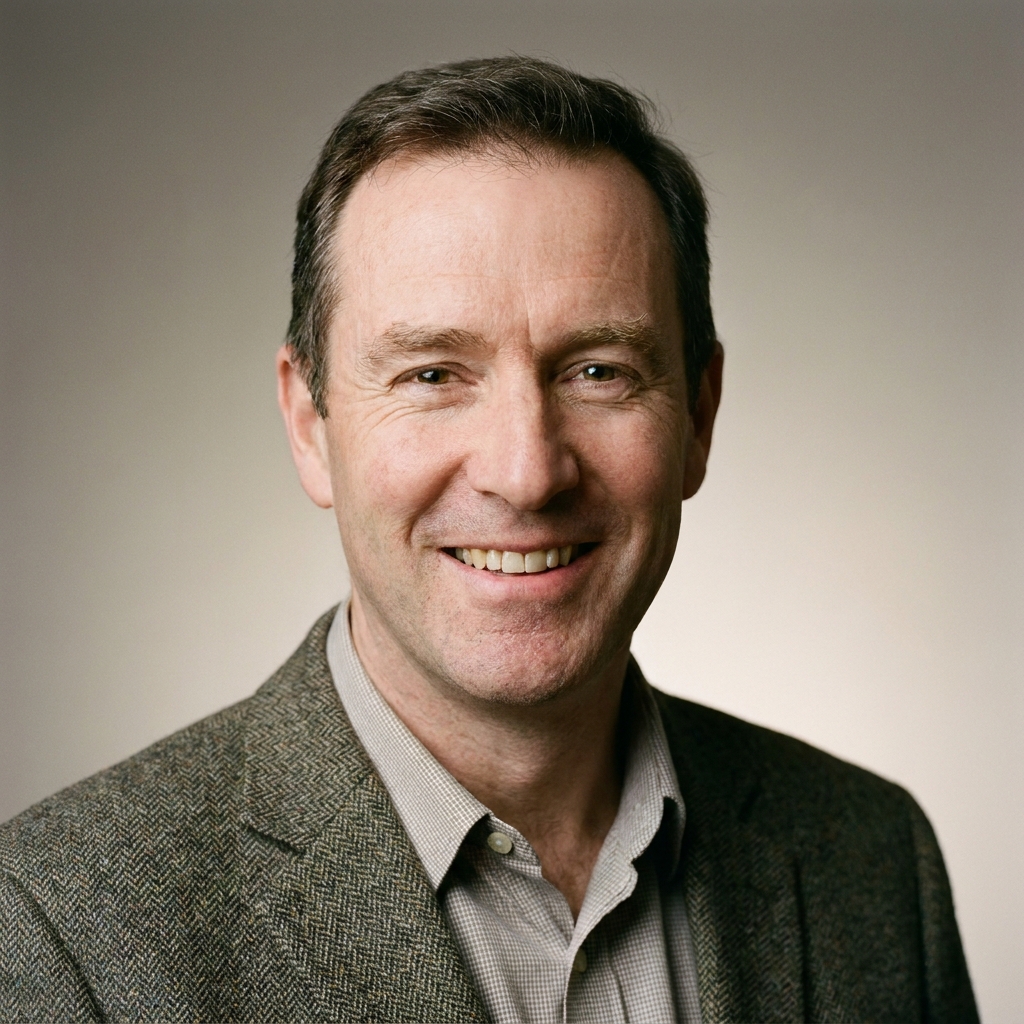
The first time I drove alone into the backroads of Connemara, my confidence lasted right up until the sat nav went quiet and the sign ahead offered two destinations in two languages, neither of which looked like the spelling rules I’d grown up with in Irish-American kitchens. The English place name I expected was there, sure, but above it was the Irish, and it felt like the land was speaking in its older voice.
Once you learn a handful of Irish words that repeat across the map, rural Ireland becomes far less mysterious. Better still, the names start telling you what kind of place you’re heading into: a town at a ford, a hill with gorse, a church by a bog, a field of stones. This is my boots-on-the-ground beginner’s guide to reading Irish road signs and getting friendly with Gaelic place names without pretending to be fluent.
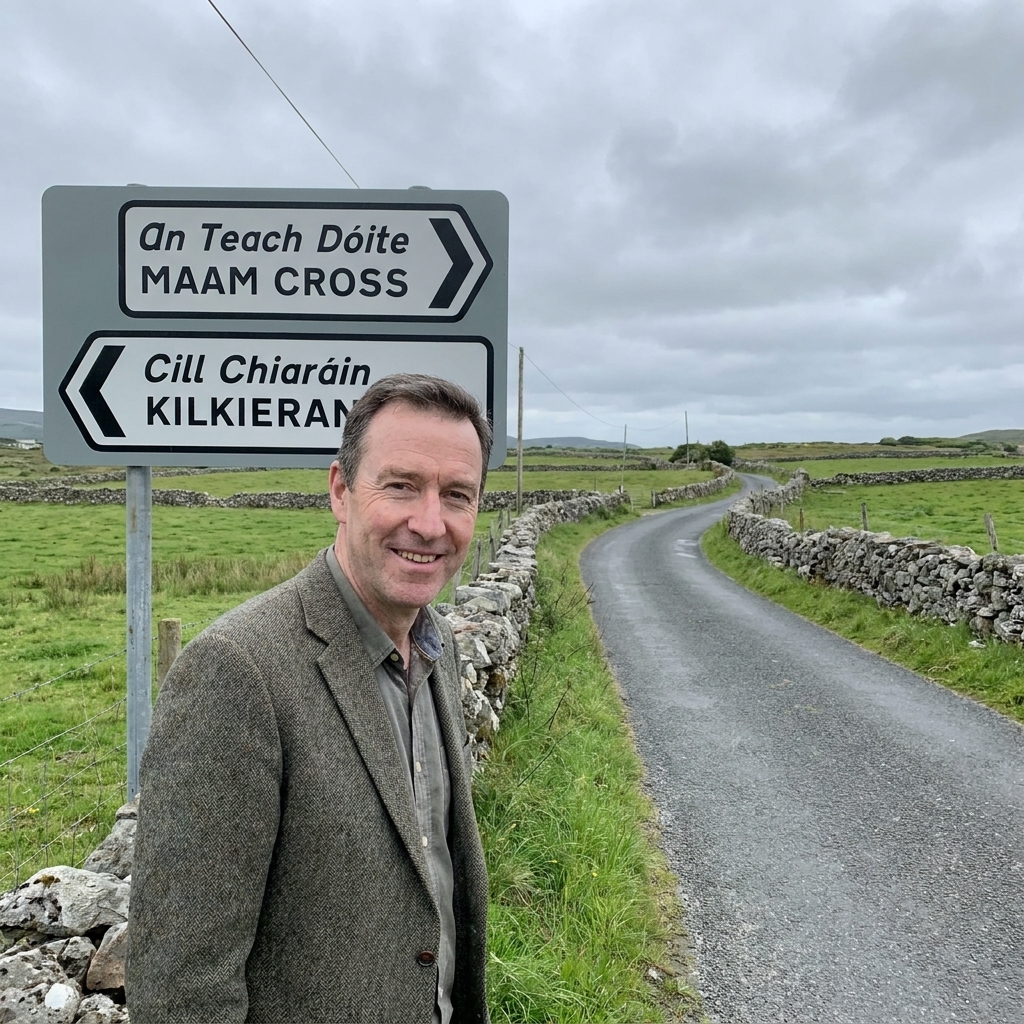
What you’re seeing on Irish road signs
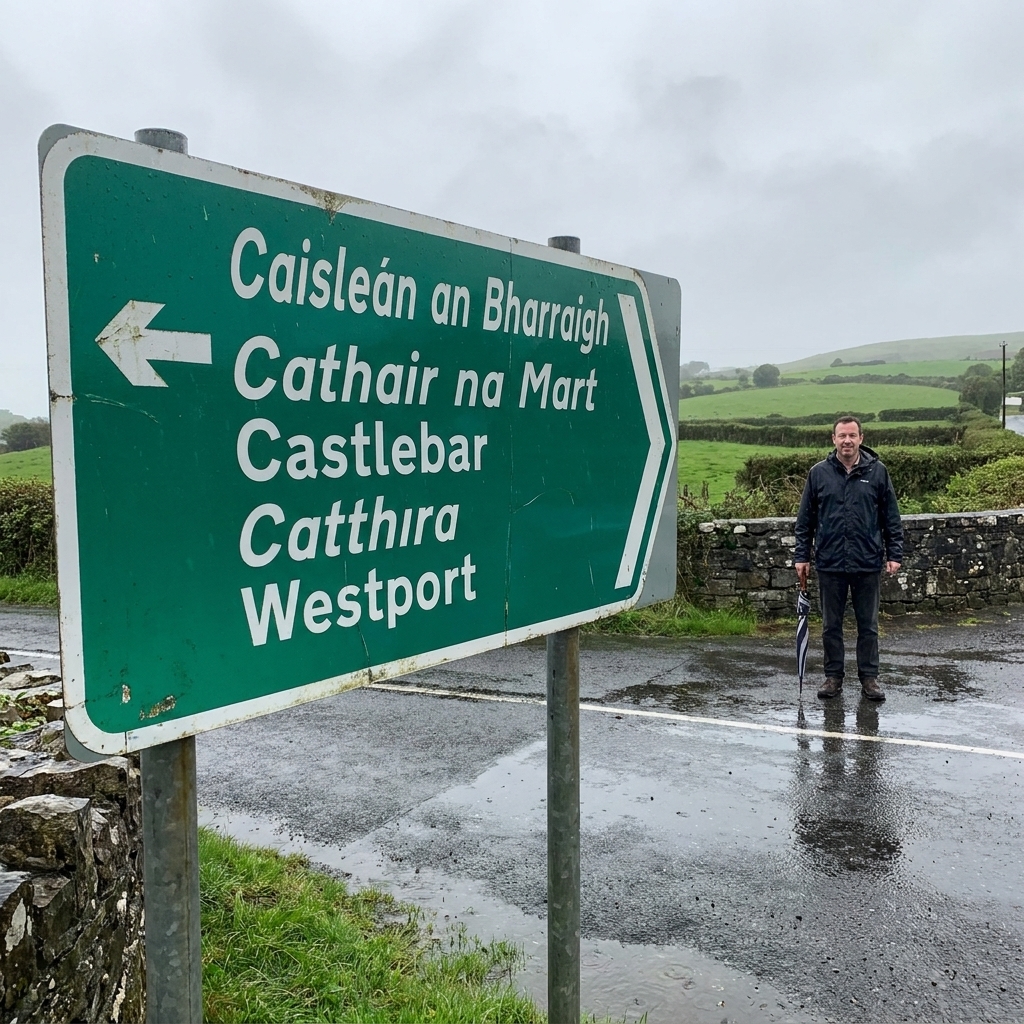
In the Republic of Ireland, many national and regional directional signs are bilingual. Usually, the Irish name appears on top, with the English below. (There are exceptions, and I’ll get to those.)
In Irish, you’ll often see special letters and marks that are worth recognizing:
- Fadas: the little accent mark over a vowel, like á, í, ó, ú, é. It lengthens the vowel sound. It can change the meaning of a word, so it’s not decoration.
- Lenition: an h after the first consonant in certain cases, like bh, mh, ch, dh. You’ll also see it in pairs like ph, th, gh, and fh (which is often silent). This usually softens or shifts the sound.
- Different spellings, same place: sometimes the Irish and English versions look nothing alike, because the English name is an older Anglicization rather than a direct translation.
You’ll also see Irish in practical contexts, not just place names: warning signs, tourist brown signs, and official notices. If you want a wider grounding in quirky geography and language facts, my hub page Ireland Facts is a good wandering trail.
The quickest way to decode a place name
When I’m driving and a sign flashes by, I don’t try to translate the whole thing. I look for the root word that tells you what the place is. In Ireland, the same building blocks appear again and again.
Here are the most useful ones to learn first, with what they usually mean and what you might expect to see on the ground.
Baile (Bally)
Baile (often seen as Bally in English place names) generally means town or homestead. If you’ve ever driven through Bally something after Bally something, you’ve met this word.
- What it hints at: a settled place, older farmland, clusters of houses.
- On signs: you might see Irish like Baile and an English Bally- version, or only one of them depending on the official name.
Cill (Kil)
Cill (often Kil in English) means church, usually pointing to an early Christian site.
- What it hints at: an old graveyard, a ruined church, a holy well, a monastery site if you’re lucky.
Dún (Dun)
Dún means fort. Ireland is scattered with ringforts, promontory forts, and strongholds that left their mark on names long after the walls fell.
- What it hints at: defensive sites, hilltops, headlands, sometimes a Norman or later fortification nearby.
Ráth (Rath) and Lios (Lis)
Ráth and Lios both relate to ringforts or enclosed dwelling places. You’ll see Rath- and Lis- all over the country.
- What it hints at: ancient settlement landscapes, farmed land with subtle grassy banks and circular rises.
Gleann (Glen)
Gleann means valley. If you’re heading toward a Gleann, expect the road to start folding into itself.
- What it hints at: steep sides, streams, sudden weather changes, and sheep that treat your lane like a private footpath.
Sliabh (Slieve)
Sliabh means mountain. Even low mountains can carry the Slieve name, because in Ireland a “mountain” is often a feeling as much as a height.
- What it hints at: upland, bog, heather, and views that arrive in dramatic bursts between showers.
Loch (Lough)
Loch means lake or inlet. In English place names you’ll often see Lough.
- What it hints at: freshwater lakes inland, sea loughs along the coast, and roads that suddenly decide to hug the water for miles.
Inis (Inish)
Inis means island. You’ll see it as Inis in Irish and often as Inish in English spellings.
- What it hints at: a real island, or sometimes a river island or older “island” of higher ground in a boggy area.
Droichead (bridge)
Droichead means bridge. You’ll see it in names tied to crossings and old routes.
- What it hints at: a river, a ford nearby, and a settlement that grew around movement.
- A concrete example: Drogheda’s Irish name is Droichead Átha, meaning “bridge of the ford.”
Béal (Bel, Ball)
Béal means mouth, usually the mouth of a river or the opening of a pass.
- What it hints at: a river meeting the sea, or a key geographic gateway.
Áth (Ath)
Áth means ford. This one is pure gold for understanding Ireland’s older travel routes.
- What it hints at: a river crossing point that mattered long before modern bridges.
Two quick real-world examples
If you like something you can try immediately, these two come up often in maps, chats, and road trips.
- Drogheda: Droichead Átha. Once you spot droichead (bridge) and áth (ford), the whole thing starts to feel less like a tongue twister and more like directions from an older Ireland.
- Athlone: Áth Luain. Even if you do not know who or what “Luain” refers to, you can still catch the important bit for your mental map: áth, a ford.
Pronunciation basics
I’m not going to sell you a magic trick where Irish suddenly reads like Spanish. It doesn’t. But you can get surprisingly far with a few friendly rules and a willingness to approximate.
Fadas stretch the vowel
A fada generally makes the vowel longer. If you see á or ó, give it time in your mouth. It often makes the word sound smoother than you’d expect from the spelling.
Bh and mh often sound like v or w
These combinations shift depending on nearby vowels and regional speech, but a good beginner instinct is:
- bh: often like a v or w
- mh: often like a v or w, sometimes very faint
Ch is a throaty sound
ch is not “tch.” It’s the raspy sound in Scottish loch. You’ll hear it clearly in Irish too.
Dh and gh can be soft and airy
Sometimes they’re a gentle sound, sometimes they almost disappear into the surrounding vowels. If your version feels too simple, you’re probably closer than you think.
It’s OK to say it your way
In small towns, locals will understand your earnest attempt. If you’re unsure, try this: pronounce the root word you recognize, then point at the sign. I’ve had entire conversations at petrol stations that began with me saying, “I’m trying to get to that one,” and everyone knew exactly where “that one” was.
Place names as landscape notes
This is the fun part. Irish place names are often literal. They describe what someone saw, owned, feared, celebrated, or built.
Color words you’ll spot everywhere
- Dubh (doo, dove): black or dark
- Bán (bawn): white or fair
- Dearg (dyarg, jarrag depending on region): red
- Glas (glass): green or grey-green. In some place names it can also lean toward the look of water or wet ground, that greenish-grey sheen you get under Irish skies.
Common terrain clues
- Cnoc: hill
- Carraig: rock
- Coill: wood
- Móin: bog, turf
- Trá: beach or strand
- Ceann: headland or end
Once you start noticing these, you can almost predict the next bend. A cnoc tends to appear before the view opens. A móin warns you the road might narrow and float through brown peatland. A trá suggests you might smell salt soon, even before you see the Atlantic.
Why Irish and English names don’t match
Sometimes the English name is a direct Anglicization of the Irish sounds. Other times it’s a translation, a shortened form, or a completely different historical thread.
You’ll run into a few patterns:
- Sound-alike evolution: English spelling tried to capture Irish sounds, and over centuries the shape changed.
- Administrative standardization: modern official forms may favor one historic version over another.
- Local usage: locals might still use a nickname or an older name that never appears on your map.
If you love this sort of thing, it pairs nicely with slow travel. I’m a big believer that you understand a town better when you give it a whole day and let the names sink in. My guide Plan an Unhurried Day in an Irish Town leans into that kind of wandering.
Road sign basics in rural areas
Beyond the language, Ireland has a few sign quirks worth knowing if you’re new to driving here.
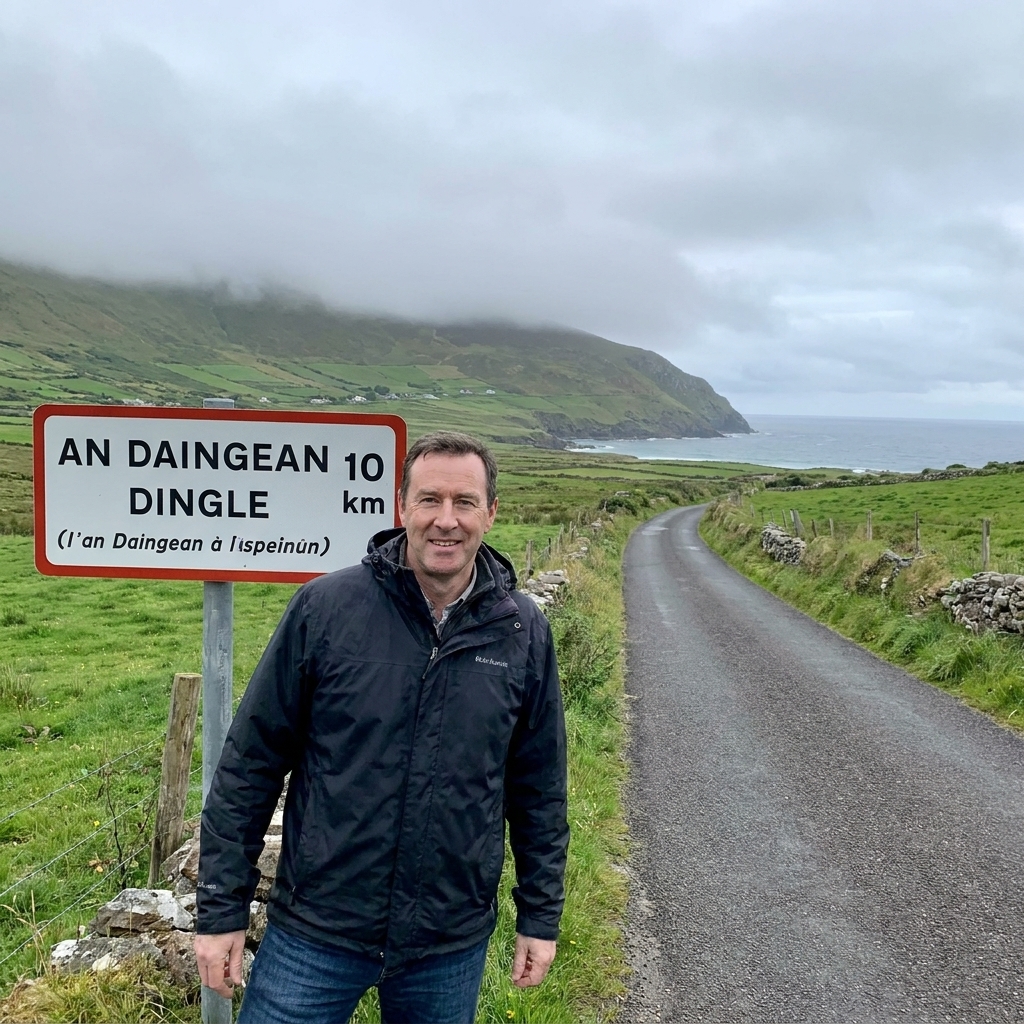
Distances use km in the Republic
In the Republic of Ireland, road distances are in kilometers, and speed limits are km/h. Northern Ireland uses miles and mph. If you’re crossing the border on a road trip, it’s a small detail that matters.
Townlands can be tiny
You may see a sign for a place name that feels like it should be a village, and then you pass exactly three houses, a gate, and a dog that looks like it owns the parish. That can still be an official place name, often a townland.
Gaeltacht signs can be Irish-only
In Gaeltacht areas, where Irish is the everyday community language, you’ll often see Irish place names prominently, and some directional signs may be Irish-only for local destinations. It’s not there to confuse you. It’s there because you’ve entered a living language landscape, most commonly along parts of the west coast.
A small cheat sheet
If you only remember one section, make it this one. These are the words I find myself decoding again and again while driving.
| Irish on signs | Often appears as | Usually means |
|---|---|---|
| Baile | Bally | Town, homestead |
| Cill | Kil | Church |
| Dún | Dun | Fort |
| Ráth | Rath | Ringfort, enclosure |
| Lios | Lis | Ringfort, enclosure |
| Gleann | Glen | Valley |
| Sliabh | Slieve | Mountain |
| Loch | Lough | Lake, inlet |
| Inis | Inish | Island |
| Áth | Ath | Ford |
| Droichead | Seen in names like Drogheda | Bridge |
| Trá | Tra | Beach, strand |
Not every name is perfectly literal, and not every translation is neat. But even rough recognition makes you a calmer navigator.
FAQ from the passenger seat
Is it Gaelic or Irish?
People often say “Gaelic,” but the language in Ireland is properly called Irish or Gaeilge. “Gaelic” can be used in a broader sense, especially when people are talking about the Gaelic language family, but on the ground in Ireland you’ll hear “Irish” and “Gaeilge” most.
Why is Irish above English on signs?
Irish is the first official language of the Republic of Ireland, so signage generally places Irish first. It’s also a quiet, everyday way of keeping the language visible in public life.
Do I need Irish to drive in Ireland?
No. You can road trip happily with zero Irish. But learning a few place-name roots reduces stress, helps you match what you see on the sign to what you see on your map, and turns navigation into a bit of storytelling.
What if my map app shows a different spelling than the sign?
It happens. Look for the recognizable root word, and zoom out to confirm the county or nearby larger town. If you’re in a rural area, asking at a shop or petrol station still works wonderfully. Ireland remains gloriously human that way.
Let the names slow you down
On my best days in the campervan, I wasn’t chasing the next highlight. I was letting place names lure me off the main road: a gleann here, a trá there, a lios that suggested a fort hidden behind a hawthorn hedge.
If you’d like more gentle, practical Ireland reading, you can browse the main guides at Places to Visit and Ireland Facts. And if you ever find yourself lost between two spellings of the same village, take it from me. Pull in, breathe, and order something warm. The road will still be there when you step back outside.