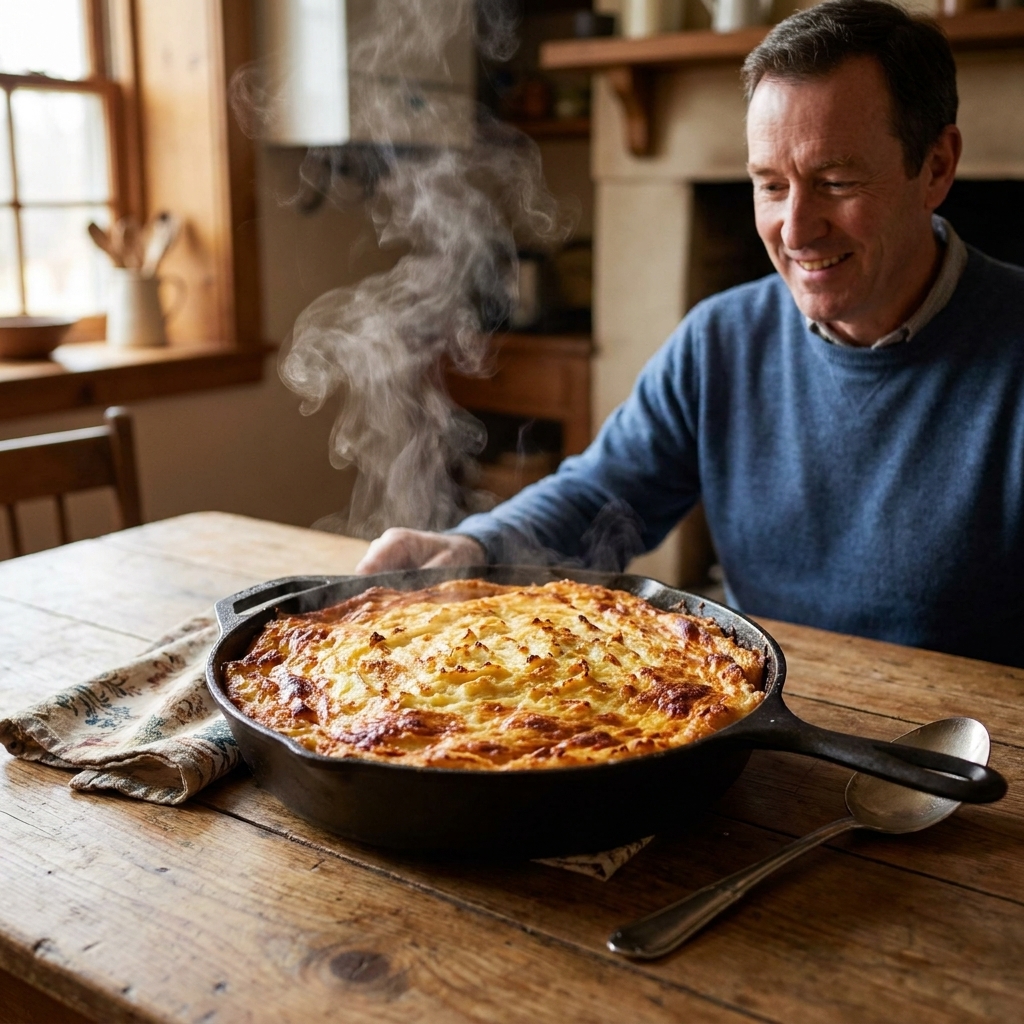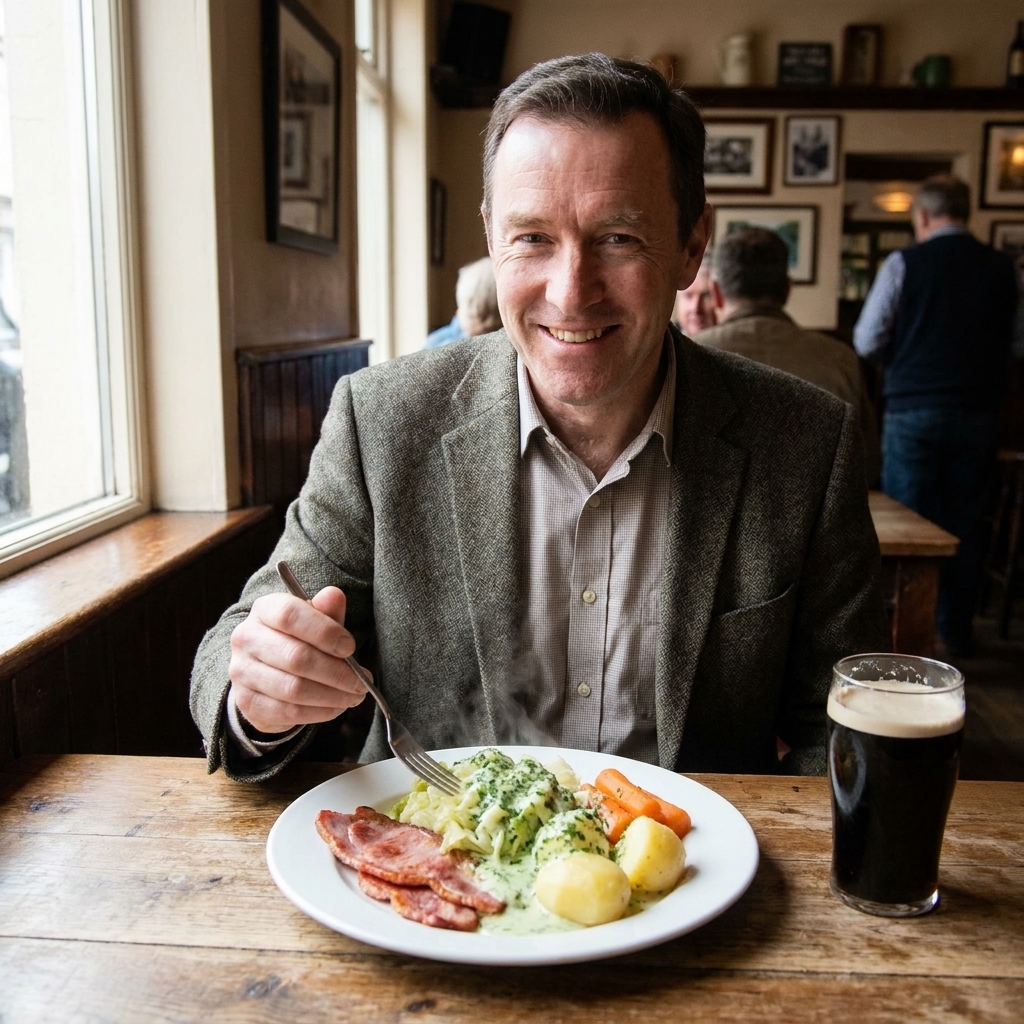

I have a soft spot for Irish potatoes that show up like an old friend: steaming, butter-slicked, and meant to be shared. In little coastal pubs and farmhouse kitchens, I kept running into two classics that look similar at first glance, but taste like completely different stories.
Colcannon is mashed potato folded with cabbage or kale until it turns into something hearty and faintly sweet. Champ is mashed potato perfumed with scallions (spring onions), the kind of comfort food that somehow tastes like you have been looked after.
This is my boots-on-the-ground guide to both, with step-by-step instructions you can cook tonight.

Colcannon vs. champ
If you remember just one thing, make it this: colcannon is greens-in-the-mash, and champ is scallions-in-the-mash.
| Dish | What goes in | Flavor | Best with |
|---|---|---|---|
| Colcannon | Cabbage or kale (sometimes leeks), plus butter and milk | Earthy, sweet, savory, a little nutty if you use kale | Roast meats, sausages, fried eggs, or as a meal with more butter |
| Champ | Scallions (spring onions) steeped in warm milk, plus butter | Buttery, oniony, gentle and aromatic | Ham, bacon, smoked fish, or anything that loves a creamy side |
Both are traditional, both are simple, and both depend on one unglamorous detail: good potatoes.
One little bit of context I like to mention: you will find both dishes across the island, but champ is especially associated with Ulster and Northern Ireland. If you see it on a menu up there, it feels completely at home.
The potato rule
Every Irish mammy I have ever chatted with has some version of the same advice: use floury potatoes and do not bully them. Here is what works reliably in an ordinary home kitchen.
- Use floury potatoes: Roosters are one of the most common choices in Irish kitchens, but any starchy variety works.
- Start in cold salted water: it cooks the potatoes evenly.
- Drain well, then put the pot back on low heat for 30 to 60 seconds to steam off excess water.
- Mash hot: hot potatoes absorb butter and milk better.
- Avoid over-mixing: a masher is safer than a food processor.
Workflow tip: get the potatoes on first, then start your cabbage pan or your scallion milk while they simmer. That little bit of coordination takes the stress out of it.
If you want to explore more Irish staples that show up beside these dishes, I keep a running list of what locals actually eat here: what Irish people actually eat.
Recipe 1: Colcannon
Colcannon is the one I make when the weather is doing that classic Irish thing where it cannot decide what season it is. It is filling without being fussy.
Ingredients (serves 4)
- 2 lb (about 900 g) floury potatoes, peeled and cut into chunks
- 1/2 small green cabbage, finely shredded (or 4 to 6 cups chopped kale)
- 4 tbsp (55 g) butter, plus extra for serving
- 3/4 to 1 cup (180 to 240 ml) whole milk, warmed (or half milk and half cream)
- 2 to 3 scallions, thinly sliced (optional but lovely)
- Salt and black pepper
Step-by-step
- Boil the potatoes. Put potatoes in a pot, cover with cold salted water, bring to a boil, then simmer 15 to 20 minutes until very tender.
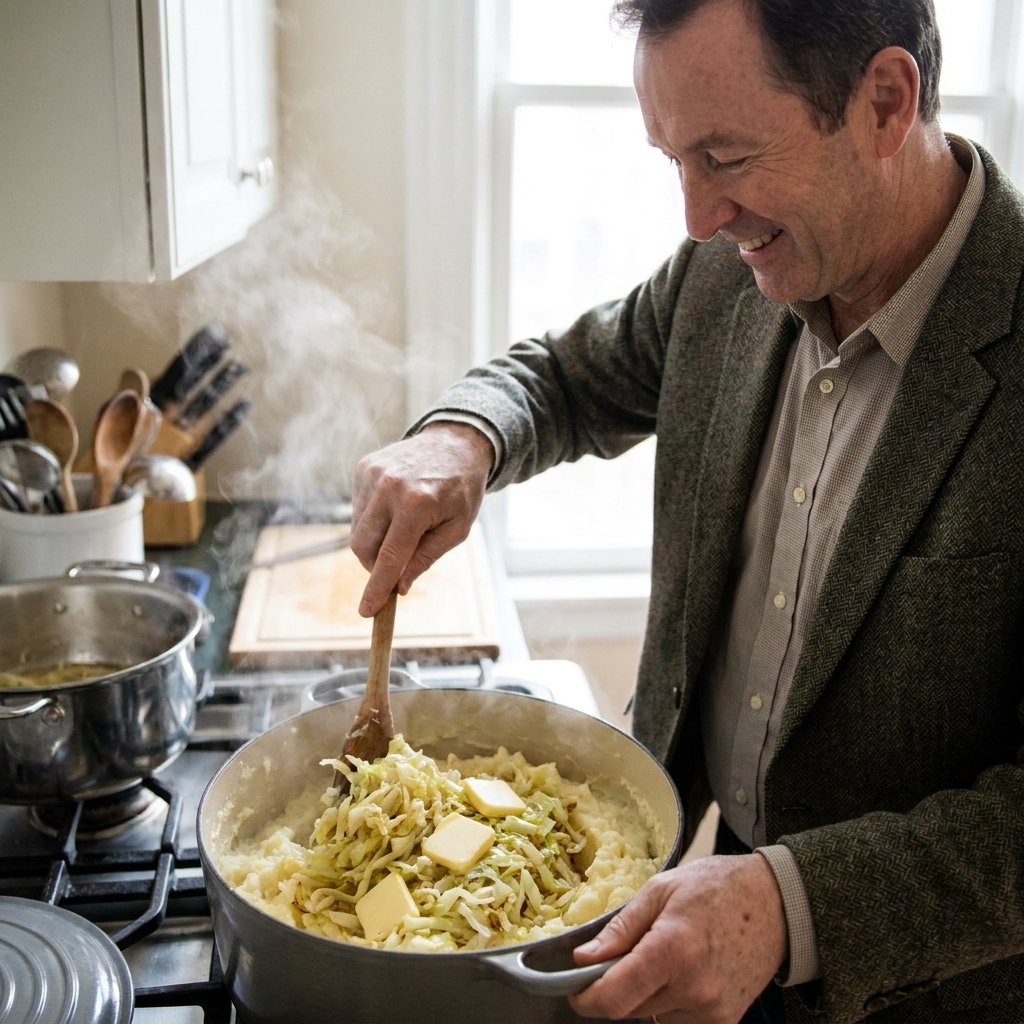
- Cook the cabbage or kale. While the potatoes cook, melt 2 tbsp butter in a pan. Add shredded cabbage with a pinch of salt and sauté 6 to 10 minutes until soft and sweet. For kale, sauté 3 to 5 minutes until tender. If it looks dry, add a small splash of water and cover for a minute.
- Drain and dry the potatoes. Drain well, then return the pot to low heat for 30 to 60 seconds, shaking gently, until the surface moisture steams off.
- Mash with butter first. Add remaining 2 tbsp butter to the hot potatoes and mash until it disappears.
- Add warm milk gradually. Pour in about 3/4 cup warm milk and mash. Add more only if you want it looser.
- Fold in the greens. Stir in cabbage or kale (and optional sliced scallions). Season with salt and plenty of black pepper.
- Serve properly. Pile into a warm bowl, make a small well in the center, and add a knob of butter so it melts into the mash.
Colcannon variations I actually see
- With leeks: sauté sliced leeks in butter until silky, then fold in with the greens.
- With bacon rashers: crisp 4 to 6 rashers or thick-cut bacon, chop, and stir through at the end.
- With kale instead of cabbage: a little more earthy, a little more bite, very common.
Make-ahead and leftovers
Colcannon reheats well. Warm gently with a splash of milk and an extra bit of butter. Leftovers also make brilliant potato cakes: shape into patties and fry in butter until golden.
Recipe 2: Champ
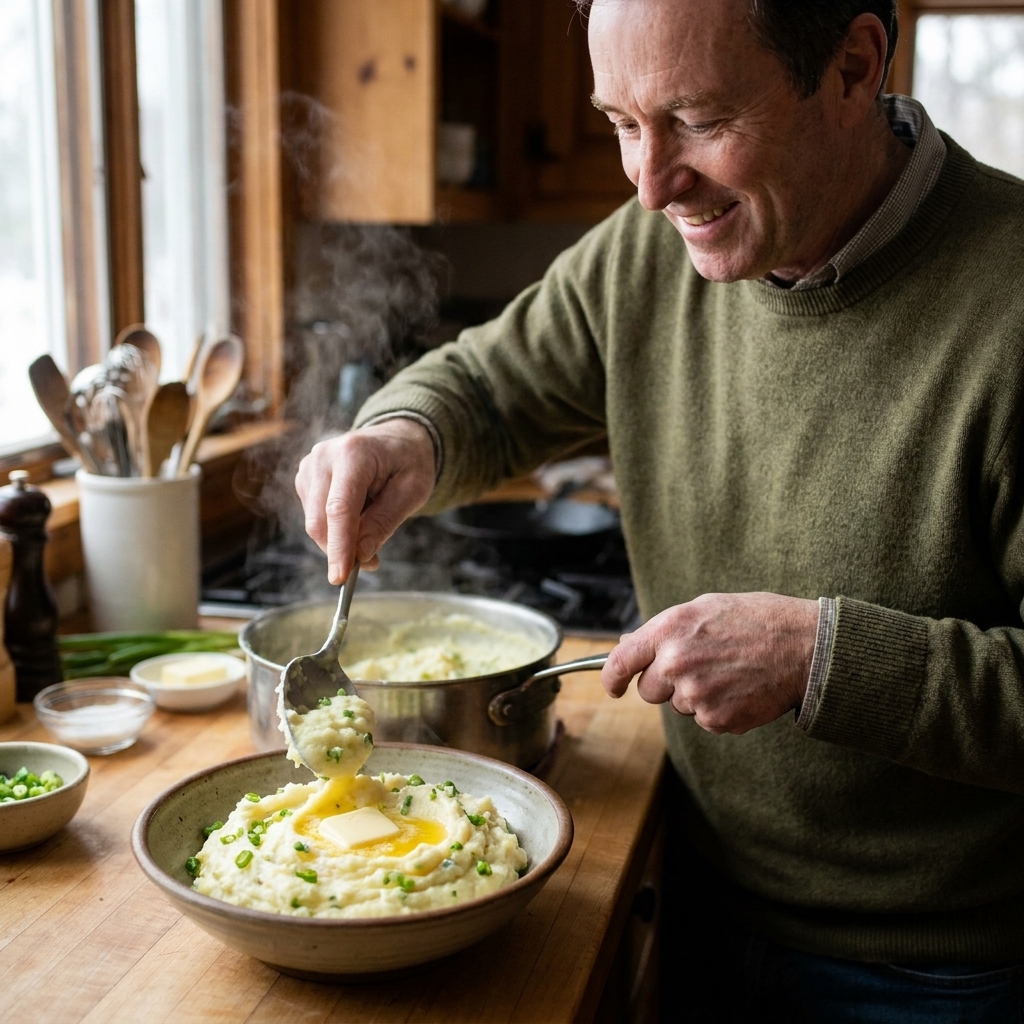
Champ is the smoother, more delicate cousin. When it is done right, the scallions taste like they have melted into the potatoes, not like raw onion sitting on top.
Ingredients (serves 4)
- 2 lb (about 900 g) floury potatoes, peeled and cut into chunks
- 6 to 8 scallions (spring onions), thinly sliced (white and green parts)
- 1 cup (240 ml) whole milk
- 4 tbsp (55 g) butter, plus extra for serving
- Salt and black pepper
Step-by-step
- Boil the potatoes. Cover potatoes with cold salted water, bring to a boil, then simmer 15 to 20 minutes until tender.
- Warm the milk with scallions. While potatoes cook, gently heat milk in a small saucepan until steaming but not boiling. Add sliced scallions and a pinch of salt. Let it sit on very low heat 3 to 5 minutes, then turn off the heat and steep another 5 minutes. This softens the scallion bite and perfumes the milk.
- Drain and dry the potatoes. Drain well and steam dry briefly over low heat.
- Mash with butter. Add 3 tbsp butter to the hot potatoes and mash.
- Add the scallion milk. Pour in the warm milk and scallions gradually, mashing until creamy. You may not need every drop depending on the potatoes.
- Season and serve. Taste for salt, add black pepper, and serve with the last tablespoon of butter melting on top.
Champ tip: do not skip steeping
If you toss raw scallions into mash, champ can taste sharp and grassy. Steeping the scallions in warm milk is the small detail that makes it taste like the versions I remember from roadside pubs.
And a quick translation note, because this trips people up: in Ireland you will usually hear scallions called spring onions. In many US grocery stores, green onions are the same thing.
Which one to make
- Make colcannon when you want something hearty, rustic, and green-speckled. It is almost a meal in itself.
- Make champ when you want the pure comfort of creamy mash with a gentle onion warmth.
- Make both if you are feeding a group. Put out bowls of butter, pepper, and maybe a pan of sausages and let people argue about it in the nicest possible way.
If you are building out a proper Irish table, you will find more classics in my Irish recipes guide.
Troubleshooting
My mash is watery
Drain longer, then steam dry the potatoes in the pot for up to a minute. Next time, cut chunks a bit larger so they absorb less water.
My mash is gluey
Usually it is overworked potatoes or the wrong variety. Use a masher and stop as soon as it is smooth. Avoid blenders and food processors.
My colcannon tastes bland
Add more salt than you think you need, and finish with black pepper and an extra knob of butter. Cabbage also needs enough time in the pan to turn sweet.
My champ tastes too oniony
Steep the scallions in warm milk off the heat for longer, and use more of the green parts (milder) than the white parts (sharper).
Quick FAQ
Is colcannon the same as bubble and squeak?
Not quite. Bubble and squeak is a British leftover dish, usually potatoes and cabbage (often with other leftover veg) fried in a pan. Colcannon is the mash itself mixed with cooked greens, although leftovers are excellent pan-fried.
Can I use green onions instead of scallions?
In most US grocery stores, they are the same thing. Look for slender onions with long green tops.
Do people put cheese in colcannon or champ?
Not traditionally, but nobody is going to arrest you for it. If you want to try it, keep it subtle: a little mature cheddar folded in at the end is plenty.
The butter well
In many homes, both dishes get served with a little butter well in the center. It is exactly what it sounds like: a hollow for butter to melt into. It is also a quiet reminder that these recipes were built on simple ingredients, made generous through care, time, and a willingness to use real butter.
And if you ever find yourself ordering dinner in Ireland and want to sound like you have done this before, I have a practical pub tip here: how to order a Guinness like a local.