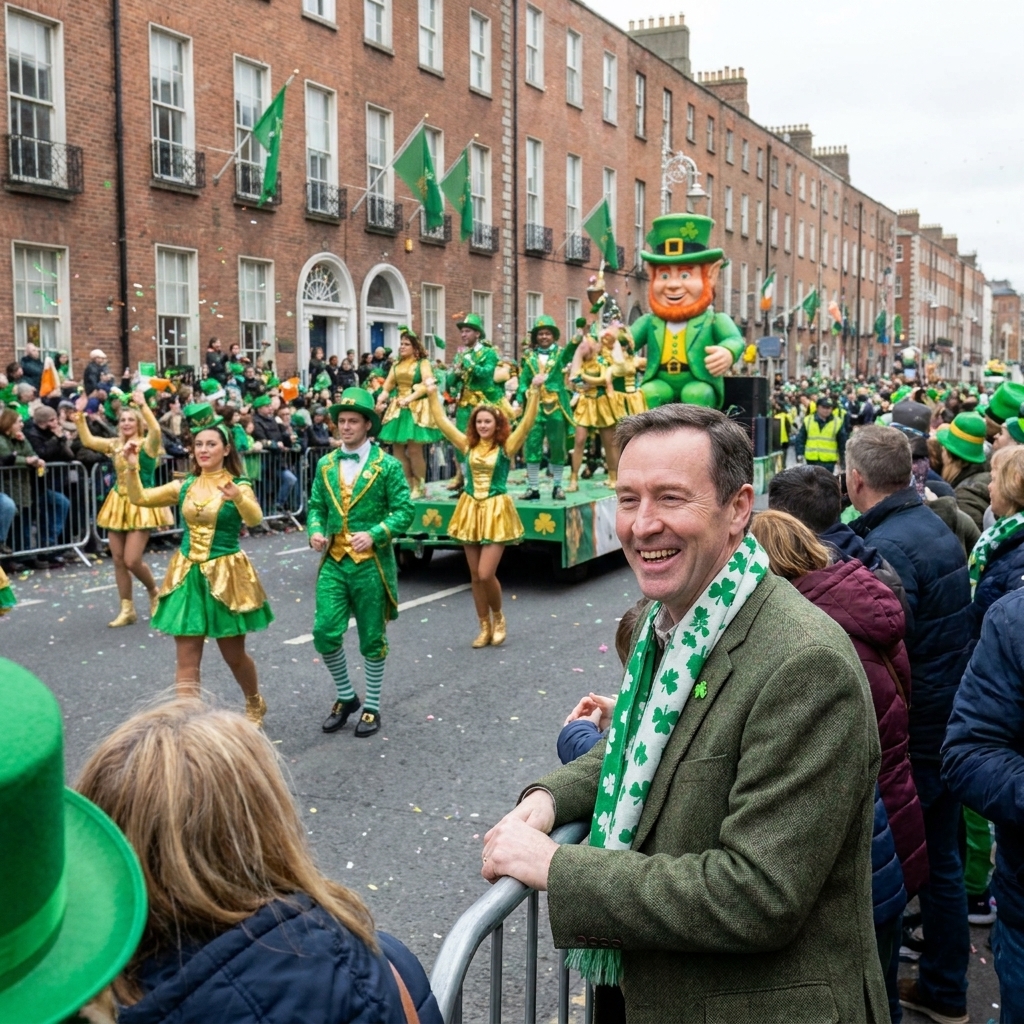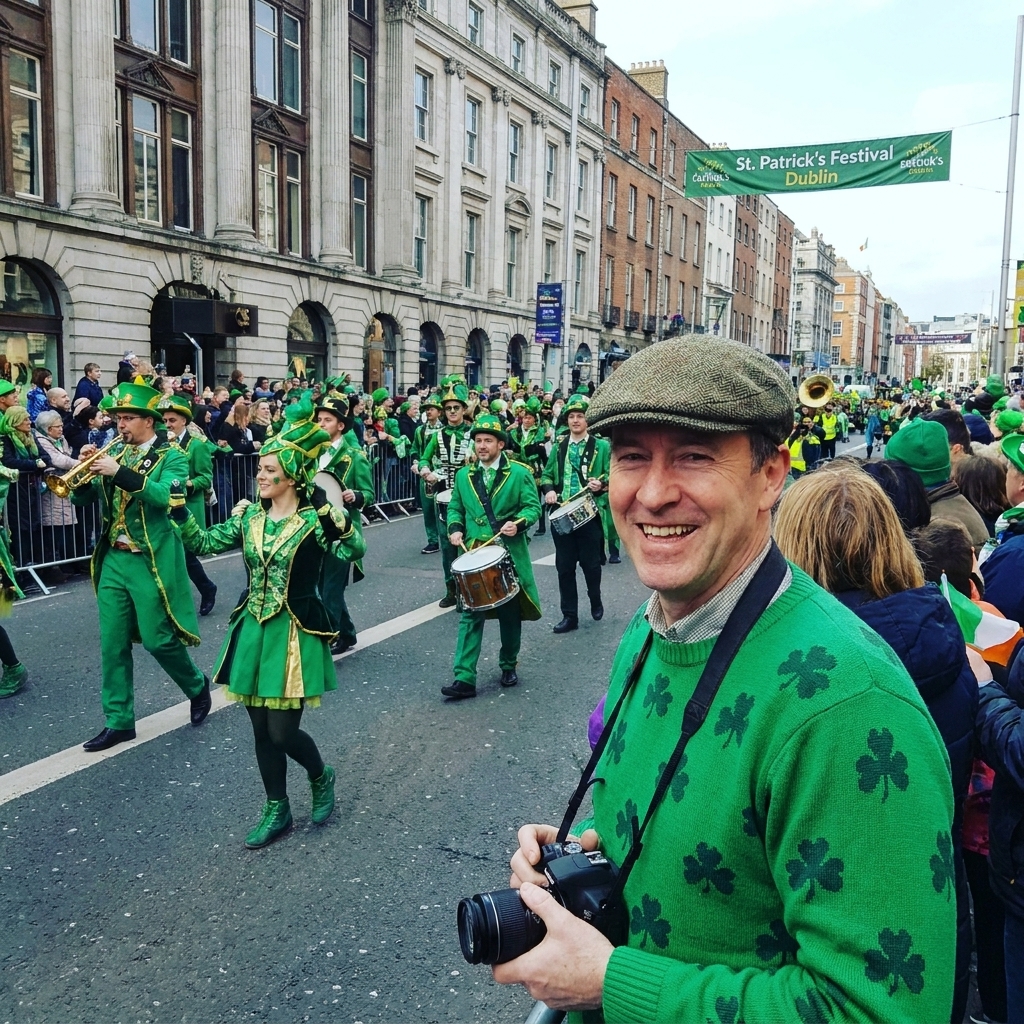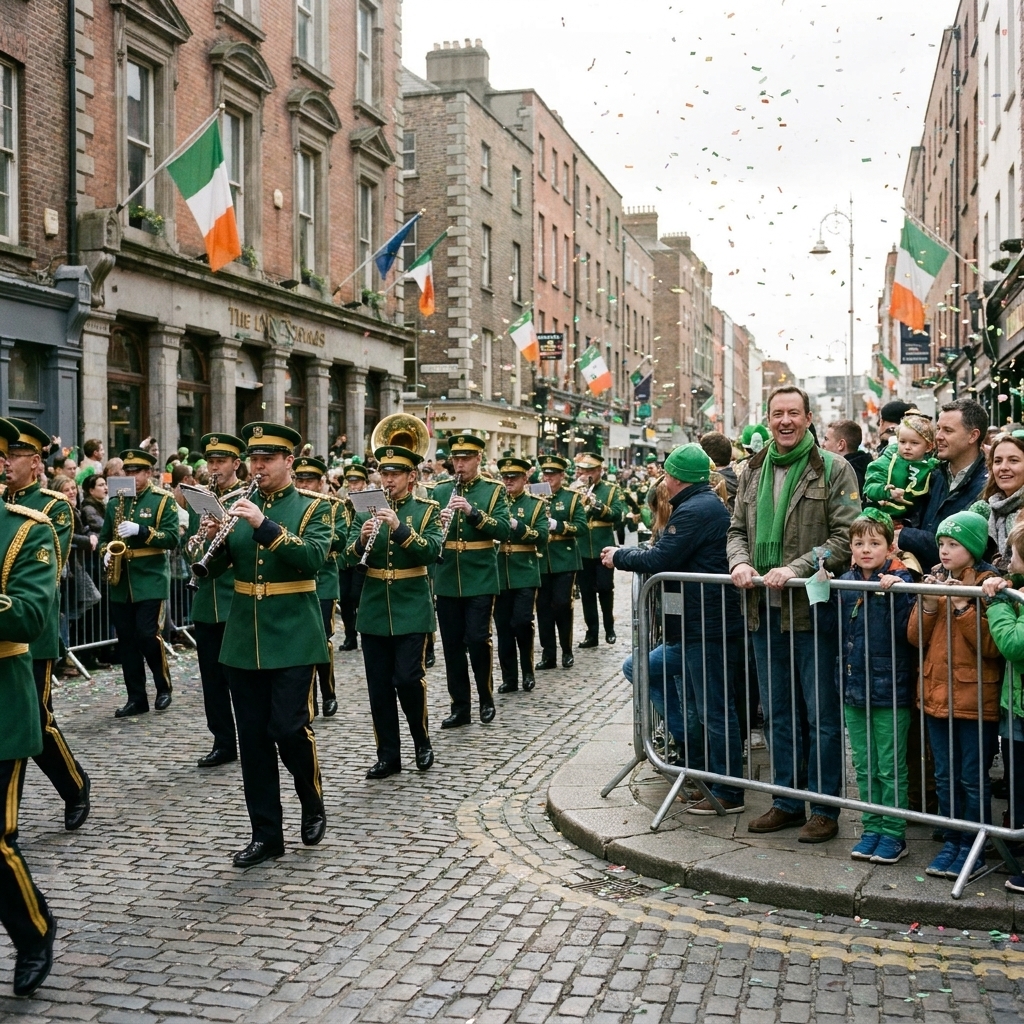

My first St. Patrick’s Day in Dublin, I did what a lot of well-meaning visitors do. I went all-in on the green. Thin hoodie, cheap shamrock hat, and trainers that had never met Irish rain before. By the time the parade finished, my feet were damp, my shoulders were cold, and I’d learned the most important style rule on the island.
In Ireland, St. Patrick’s Day outfits are built like a sandwich. A bit of green on top, solid layers underneath, and something weatherproof to keep the whole thing from turning into a soggy mess while you’re standing at the curb for an hour.

The only rule: dress for March
Mid-March in Ireland can feel like four seasons taking turns every fifteen minutes. Even if the morning is mild, the parade hours are mostly standing still, which means you chill quickly, especially in wind.
So here’s the mindset I use: stay dry first, stay warm second, look festive third. You can always add green without sacrificing comfort.
If you want the bigger parade-planning picture, I’ve also got a city breakdown here: Dublin vs Galway: which St. Patrick’s Day parade should you attend?
St. Patrick’s Day packing list
1) Waterproof outer layer (non-negotiable)
Bring a rain jacket with a hood. In changeable weather, a waterproof shell beats a heavy coat because you can layer underneath and adapt as the day shifts.
- Best choice: a breathable waterproof jacket with taped seams and a proper hood.
- Good enough: a packable rain shell plus a warm mid-layer.
- Skip: “water-resistant” fashion coats if you’re going to be outside for hours. They surrender fast in wind-driven drizzle.
2) Mid-layer for warmth (fleece, wool, or a light puffer)
This is where comfort lives. I’m partial to a fleece or a thin insulated jacket that fits under my rain shell.
- For cold snaps: a lightweight puffer under the shell.
- For typical days: fleece or a wool sweater.
- For pub hopping later: something you can keep on indoors without roasting.
3) Base layer that doesn’t feel clammy
Ireland can be damp rather than properly freezing. If you’re walking between viewpoints, bus stops, and parade routes, you can sweat a little, then cool down fast.
- Best: merino or a synthetic base layer.
- Works: a normal long-sleeve tee if you run warm.
- Skip: heavy cotton as your only layer if you’re likely to get wet.
4) Trousers that handle drizzle
People obsess over jackets, then forget their legs. Denim looks grand, but when it gets damp it can feel cold and heavy, especially if you’re standing still.
- Best: quick-dry trousers or a heavier technical fabric that sheds light rain.
- Works: jeans if the forecast is decent and you’ve got a longer jacket.
- Tip: if you are wearing jeans, pair them with warm socks and shoes that can handle puddles.
5) Shoes you can stand in for hours
This is where most St. Patrick’s Day outfits fail. Parades are fun, but they are a lot of time on your feet.
- Best: waterproof walking shoes or boots with cushioning.
- Works: comfortable trainers if the forecast is dry and you don’t mind puddles.
- Skip: brand-new boots, thin soles, or anything that pinches. Blisters on March 17 are a long, grim story.
6) Socks that stay warm when the day turns damp
Pack wool or wool-blend socks. If you’ve never tried them, this is the day. They manage moisture and keep your feet from feeling like two cold sponges.
7) One small green “hero” item
Here’s how you stay festive without dressing like a novelty pint glass: pick one green piece and let the rest be practical.
- A green beanie or scarf
- A green sweater under a neutral rain jacket
- A shamrock pin on your lapel or backpack strap
- Green nail polish or a subtle accessory if you prefer minimal
8) Warm accessories that actually help
Wind is the sneak attack on Irish streets.
- Beanie: a big difference for tiny packing space.
- Scarf or buff: keeps the chill off your neck while you stand around.
- Thin gloves: especially if you’ll be holding a phone for photos or videos.
9) A compact umbrella (optional)
I’ll be honest: umbrellas in Ireland are a gamble. In a stiff wind, they flip inside-out fast. If you bring one, treat it as backup. Your hooded rain jacket should be your main plan.
10) Small day bag with weather in mind
A crossbody or small backpack is perfect for a parade day.
- Throw in a spare pair of socks if you’re paranoid like me.
- Pack tissues and lip balm. Windburn is real.
- If you’re carrying electronics, use a simple zip pouch to keep things dry.
11) A “pub-ready” layer for later
Most folks do some version of: parade, wander, then warmth indoors. A clean sweater or decent overshirt turns you from soaked tourist into someone who looks like they belong ordering a round.
If Guinness is part of your plan, I wrote up the little social details that make life easier: How to order a Guinness like a local.
Three easy outfit formulas
The “festive but normal” outfit
- Waterproof hooded jacket in navy, black, tan, or olive
- Green sweater or green scarf
- Jeans or trousers you can move in
- Waterproof walking shoes
The “I get cold thinking about it” outfit
- Rain shell
- Light puffer or thick fleece
- Merino base layer
- Beanie, scarf, gloves
- Warm socks and boots
The “lots of walking between events” outfit
- Breathable waterproof jacket
- Fleece mid-layer
- Moisture-wicking base
- Comfort trainers or walking shoes with grip
- A green hat or pin for the photos

What not to wear
- All green, all cotton: looks cheerful, feels miserable once it’s damp.
- Costume leprechaun hats: if you love them, wear one, but in wind they can turn into an awkward sail.
- Heels or dress shoes: between cobblestones, curbs, and long standing time, they are a trap.
- A heavy winter coat with no waterproofing: it gets wet and stays wet.
- Anything you can’t sit in comfortably: you’ll want a warm café break at some point.
Parade comfort tips
Keep your core warm
If your torso stays warm, the rest of you behaves. That’s why the base layer plus mid-layer matters more than doubling up on novelty accessories.
Choose pockets over carrying things
A jacket with decent pockets means less rummaging in drizzle. It sounds small, but it makes the day smoother.
Make your green removable
If you’re traveling for a week, you don’t want one holiday outfit that takes over your suitcase. A green scarf, pin, or hat gives you the spirit without committing your entire wardrobe.
Sort the simple logistics early
If you want a good curb spot, arrive a bit early. Bring a small snack and some water, and have a rough plan for toilets before you settle in for the long stand. It is the unglamorous detail that saves your day.
Plan for the evening drop
Evenings can feel sharper than the daytime, especially near the coast. If your day ends with a walk back to your hotel or a bus stop, pack that warm layer.
Quick FAQ
Do I have to wear green in Ireland on St. Patrick’s Day?
No. Plenty of people wear normal clothes with a small shamrock, a green scarf, or nothing at all. You are very unlikely to be shamed by locals. The only thing that tends to get judged is poor rain preparation.
Is it disrespectful to wear Irish flags or tricolour colors?
Not automatically, but I keep it simple: green is safest, tricolour items are fine when they’re respectful and not used as a costume prop. When in doubt, go with a shamrock pin and a solid rain jacket.
Should I bring a kilt?
You’ll see the odd one, but it’s not standard here, and March wind plus bare knees is a bold choice. If you love it, commit properly with warm layers. Otherwise, trousers win.
What’s the single best item to pack for March 17?
A hooded waterproof jacket. Everything else is negotiable.
If you’re building a full St. Patrick’s Day plan
Clothes are half the battle. The other half is choosing the right place to celebrate for the kind of day you want, whether that’s big-city spectacle or a smaller, friendlier vibe. Start here: Guide to St. Patrick’s Day in Ireland.
And if your St. Patrick’s Day curiosity leans more toward the man himself than the parade route, this is a good read for the quieter side of the story: Where to find the real history of St. Patrick in Ireland.