

I have spent a fair few St. Patrick’s Days in Ireland the way most visitors do it first: following the noise. The big parade route. The packed pub. The promises of “best craic in town” written on chalkboards like a dare.
Then I had one in a small town where the biggest event was a kids’ parade behind a tractor, the priest gave a quick blessing outside the church, and the local pub filled up slowly, like a kettle coming to the boil instead of a nightclub opening its doors. That was the day it clicked for me.
St. Patrick’s Day here can be a roar, sure, but it is also a homecoming, a community day, and for plenty of people a quietly meaningful one. If you want to celebrate like locals, aim for what’s happening in ordinary places and ordinary hours, not the loudest billboard.
The local rhythm
St. Patrick’s Day tends to follow a simple Irish logic: do the important bits early, meet your people, then let the evening take whatever shape it wants.
- Morning: a mass for some families, a stroll into town for others, kids getting face paint, and someone trying to pin a shamrock on a squirming child.
- Midday: the parade, which is often smaller and more charming outside the big cities, plus a stop for tea or a first pint depending on the crowd.
- Afternoon: visiting relatives, watching sport, slipping into a local pub for a chat, or heading for a community event.
- Evening: music sessions, a meal at home or in the local pub, and a general rule that you pace yourself because tomorrow is still a day.
If you want the short version: locals celebrate with people first, pints second.
Shamrock, the real thing
If you see one thing on St. Patrick’s Day that feels properly Irish, it is a small sprig of fresh shamrock pinned to a coat, sweater, or school jumper. You will not see it everywhere and not everyone wears it, but in plenty of towns it still shows up in the simplest, least showy way.
The shamrock tradition is tied to the saint and to older symbolic storytelling, and it has a very different feel than novelty shop gear. If you want to join in:
- Choose something understated: a sprig of shamrock or a small green pin.
- Skip anything that screams “costume” unless you are in a parade group or you truly love the bit of theater.
- Remember it is still March in Ireland. A warm coat beats a thin green T-shirt every time.

If you want a deeper look at the man behind the holiday rather than the marketing around it, I wrote up a helpful starting point here: Where to find the real history of St. Patrick in Ireland. And if you are building your trip around the holiday, start with my St. Patrick’s Day guide.
Parades: smaller is sweeter
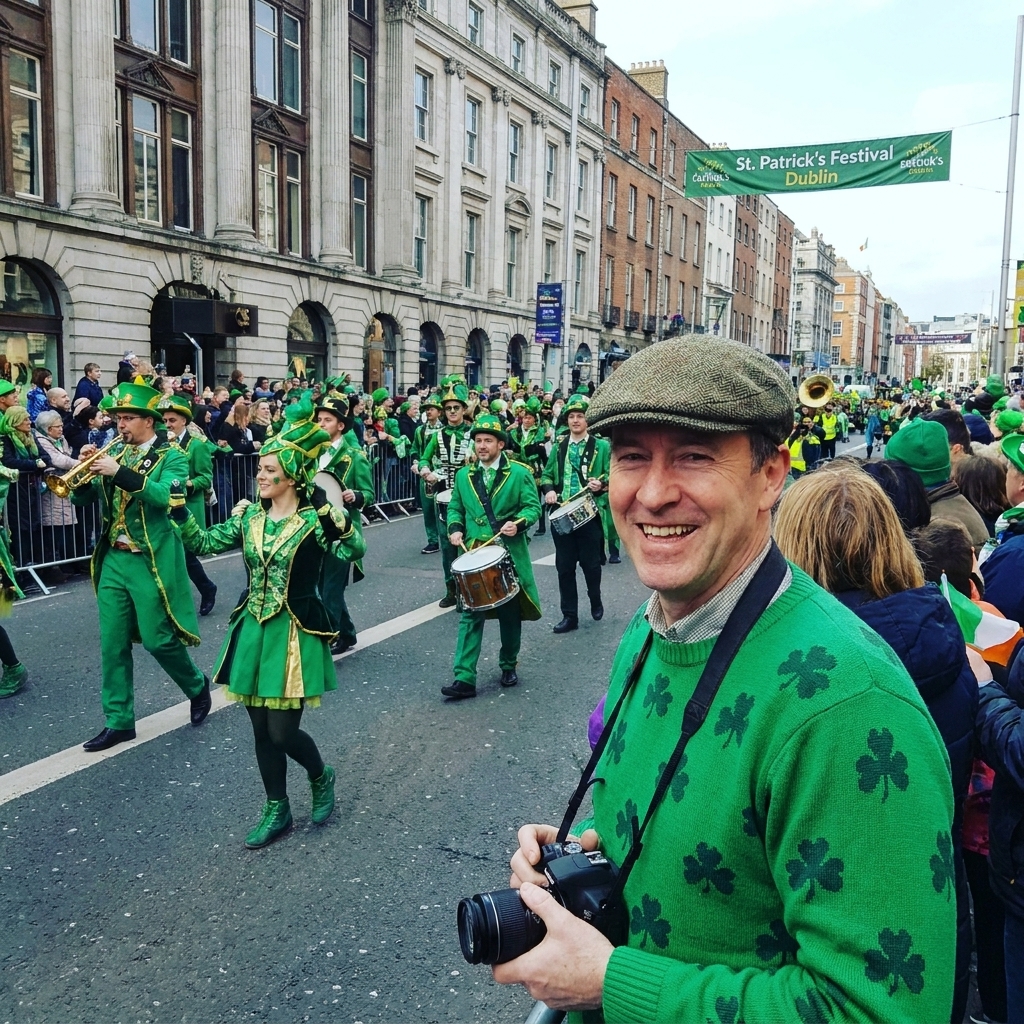
Dublin’s parade is famous for a reason, but the most local-feeling parades are often in smaller towns where you can actually see who’s who: the schools, the pipe band, the community center, the GAA club, the vintage tractor, the scout troop, and the family that always goes a bit overboard on costumes.
What a town parade feels like
- You will see parents waving at their own kids in the line-up.
- People stand where they always stand, like it is assigned seating without the tickets.
- There is often a collection for a local cause, or at least a strong community vibe.
How to do it like a local
- Arrive earlier than you think. Not for a “front row” photo, but because it is nicer to watch the town wake up.
- Bring a hot drink. March is not shy about wind and drizzle. If you need a reality check, read the truth about Irish weather.
- Keep your plans flexible. The best moments are often after the parade when people drift toward the same few doors.
Sport and community events
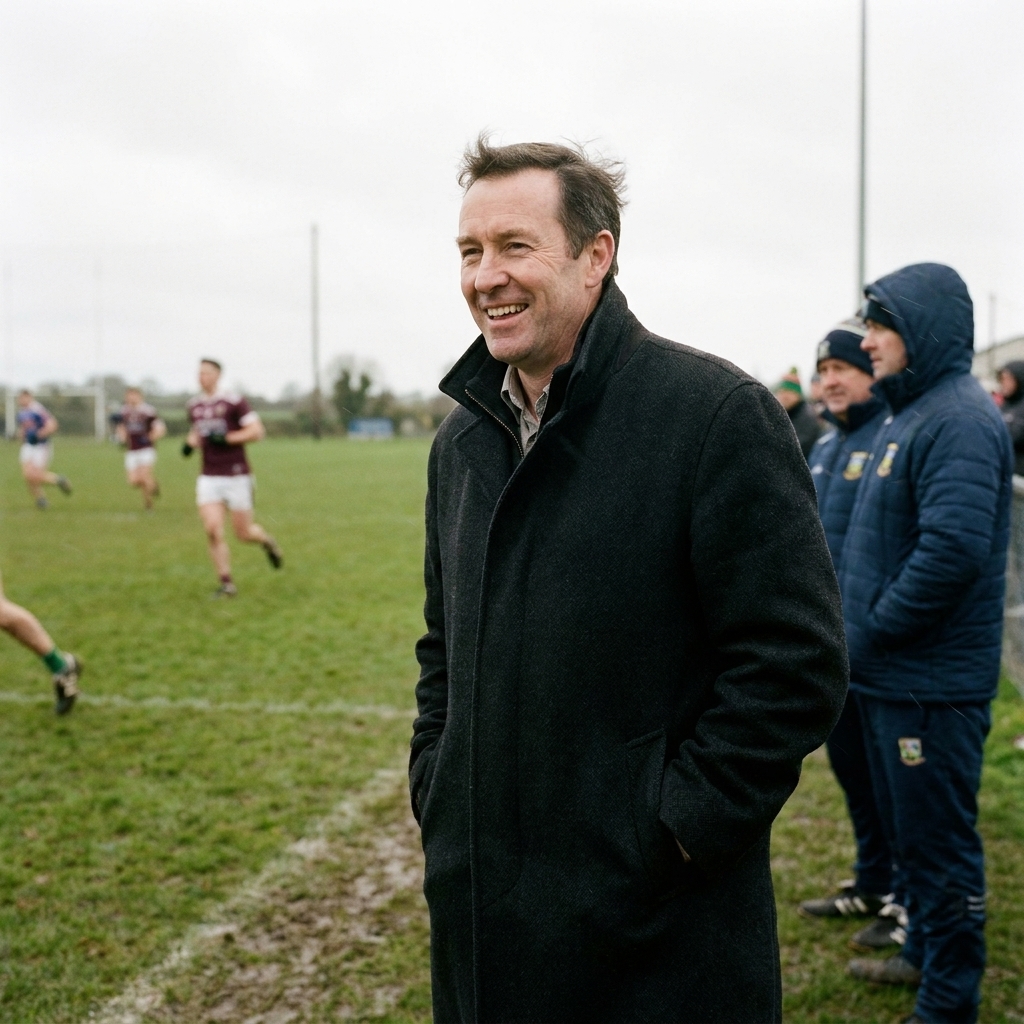
One of the most genuinely Irish ways to spend the day is to take in something local that is not “St. Patrick’s Day-themed.” In many places that means sport and community gatherings: a club match, a fundraiser, a family event, or a school performance.
GAA culture, in particular, is stitched into daily life across the country. Around the holiday you might find:
- a local hurling or Gaelic football match
- a charity walk or run organized by a club
- an underage blitz with families lining the pitch
Schedules vary year to year and county to county, but the point holds. Even if you do not know the rules, you will know the feeling. People are there because it is their place and their people. If you want one “real Ireland” memory to take home, make it that.
The pub: what’s real
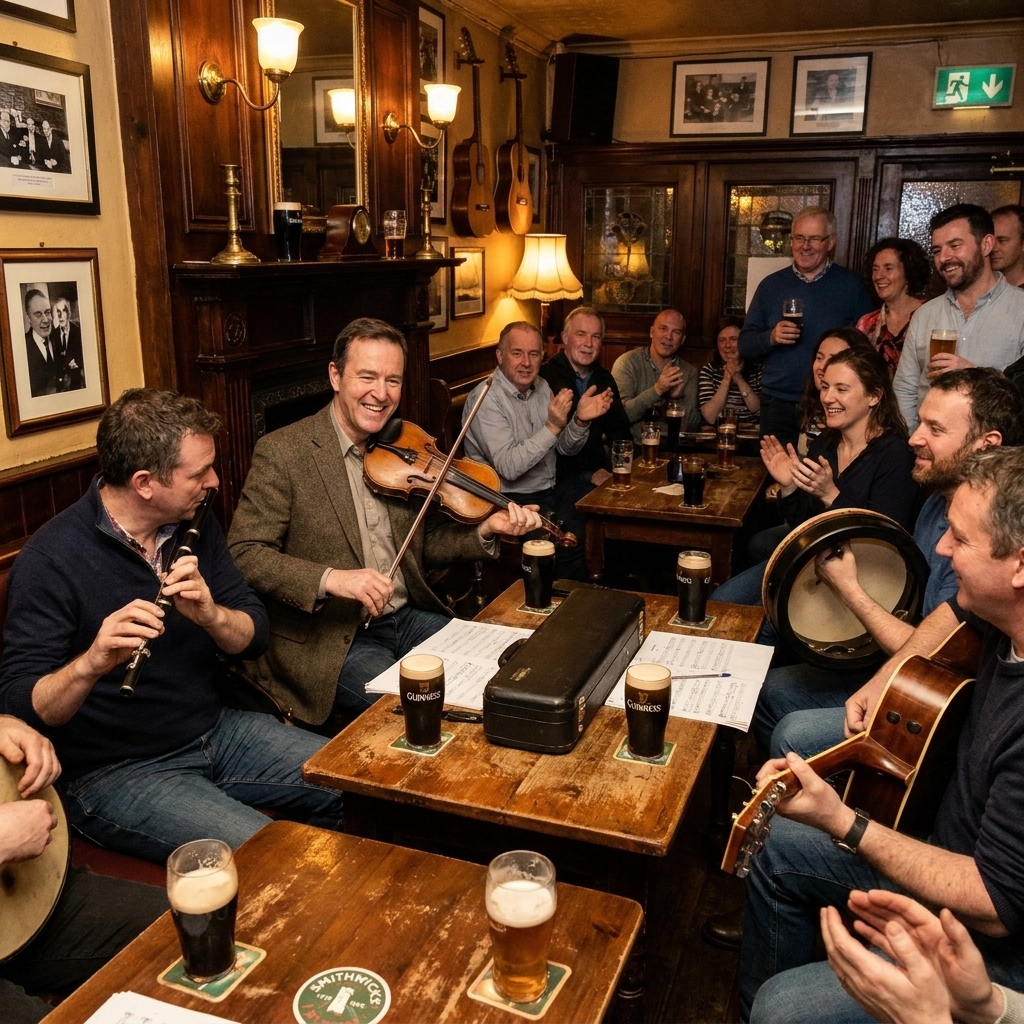
Yes, plenty of Irish people go to the pub on St. Patrick’s Day. The difference is that locals usually treat the pub like an extension of the sitting room, not a challenge.
What locals tend to do
- They start earlier or later depending on the town, but they rarely aim to spend the entire day packed shoulder-to-shoulder.
- They talk. A lot. Even on a noisy day, conversation is the point.
- They follow the music. If there is a good session, people will drift in for it, then drift out.
How to spot a good one
- Locals are inside before the “party bus” arrives.
- The place is busy, but not selling itself too hard.
- There is music that looks organic, not forced.
If you want to blend in at the bar, I have you covered: How to order a Guinness like a local.
Tourist traps to skip
Look, nobody is handing out authenticity certificates on March 17. If you want to wear a bright green wig, you are allowed. But if your goal is to celebrate the way locals actually do, these are the classic choices that can make the day feel more like a theme park.
1) “Irish” pubs selling a fantasy Ireland
If the whole pitch is green beer, shamrock-shaped everything, and a “leprechaun MC,” you are not getting much of Irish culture. You are mostly getting a performance of it.
2) Green beer and novelty overload
These things are more common in Irish America than in Ireland. You will see plenty of green, of course, but most of it is subtle or tied to community groups, not fluorescent food coloring.
3) The pub crawl plan
If you treat the day like a drinking marathon, it usually ends up feeling smaller than it should. Ireland is at its best when you slow down and let the day unfold. If you need a reminder of how good “slow” can be here, you might like Plan an unhurried day in an Irish town.
4) Paying just to stand in a crush
Some venues charge for entry on the day, especially in bigger cities and busy tourist towns. Sometimes it is legitimate for a ticketed event. Sometimes it is just paying to be squeezed. If you cannot move your arms and you cannot hear yourself speak, it is rarely worth it.
5) Only doing Dublin
Dublin is brilliant, but Ireland is not one city. A smaller town can give you a warmer, more memorable day, and you will likely spend less time queuing for everything.
If you are in Dublin
Dublin on St. Patrick’s Day can be mighty, but you will enjoy it more if you design your day around breathing room.
- Pick one anchor event. For most people, that is the parade.
- Build in a calm hour. A museum, a quiet lunch, a walk along the Liffey, or a wander where you can actually hear the city.
- Choose one pub and commit. Hopping around sounds fun until every door has a queue and your phone battery is crying.
If you want a meaningful break from the city crowds on another day of your trip, consider Glendalough. It has the sort of hush that makes March feel like a fresh start.
Logistics to know
A small bit of planning can keep the day enjoyable:
- Expect road closures near parade routes. Even in small towns, the main street can be blocked for an hour or two.
- Public transport can be busier and slower. Give yourself extra time if you are moving between towns.
- Taxis are not a sure thing. In rural areas especially, book ahead if you need one, or keep your evening local and walkable.
- Accommodation goes quickly in popular spots. If March 17 is a key date for you, it pays to lock it in early.
Food: what’s on tables
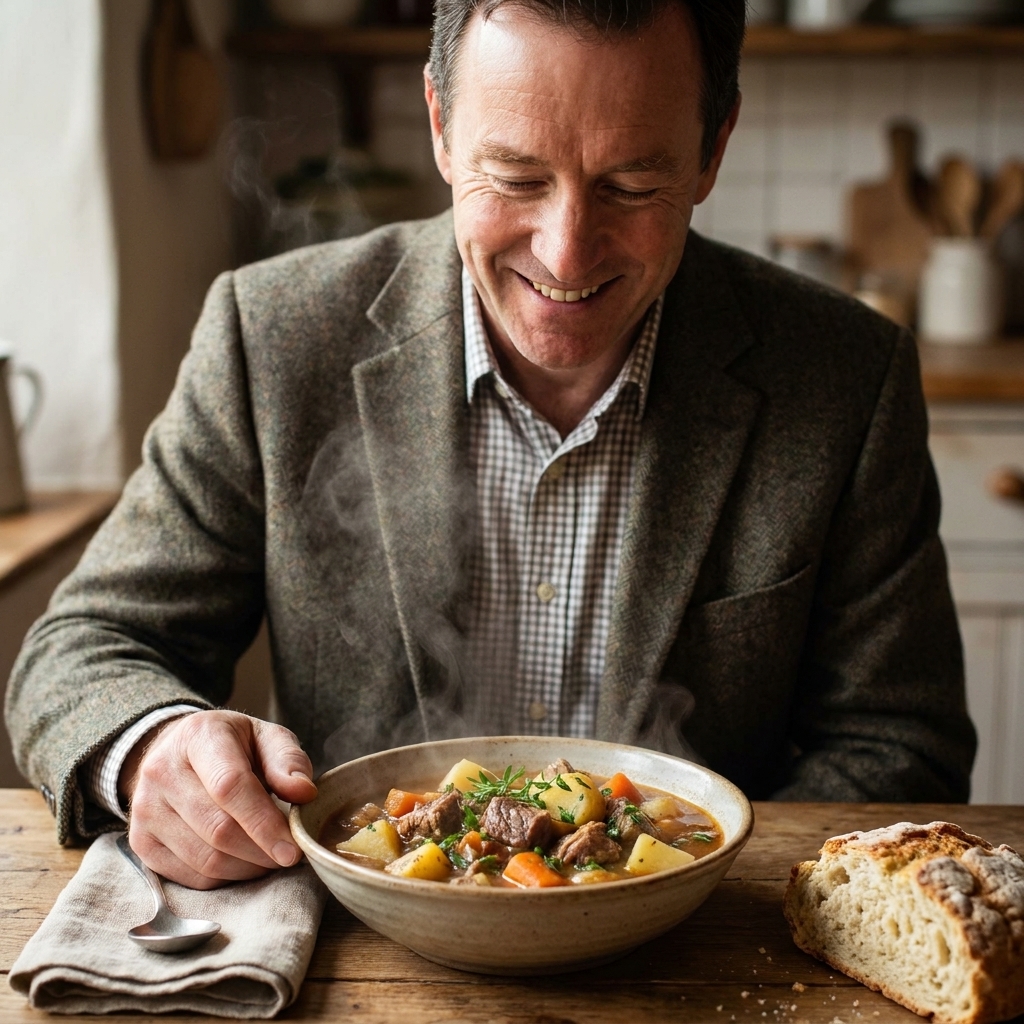
St. Patrick’s Day food in Ireland is not one single iconic dish, but you will see a pattern: warm, filling, and built for early spring weather. Families might cook at home, and pubs often run hearty specials.
- Irish stew when there’s a chill that gets into your bones
- Soda bread because it belongs beside soup, stew, and butter on a day like this
- A full Irish breakfast if the house is busy and everyone needs fuel
If you want to cook the day at home, these are good places to start: Traditional Irish stew, authentic Irish soda bread, and a full Irish breakfast at home.
Simple etiquette
- Remember it is a real holiday for people. Some will be out celebrating, others will be visiting family, and some will be doing the quiet version.
- Ask before you assume. Not every Irish person loves the “top of the morning” stuff, and not every town wants to be treated like a party backdrop.
- Mind your pace. The best nights are the ones you can remember.
- Weather-proof yourself. A dry jacket and decent shoes will save your mood.
A simple day plan
If you are staring at a map and wondering how to make the day feel like you are in on it, here is a plan I have used in more than one county.
- Morning: a walk, a coffee, and a look around town as decorations go up and families drift in.
- Late morning: watch the local parade, even if it is small. Especially if it is small.
- Afternoon: pick one community activity like a match, a market, a charity event, or simply a long lunch.
- Early evening: one good pub, one good corner, one good conversation.
- Night: if there’s a trad session, stay for it. If not, call it early and give yourself the gift of a fresh morning tomorrow.
FAQ
Do people in Ireland say “Happy St. Patrick’s Day”?
Yes, you will hear it, but more often you will hear a simple “Happy Paddy’s Day” or just the usual greetings with a nod to the day. It depends on the person and the place.
Is it offensive to call it “St. Paddy’s Day”?
In Ireland, “Paddy” comes from Pádraig, so “Paddy’s Day” is common. “Patty” is the version that often makes people in Ireland wince because it reads as short for Patricia, not Patrick.
Is St. Patrick’s Day mostly religious in Ireland?
It can be for some people, especially older generations and families who attend mass, but it is widely celebrated as a cultural and community holiday too.
Will everything be closed?
Expect altered hours. Parades and crowds can reshape a town for the day, and some smaller shops close. Many pubs and restaurants open, often with special hours. If you are traveling between towns, build in extra time.
Is it different in Northern Ireland?
It can be. Some places go all-in with parades and festivals, others keep it quieter, and local history can shape what the day looks like. If you are road-tripping the north, this route is a good starting point: Causeway Coastal Route: 3 days on Northern Ireland’s wild edge.
The real secret
The most local St. Patrick’s Day I have ever had did not hinge on any single “must-see.” It was a chain of small moments: a chat with an older lad leaning on a barrier, a kid proudly showing off a painted tricolour flag cheek, the first notes of a fiddle in a warm room, the sense that the town belonged to itself.
Chase that feeling, and you will do the day right.