
I still remember the first time I heard it said in a pub like it was simple geography: “No snakes in Ireland, lad.” I was fresh off the ferry, full of road-trip swagger, and convinced I would eventually step over something slithery on a bog path. Years later, after tramping through dunes, heather, blanket bog, and enough stone walls to rebuild half of Leinster, I can tell you this much: the old saying holds up.
But the reason is far more ice and ocean than saints and miracles. Saint Patrick gets the legend. Geology gets the credit.

The quick answer: yes, Ireland is snake-free
There are no native snake species on the island of Ireland, and you will not find wild, established snake populations in either the Republic of Ireland or Northern Ireland. That includes the classic European adders you might see in parts of Britain and mainland Europe.
Now, could a pet snake escape somewhere? In theory, sure. In practice, most escapes end with a quick recapture or a snake that does not last long in the wild, and there is no evidence of an established, breeding population.
So why no snakes? The science behind it
1) The Ice Age shut the gates
During the last Ice Age, Ireland was heavily glaciated. When the ice retreated, plants and animals had to recolonise the landscape from elsewhere. Snakes, being cold-blooded and relatively slow to spread compared with many mammals and birds, were at a disadvantage from the start.
2) Ireland was cut off early
Most ecologists point to this as the main reason: after the glaciers melted, sea levels rose and any temporary land connections disappeared. Ireland was separated from Britain and mainland Europe relatively early in the post-glacial period, which limited which species could wander in and take hold. Britain, by comparison, stayed connected, or reconnected, for longer, which helped it acquire more reptiles.
3) The climate does not help, but it is not the whole story
Ireland’s cool, wet conditions mean fewer warm basking days, which makes life harder for reptiles trying to feed and breed. But climate alone is not the decisive factor. The bigger story is still colonisation history: the animals that never arrived cannot establish themselves, no matter how nice the summer gets.
What about St Patrick?
The legend of St Patrick banishing snakes is part of Ireland’s storytelling tradition, and I love it for what it is: a vivid tale that stuck. But from a wildlife standpoint, the “banishment” happened long before written history, courtesy of ice and ocean.
If you enjoy how folklore and nature tangle together on this island, you might also like 11 surprising truths about Irish leprechaun folklore.
The reptiles you can actually find in Ireland
Snake-free does not mean reptile-free. If you are hiking with your eyes down near sunny stone walls and sandy paths, these are the ones worth knowing.
Common lizard (Zootoca vivipara)
This is Ireland’s best-known native reptile and, for most walkers, the only native land reptile you are likely to see. They are small, fast, and fond of basking when a rare patch of sun hits the rocks.
- Where you might see them: dunes, heathland, bog edges, warm roadside banks, stone walls that catch light
- When: spring through early autumn, especially on calm, bright mornings
- How to spot: pause quietly and watch for quick movement rather than actively searching
Leatherback sea turtle (Dermochelys coriacea)
Not a hiker’s sighting, but worth a nod: leatherbacks are occasional visitors to Irish waters, following jellyfish. You are far more likely to hear about them than see one, but they are part of the wider Irish wildlife story.
Animals you can spot while hiking in Ireland
If you are out on trails, beaches, bog walks, or mountain tracks, the real magic is often in what’s moving at the edge of the weather. Here are some of the most rewarding native or well-established wild animals to look for.
Mammals
- Red fox: often seen at dawn or dusk, especially near fields and scrubby edges
- Badger: mostly nocturnal, but you may spot setts and tracks in soft ground
- Irish hare: open uplands and rough grassland, especially in quiet areas, a brilliant dusk sighting
- Red deer (regional): best-known around Killarney, and also found in places like County Wicklow and parts of Donegal
- Otter: rivers, lakes, and coastal inlets, look for spraints on rocks and bridges
Birdlife that feels unmistakably Ireland
- Peregrine falcon: cliff country, watch for sudden, purposeful flight
- Raven: acrobatic and clever, common in wilder uplands
- Chough: a real treat on Atlantic cliffs, glossy black with a red beak and legs
- Skylark: you will often hear it before you see it, singing high over moorland
- Barn owl: more of an evening drive sighting than a midday hike, but unforgettable
Sea-cliff and shoreline favourites
- Grey seal and harbour seal: look for heads bobbing in calm coves, keep your distance
- Dolphins and, with luck, whales: sometimes visible from headlands in the right season and conditions
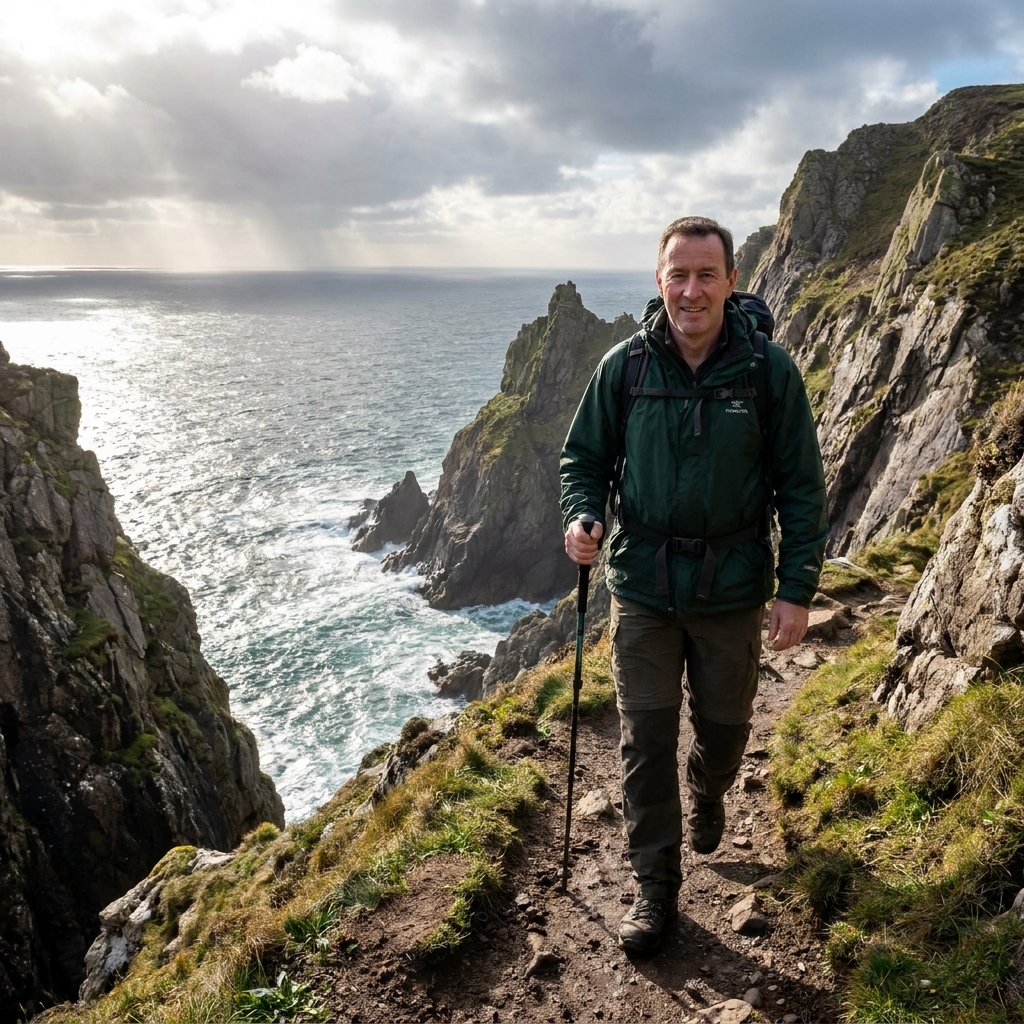
How to hike and spot wildlife
I learned this the slow way, by clomping around like a loud tourist and seeing absolutely nothing. A few small habits make a huge difference.
- Slow down near good habitat: stone walls, sunny banks, gorse edges, reedbeds, and quiet coves are prime viewing
- Stop more than you walk: animals often appear once the landscape settles again
- Look for signs: tracks in mud, droppings on rocks, burrow holes, feathers, and paw prints tell you who is nearby
- Keep distance from seals and nesting birds: if they react to you, you are too close
- Bring binoculars if you have them: it turns “maybe a bird” into a real moment
If you are new to rural driving between trailheads, I have a handy field-friendly piece on reading Irish road signs and Gaelic place names. It saves a lot of wrong turns in the backroads.
FAQ: Snake myths and worries
Do any snakes live in Ireland at all?
No native snakes live wild in Ireland, and there are no established wild snake populations on the island.
Could I mistake something for a snake on a trail?
Absolutely. The usual culprits are:
- Slow worm: common in Britain, but not native to Ireland
- Eels: near water, a glimpse of movement can fool the brain
- Ropey seaweed: on beaches, especially in low light
- A common lizard disappearing into grass: you catch the motion, miss the shape, and your imagination does the rest
Are there any dangerous wild animals in Ireland?
Ireland is generally a very safe place to hike from a wildlife standpoint. The bigger concerns are weather changes, boggy ground, cliff edges, and in some areas, livestock like cattle. Give farm animals space, keep dogs under control, and do not take shortcuts across fields if you are unsure.
The real takeaway
No snakes in Ireland is one of those facts that sounds like a tall tale until you’ve spent enough time on the island to realise it is simply true. The story behind it is even better than the myth: glaciers shaped the land, the sea drew a boundary, and Ireland ended up with a wildlife line-up all its own.
If you are in the mood for more quick, reliable bits of island trivia, you can wander through our Ireland facts guide. It is built for curious travelers who like their information with a side of scenery.