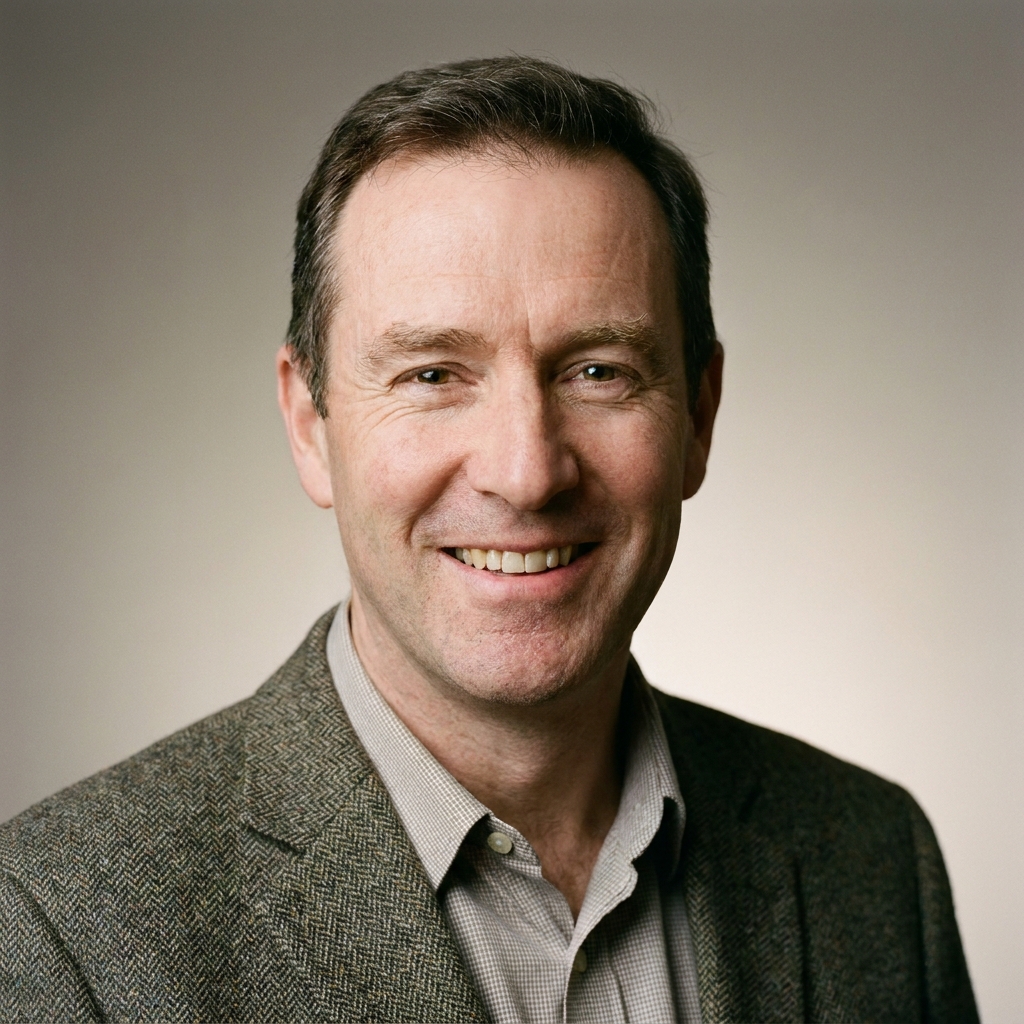
The first time I properly saw the Milky Way in Kerry, it was one of those quiet, late nights where the Atlantic wind had finally eased off and the campervan was ticking as it cooled. I stepped out, expecting the usual handful of stars you get near towns, and instead the sky looked like someone had spilled salt across black velvet. You do not forget that kind of darkness.
Kerry’s International Dark Sky Reserve sits out on the Iveragh Peninsula, and it is one of the best-known places in Ireland to stargaze without needing to be an astronomy wizard. This is a practical guide for getting there, choosing the right night, staying warm, and actually seeing something other than your own breath.
What the designation means
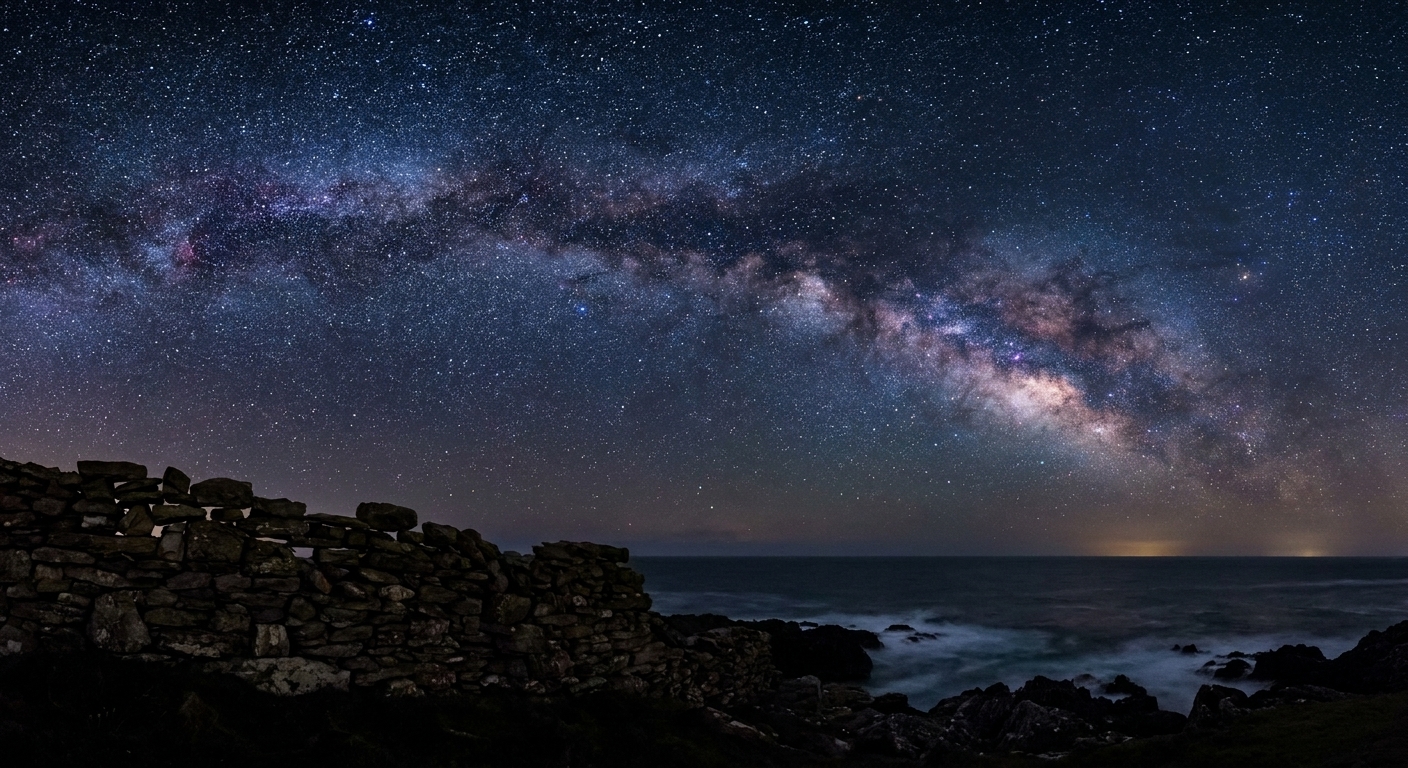
You will hear people call Kerry a “gold-standard” dark sky location. Whether or not you care about the labels, the point is simple: very low light pollution, and a night sky that looks like it has been turned up a notch.
On a clear night, away from direct lights, you can often pick out:
- The Milky Way as a bright band, not a faint smudge.
- Star clusters and constellations that disappear near cities.
- Meteor showers with frequent streaks when the timing is right.
- The Andromeda Galaxy as a faint oval haze, especially on clear autumn and winter evenings once your eyes are fully dark-adapted.
It also means you need to take the dark seriously. Roads are narrow, shoulders can vanish, and a “quick stroll” becomes a different proposition when the moon is down.
Where to go
You can get a good sky almost anywhere you can find an open view away from direct lights, but a few spots consistently feel made for it. My rule is simple: horizon plus darkness plus a safe place to stand.
1) Ballinskelligs Bay
Ballinskelligs has that magic mix of wide sky, sea horizon, and fewer nearby lights. If you can tuck yourself out of the breeze, it is a brilliant place for long looks and wide-field Milky Way views.
- Best for: Milky Way photography, horizon-gazing, meteor showers.
- Watch out for: exposure off the water, sudden showers.
2) Valentia Island
Valentia is a classic for a reason. Once you are out of the village glow, it can feel like you are standing at the very edge of Europe, with a dark ocean in front of you and very little glare behind. The sea horizon can make constellations feel extra crisp.
- Best for: clean horizons and big-sky views.
- Watch out for: reflective wet roads and strong gusts on open viewpoints.
3) Near Waterville and quieter inland pull-offs
If the coast is getting battered, heading slightly inland can be a comfort upgrade. Look for safe pull-offs with an unobstructed view and no nearby yard lights. You will often trade a sea horizon for calmer conditions.
- Best for: comfort, steadier tripods, longer observing sessions.
- Watch out for: hedgerows blocking the sky if you choose a spot that is too enclosed.
4) A sensible base town
If you want to do this without a late-night drive across unfamiliar roads, base yourself somewhere sensible and drive a short hop to darkness. Towns like Cahersiveen, Waterville, and Portmagee can work as jumping-off points depending on your route.
If you are building a bigger Kerry loop, it pairs naturally with a Skelligs day. Here is my field guide for that: Skellig Michael: how to visit Ireland’s real-life Jedi temple.
Practical access notes
This is the bit people forget in the excitement. The Iveragh Peninsula is not built for crowds at midnight.
- Expect narrow lanes: some stretches are proper boreens where meeting another car becomes a slow, polite negotiation.
- Parking is limited: many great views are near small pull-offs. If a spot feels dodgy in daylight, it will not improve in darkness.
- Facilities are rare at viewpoints: often no toilets, no bins, no shelter. Plan like you are going somewhere simple but remote.
When to go
In Kerry, stargazing is a three-part negotiation between cloud, moonlight, and darkness hours. Temperature matters too, but you can dress for cold. You cannot dress for thick cloud.
Pick the right moon
- For the Milky Way and faint stars: aim for a new moon window or nights when the moon sets early.
- For beginner-friendly stargazing: a quarter moon can be lovely because it adds gentle light to the landscape while still leaving plenty of stars visible.
- Avoid (if you want maximum stars): bright full-moon nights, especially if you are hoping for that ink-black sky.
Best seasons (honestly)
I wish I could tell you summer is perfect, but Ireland loves humbling us.
- Autumn (September to November): often excellent. Nights are longer, the air can be crisp, and you can get surprisingly clear spells.
- Winter (December to February): longest darkness and sometimes the clearest air, but cold and exposure can shorten your session fast.
- Spring (March to May): a strong contender when weather behaves, and the evenings are not as brutal as mid-winter.
- Summer (June to August): can still be great, but true darkness comes late, and around late May to July it may never get fully dark in the astronomical sense. Translation: you might get stars, but not the deepest contrast.
Time it to real darkness
Twilight lingers in Ireland, especially in summer. For serious stargazing, you want the period after evening twilight when the sky is properly dark. If you arrive too early, do not fight it. Let your eyes adjust, listen to the sea, and give the night time to deepen.
And yes, the weather matters. Kerry can serve you four seasons in a single hour. If you want a realistic sense of what you are up against, I wrote this after many damp lessons learned: The truth about Irish weather.
What to bring
The secret to a great night under Kerry skies is not a fancy telescope. It is being comfortable enough to stay outside long enough for your eyes and patience to do their job.
Essentials
- Warm layers: base layer, mid-layer, and a windproof outer layer. Exposure is the real thief of joy.
- Hat and gloves: non-negotiable even in mild months.
- Waterproof footwear: damp ground and dewy grass are guaranteed.
- A headlamp with a red setting (or red filter): white light wrecks night vision.
- A hot drink in a flask: morale in liquid form.
- A blanket or insulated mat: sitting on cold stone is a fast way to end early.
- Fully charged phone plus a power bank: for maps, emergencies, and star apps.
Binoculars are the best upgrade
If you bring one piece of gear, make it binoculars. A simple pair shows star clusters, the Moon’s craters, and more detail in bright objects than you will expect. They are also far less hassle than a telescope in blustery conditions.
If you want photos, keep it simple
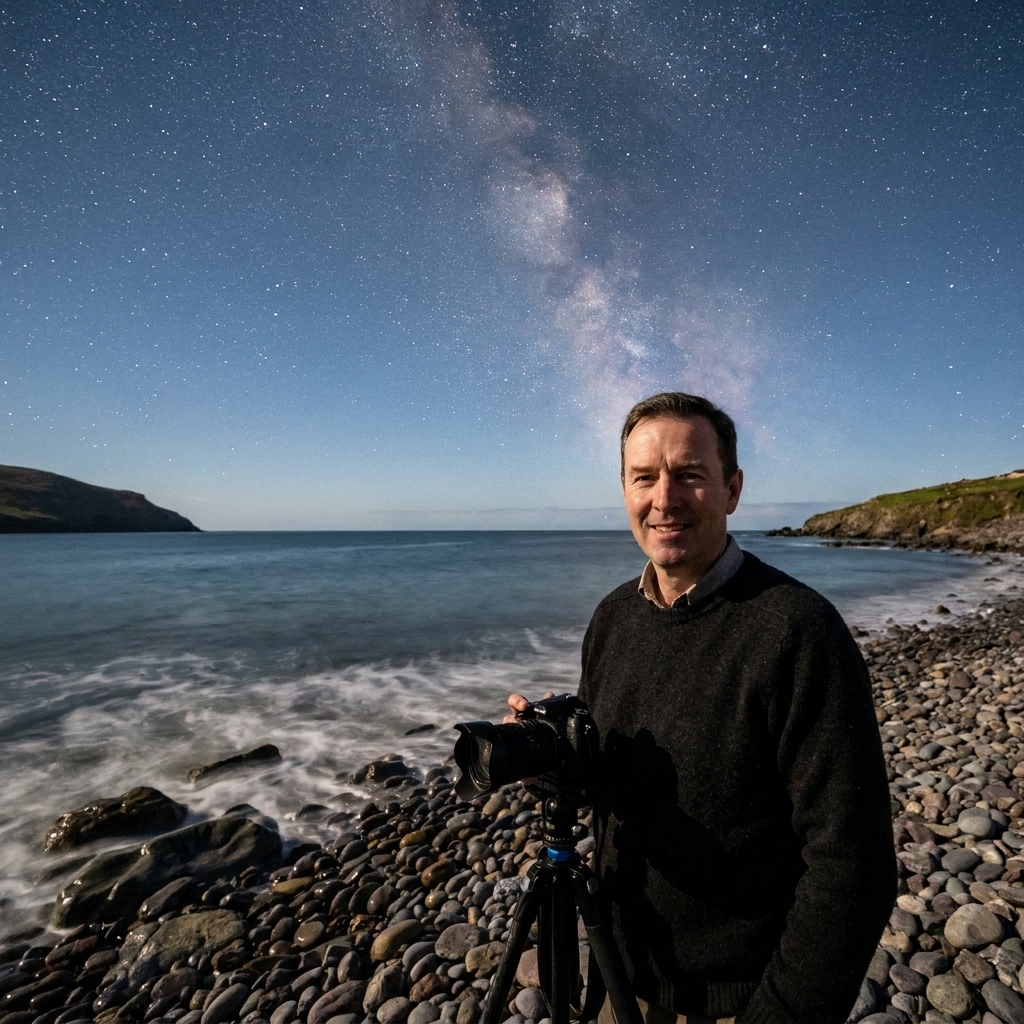
Modern phones can do a lot, especially with night modes and steady support. If you have a camera, a tripod helps, but gusts can be a menace on exposed coasts. Keep your setup low, use your body as a windbreak, and be patient between lulls.
Plan your night
1) Pick a Plan A and Plan B
On the Iveragh Peninsula, cloud can cling to one bay and leave another perfectly clear. I like to pick one coastal location and one slightly inland backup so I am not stuck staring at fog.
2) Check three things before you drive
- Cloud cover: high cloud can still allow stargazing, but thick low cloud ends the story.
- Wind: not just for comfort. It affects tripods, safety near cliffs, and how long you can stay out.
- Moon timing: moonrise and moonset make a big difference to darkness.
3) Arrive before it is pitch black
This is the move that keeps you safe. Park, find your footing, and choose where you will stand while you still have some light. Once it is properly dark, your depth perception gets creative, especially near uneven ground.
4) Give your eyes 20 to 30 minutes
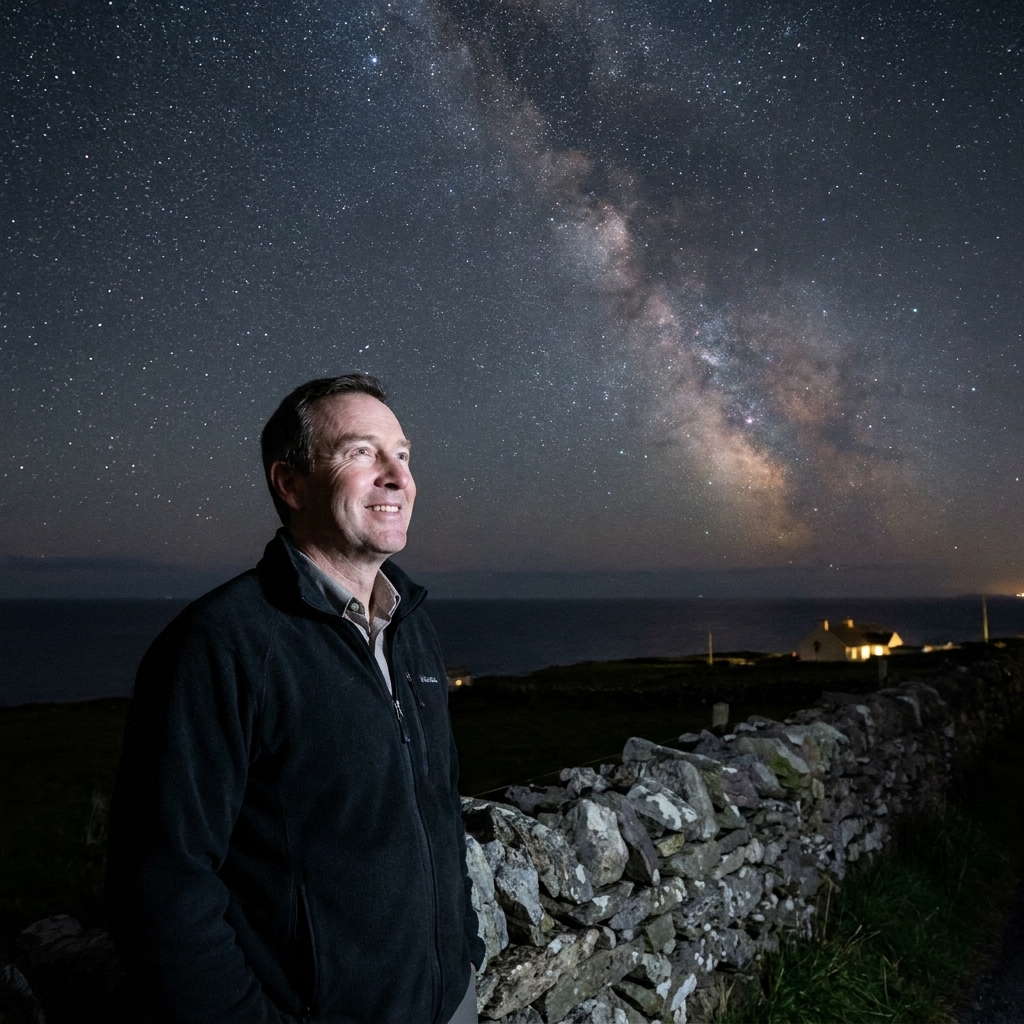
Dark adaptation is real. Avoid bright screens, keep lights red and dim, and you will watch the sky fill in with stars you did not notice at first.
5) Start with easy targets
- The Moon (if it is up): an instant crowd-pleaser through binoculars.
- Bright planets: Venus and Jupiter often steal the show.
- Orion (winter), the Summer Triangle (summer), or the Plough for quick constellation wins.
- Satellites: once you know what you are looking for, they are often easiest to spot in the hour or two after dusk when the sky is darkening but not fully deep-night.
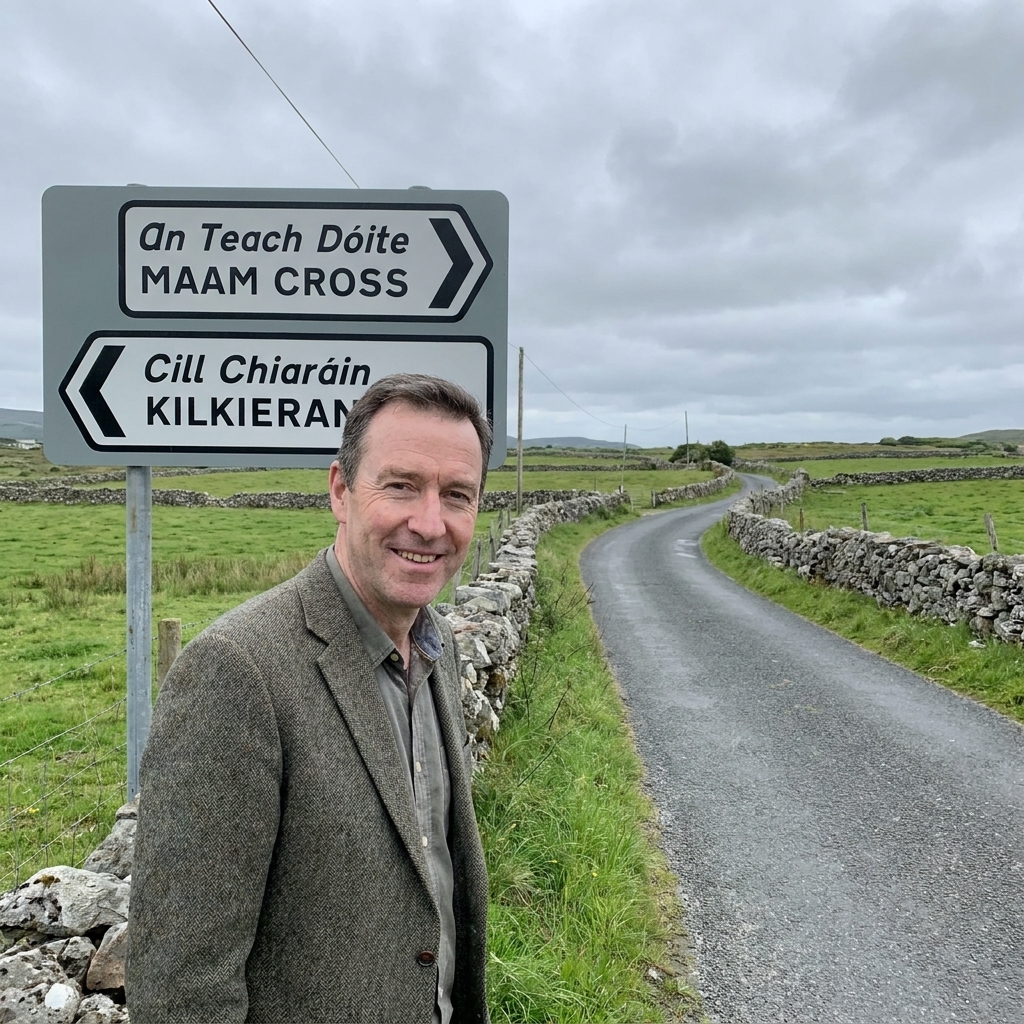
If you are road-tripping, you will probably be navigating Gaelic place names on signs as you go. I have a handy primer here: Reading Irish road signs and Gaelic place names.
Safety and etiquette
- Do not stargaze from cliff edges in full darkness. It is not worth it, especially in wind.
- Park considerately. Do not block gates, lay-bys, or narrow lanes. Farmers and locals still need to get through.
- Respect private land. If there is a gate, a wall, or a sign, take it as your cue to stay put. Stick to public areas, beaches, and obvious roadside viewpoints.
- Keep lights low and red. Your eyes, and everyone else’s eyes, will thank you.
- Leave no trace. Pack out every wrapper and cup. These places feel wild because people treat them that way.
- Tell someone your plan if you are heading somewhere remote late at night, particularly if you are solo.
What you can see
You do not need to name every star to have a brilliant night. Here is what most people can expect on a clear, dark evening in Kerry:
- With naked eyes: the Milky Way (in the right season and moon phase), shooting stars, and a sky absolutely stuffed with stars.
- With binoculars: lunar craters, star clusters, and brighter deep-sky objects as soft glows.
- With a small telescope: Saturn’s rings, Jupiter’s moons, more lunar detail, and clearer views of bright nebulae and clusters.
One small mindset shift helps: stargazing is not about bagging objects. It is about letting the night unfold slowly, the way the sea does. Kerry rewards patience.
Mini itinerary
- Late afternoon: base yourself in a town, grab a warm meal, and check cloud and wind.
- Sunset: drive to your chosen spot while there is still light to orient yourself.
- After twilight: settle in with a flask, keep lights dim, and let your eyes adjust.
- One hour in: use binoculars, scan slowly, and take breaks from screens.
- Before you leave: do a final sweep of the ground for anything you brought with you.
FAQ
Do I need a tour?
No. You can absolutely do this independently if you plan for weather, arrive before full darkness, and pick a safe spot. Tours can be lovely for learning the sky faster, but the darkness itself is free.
Is it year-round?
Yes, but not every night is equal. Winter brings long darkness and sometimes very clear air, while summer brings short nights. In every season, cloud is the real gatekeeper.
Can I see the Northern Lights?
Occasionally, during strong solar activity, aurora can be visible in parts of Ireland. Kerry’s darkness helps, but it is never guaranteed. Think of it as a rare bonus, not the plan.
What is the biggest mistake?
Arriving too late, parking in a rush, and trying to find a safe viewpoint in full darkness. Get there early, get settled, and let the sky come to you.
Keep wandering
If Kerry has you in the mood for big landscapes and quiet corners, you might also enjoy these: