

The first time I tasted a proper Irish coffee in Ireland, I stopped treating it like a boozy latte and started treating it like its own little piece of winter engineering. Done right, it is hot, strong, gently sweet, and topped with a cool cap of cream that stays put. You do not stir it in. You sip coffee through cream, and the whole drink feels like a warm coat you can hold in two hands.
Like a lot of things on this island, the story starts with bad weather and good hospitality. In the 1940s at Foynes, County Limerick, tired travelers were coming in off transatlantic flights that used the Shannon Estuary. When conditions turned rough, people arrived cold and rattled, and a chef named Joe Sheridan is widely credited with fortifying their coffee with Irish whiskey and finishing it with cream. The finer points of the tale vary depending on who is telling it, but the heart of the drink does not: hot sweetened coffee, Irish whiskey, and a properly floated layer of lightly whipped cream.
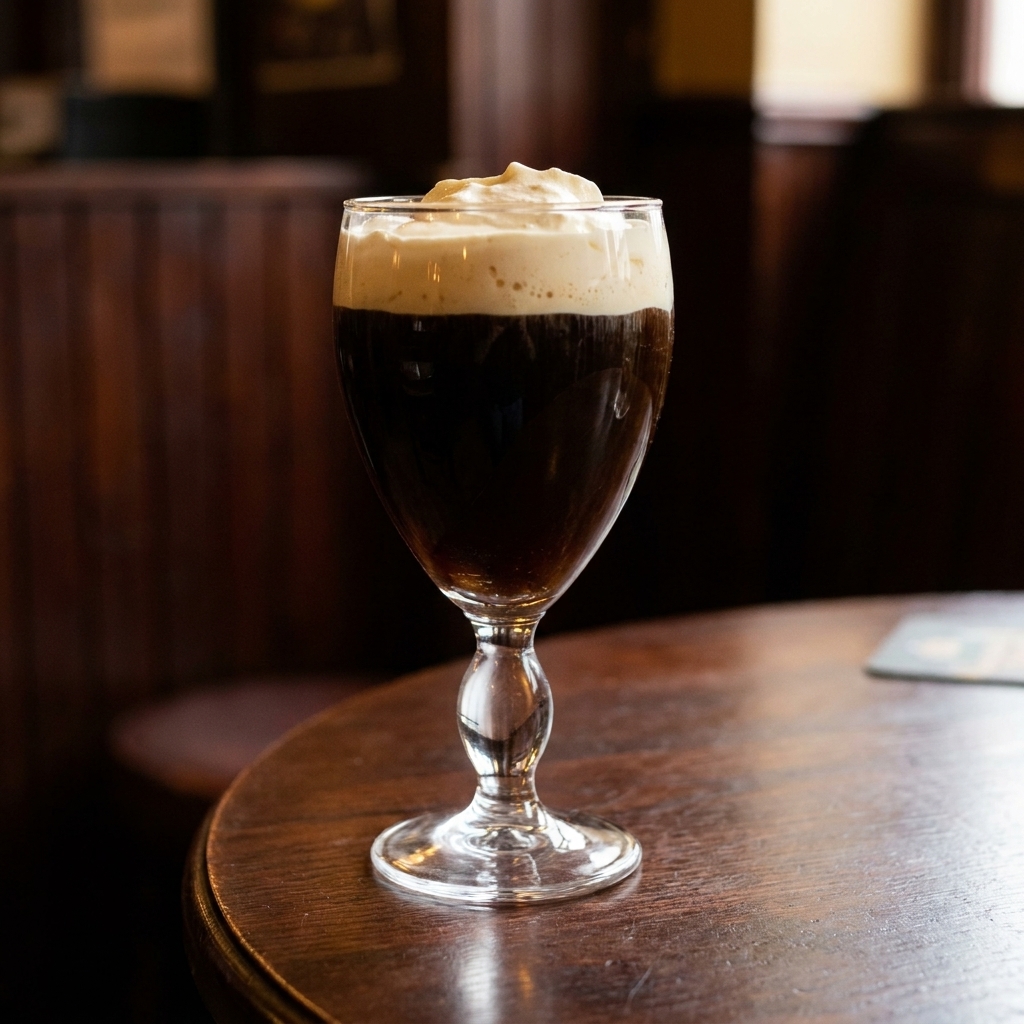
What you are getting here is the original-style structure, with the one detail that separates the real thing from a beige puddle: a cream float that actually floats. In the recipe card below, I keep it practical and bartender-simple, from warming the glass to sweetening the coffee properly to pouring the cream so it lands like a soft lid rather than a splash.
If you are building out a cozy Irish night at home, pair this with something hearty like my traditional Irish stew, or finish the evening with a slice of authentic Irish soda bread toasted and buttered.
What “original” means here
Ask three Irish bartenders about Irish coffee and you might get four opinions. Some pour it in a handled glass, some prefer a stemmed one, some insist on brown sugar, some will tell you any sugar is fine as long as it dissolves. What does not change is the structure: sweetened hot coffee with Irish whiskey, topped with cool, lightly whipped cream that floats.
The Foynes origin is part of modern Irish food lore for a reason. It explains the drink’s purpose. It was built to warm you up quickly, using ordinary things done carefully. That is still the goal in your own kitchen.
The detail that makes it work
Floating the cream is not about piling whipped cream on top like dessert. It is about making the cream thick enough to sit on the coffee, but still fluid enough to glide off a spoon. Think soft peaks and a “thick pour.” If it is stiff, it will clump. If it is thin, it will sink.
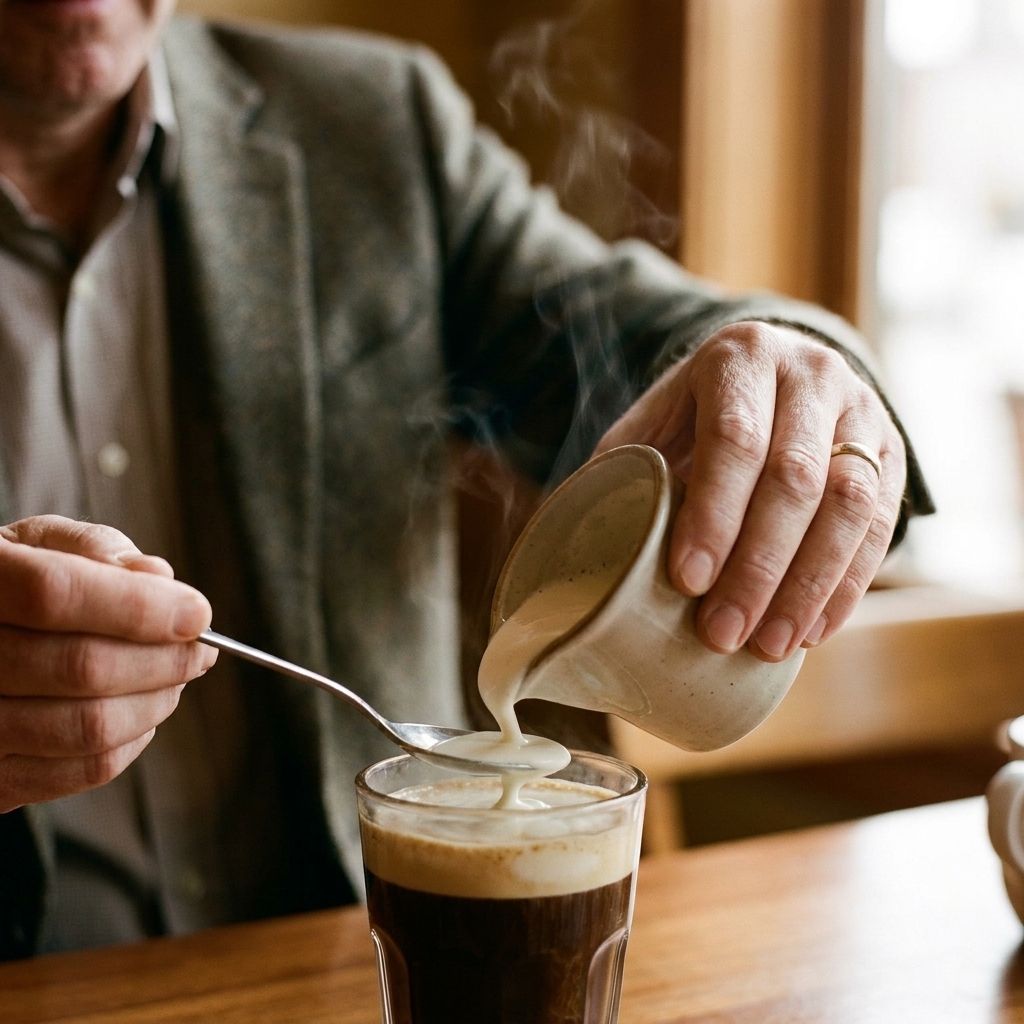
The other half of the trick is patience. Hot coffee helps sugar dissolve completely, and that can help the cream behave a little better on top. Then you pour the cream slowly over the back of a spoon so it spreads gently, instead of punching straight through the surface.
Why it works
- Dissolved sugar helps: stirring sugar until it fully dissolves improves the balance, and it can help the cream float a bit more reliably.
- Soft whipped cream, not stiff: lightly whipped cream forms a cohesive layer that pours and floats, instead of breaking into blobs or sinking.
- Hot coffee, cool cream: the temperature contrast is part of the experience, and it helps keep the cream sitting on top long enough to enjoy the proper sip.
- The spoon pour: pouring over the back of a spoon turns a messy splash into a clean, even cap.
Ingredient notes
Coffee
Use strong, freshly brewed coffee. Irish coffee is not meant to be timid. If you have a French press or Aeropress, this is a great moment for it. If you are using drip coffee, simply brew it a touch stronger than usual.
Irish whiskey
A standard Irish whiskey works beautifully. You want warmth and a gentle cereal sweetness, not something aggressively smoky or heavily peated.
Sugar
Many old-school versions lean toward brown sugar because it dissolves well and brings a faint caramel note. White sugar is perfectly workable if that is what you keep in the cupboard. The main rule is to dissolve it fully in the hot coffee before the cream goes anywhere near the glass.
Cream
Use heavy cream, sometimes labeled double cream. Do not use aerosol whipped cream. Lightly whip the cream yourself until it is thick but still pourable.
Equipment
- Heatproof Irish coffee glass or a warmed mug
- Measuring jigger or tablespoon measure
- Small whisk or handheld frother for lightly whipping cream
- Spoon (for floating the cream)
- Kettle or access to very hot water (for warming the glass)
Pro tips
- Warm the glass first: a cold glass steals heat fast and can flatten the whole drink. Swirl hot water in the glass, then discard before building.
- Whip to “thick pour” stage: when you lift the whisk, the cream should mound softly then relax. If it stands stiffly, add a tiny splash more cream and whisk gently to loosen.
- Use the spoon like a landing pad: hold the spoon just above the coffee surface and pour the cream onto the spoon so it spreads out and settles.
- Build fast, sip sooner: Irish coffee is best when the coffee is properly hot and the cream is still cool.
- Do not stir after topping: the classic experience is sipping coffee through the cream layer.
Substitutes
- No heavy cream: you can try the highest-fat cream you can find, but a lower fat cream is more likely to sink. If it does, treat it as a tasty coffee cocktail rather than a failure.
- No Irish whiskey: you will still have a warming spiked coffee, but it will not taste like an Irish coffee. If you are making it anyway, choose a smooth whiskey and keep the pour modest.
- No sugar: you can skip it, but you lose balance and some float stability. If you prefer less sweetness, reduce instead of removing entirely.
- Decaf: totally fair for an after-dinner version. Keep everything else the same.
Variations
- Foynes-style simplicity: keep it classic: coffee, sugar, Irish whiskey, cream. No spices, no syrups.
- Dublin after-dinner: add a tiny pinch of grated nutmeg on the cream for aroma.
- Extra cold-weather: slightly increase the coffee strength rather than increasing the whiskey. It keeps the drink balanced.
- Non-alcoholic winter warmer: make the drink as sweetened coffee with floated cream. You still get the hot-cool contrast that makes the original so satisfying.
Serving ideas
- Serve with a small plate of buttered soda bread, especially if you already have a loaf from my 4-ingredient recipe.
- After a hearty bowl of traditional Irish stew, Irish coffee feels like dessert without being fussy.
- If you are doing a full Irish spread for brunch, keep the Irish coffee for later in the day and start with tea or something savory like my full Irish breakfast at home.
Storage
Irish coffee is meant to be made and enjoyed immediately. If you want to prep ahead, the only component worth preparing is the lightly whipped cream. You can whip it to the thick-pour stage and keep it chilled for a short time, then give it a gentle stir before floating.
Common mistakes
- Using stiff whipped cream: it sits in clumps and makes sipping awkward. Aim for soft, pourable cream.
- Pouring cream straight in: it will dive under the surface. Always pour slowly over the back of a spoon.
- Not dissolving the sugar: gritty sugar at the bottom is unpleasant, and it throws off the balance of the drink.
- Lukewarm coffee: Irish coffee should be hot enough to fog the glass. Brew fresh, and warm the glass.
- Overpouring whiskey: it stops tasting like a composed drink and starts tasting like a dare. Measure once, then adjust next time.
FAQ
Should you stir Irish coffee?
Stir before the cream goes on, so the sugar dissolves and the whiskey is evenly mixed. After you float the cream, do not stir. Sip the coffee through the cream.
Why won’t my cream float?
Usually it is one of three things: the cream is too thin, you poured it too fast, or you did not pour over a spoon. Lightly whip the cream to a thick-pour consistency and pour it slowly over the back of a spoon held just above the coffee.
Is Irish coffee served in a mug or a glass?
You will see both. A heatproof glass shows off the layers, which is part of the charm. A warmed mug is perfectly acceptable at home, especially on a windy night when you just want the heat in your hands.
Can I use whipped cream from a can?
You can, but it will not behave like the original drink. Aerosol whipped cream is usually too airy and not pourable, so you lose the classic floating layer and the proper sip.
Where did Irish coffee originate?
It is widely associated with Foynes in County Limerick in the 1940s, serving travelers coming in off transatlantic flights. That origin story is part of why the drink is designed to warm you up quickly and cheerfully.
Recipe
Original Irish Coffee Recipe
A classic Irish coffee in the original style: hot sweetened coffee with Irish whiskey, topped with a smooth layer of lightly whipped heavy cream that floats.
- Prep
- 5 minutes
- Cook
- 5 minutes
- Total
- 10 minutes
- Servings
- 1 drink
Ingredients
- 1 heatproof Irish coffee glass or mug
- Hot water, for warming the glass
- 120 ml (1/2 cup) strong hot coffee, freshly brewed
- 2 tsp brown sugar (or 2 tsp white sugar)
- 45 ml (1 1/2 oz) Irish whiskey
- 30 ml (2 tbsp) heavy cream, lightly whipped to a thick but pourable consistency
Instructions
- Warm the glass: Fill the glass with hot water, swirl for 15 to 20 seconds, then discard the water.
- Sweeten the coffee: Pour the hot coffee into the warmed glass. Add the sugar and stir until completely dissolved, 15 to 30 seconds.
- Add the whiskey: Measure in the Irish whiskey and stir briefly to combine.
- Lightly whip the cream: In a small bowl, whisk the heavy cream until it thickens and forms soft peaks, but still pours smoothly. If it becomes stiff, whisk in a small splash of cream to loosen.
- Float the cream: Hold a spoon just above the coffee surface, bowl-side up. Slowly pour the cream over the back of the spoon so it spreads across the top and floats in an even layer.
- Serve: Serve immediately. Do not stir after topping. Sip the hot coffee through the cool cream.
Notes
- Balance tip: If your drink tastes sharp, add an extra 1/2 tsp sugar next time rather than more whiskey.
- Cream texture: The goal is “thick pour,” not a firm whipped topping.
- Scaling up: For multiple drinks, whip cream in a larger bowl and build each glass one at a time so the coffee stays hot.